

Best Treadmills for Your Home Gym Check Them Out
Best Smart Home Gym Equipment Check It Out
Best Outdoor Saunas Check Them Out
  • Best-in-Class Equipment
    • See All Roundups
    • Best Adjustable Dumbbells
    • Best Budget Home Gym Equipment
    • Best Cross-Training Shoes
    • Best Dumbbells
    • Best Exercise Bikes
    • Best Cold Plunge Tubs
    • Best Home Saunas
    • Best Ellipticals
    • Best Home Gym Machines
    • Best Kettlebells
    • Best Olympic Barbells
    • Best Rowing Machines
    • Best Squat Racks
    • Best Supplements
      • Best BCAA
      • Best Creatine
      • Best Greens Powder
      • Best Pre-Workout
      • Best Protein Powder
    • Best Treadmills
    • Best Weighted Vests
    • Best Weightlifting Shoes
    • Best Weight Benches
  • Reviews
    • See All Reviews
    • Barbells
    • Bodyweight
    • Certification Courses
    • Conditioning
    • Gym Accessories
    • Nutrition
    • Recovery
    • Rigs and Racks
    • Shoes
    • Strength Equipment
    • Support Gear
    • Technology
    • Training Programs
    • Weight Plates
  • Comparisons
    • See All Comparisons
    • Best Peloton Alternatives
    • Home Gym vs Gym Membership
    • Peloton Bike vs Bike Plus
    • PowerBlock vs Bowflex
    • Rogue Echo Bike vs Assault Air Bike
    • Rogue Ohio Power Bar vs Texas Power Bar
    • Tonal vs Tempo
  • Coupons
    • Holiday Sales
    • Military Discounts
    • See All Coupons
      • Bells of Steel Coupons
      • REP Fitness Coupons
      • Rogue Fitness Coupons
      • Titan Fitness Coupons
      • Concept2 Coupons
      • Plunge Coupons
  • Equipment
    • Browse Gym Equipment
    • See All Equipment
    • Apparel
      • Shoes
        • Running Shoes
        • Training Shoes
        • Weightlifting Shoes
    • Strength Equipment
      • Barbells
      • Benches
      • Dumbbells
      • Glute Ham Developers (GHD)
      • Kettlebells
      • Rigs and Racks
      • Strength Machines
      • Weight Plates
    • Conditioning
      • Core and Stability
      • Endurance
        • Air Bikes
        • Ellipticals
        • Exercise Bikes
        • Rowing Machines
        • Treadmills
      • Jump Ropes
      • Strength Conditioning
    • Bodyweight
      • Climbing Ropes
      • Grip
      • Gymnastics
      • Pull-Up Systems
      • Training Equipment
    • Support Gear
      • Belts
      • Hand Protection
      • Mobility & Recovery
      • Straps & Wraps
      • Training Apparel
    • Gym Accessories
      • Flooring
      • Storage
    • Supplements
    • Technology
    • Training Programs
  • Home Gym Resources
    • See All Home Gym Resources
    • Calculators
    • DIY Guides
    • Equipment Guides
    • Gym Tours
    • Spotlight
    • Workout Guides
  • About Us
    • Meet Our Experts
    • GGR Fitness Equipment Testing Methodology
      • How We Test Ellipticals
      • How We Test Smart Home Gym Equipment
      • How We Test Smith Machines
      • How We Test Dumbbells and Adjustable Dumbbells
      • How We Test Barbells
      • How We Test Weight Benches
      • How We Test Treadmills
      • How We Test Saunas
      • How We Test Kettlebells and Adjustable Kettlebells 
      • How We Test Exercise Bikes
      • How We Test Cold Plunges
      • How We Test Massage Chairs 
      • How We Test Functional Trainers
    • GGR Supplement Testing Methodology
      • How We Test Pre-Workout Supplements
      • How We Test Creatine
  • Facebook
  • Instagram
  • YouTube

Search

  • Best-in-Class Equipment
    • See All Roundups
    • Best Adjustable Dumbbells
    • Best Budget Home Gym Equipment
    • Best Cross-Training Shoes
    • Best Dumbbells
    • Best Exercise Bikes
    • Best Cold Plunge Tubs
    • Best Home Saunas
    • Best Ellipticals
    • Best Home Gym Machines
    • Best Kettlebells
    • Best Olympic Barbells
    • Best Rowing Machines
    • Best Squat Racks
    • Best Supplements
      • Best BCAA
      • Best Creatine
      • Best Greens Powder
      • Best Pre-Workout
      • Best Protein Powder
    • Best Treadmills
    • Best Weighted Vests
    • Best Weightlifting Shoes
    • Best Weight Benches
  • Reviews
    • See All Reviews
    • Barbells
    • Bodyweight
    • Certification Courses
    • Conditioning
    • Gym Accessories
    • Nutrition
    • Recovery
    • Rigs and Racks
    • Shoes
    • Strength Equipment
    • Support Gear
    • Technology
    • Training Programs
    • Weight Plates
  • Comparisons
    • See All Comparisons
    • Best Peloton Alternatives
    • Home Gym vs Gym Membership
    • Peloton Bike vs Bike Plus
    • PowerBlock vs Bowflex
    • Rogue Echo Bike vs Assault Air Bike
    • Rogue Ohio Power Bar vs Texas Power Bar
    • Tonal vs Tempo
  • Coupons
    • Holiday Sales
    • Military Discounts
    • See All Coupons
      • Bells of Steel Coupons
      • REP Fitness Coupons
      • Rogue Fitness Coupons
      • Titan Fitness Coupons
      • Concept2 Coupons
      • Plunge Coupons
  • Equipment
    • Browse Gym Equipment
    • See All Equipment
    • Apparel
      • Shoes
        • Running Shoes
        • Training Shoes
        • Weightlifting Shoes
    • Strength Equipment
      • Barbells
      • Benches
      • Dumbbells
      • Glute Ham Developers (GHD)
      • Kettlebells
      • Rigs and Racks
      • Strength Machines
      • Weight Plates
    • Conditioning
      • Core and Stability
      • Endurance
        • Air Bikes
        • Ellipticals
        • Exercise Bikes
        • Rowing Machines
        • Treadmills
      • Jump Ropes
      • Strength Conditioning
    • Bodyweight
      • Climbing Ropes
      • Grip
      • Gymnastics
      • Pull-Up Systems
      • Training Equipment
    • Support Gear
      • Belts
      • Hand Protection
      • Mobility & Recovery
      • Straps & Wraps
      • Training Apparel
    • Gym Accessories
      • Flooring
      • Storage
    • Supplements
    • Technology
    • Training Programs
  • Home Gym Resources
    • See All Home Gym Resources
    • Calculators
    • DIY Guides
    • Equipment Guides
    • Gym Tours
    • Spotlight
    • Workout Guides
  • About Us
    • Meet Our Experts
    • GGR Fitness Equipment Testing Methodology
      • How We Test Ellipticals
      • How We Test Smart Home Gym Equipment
      • How We Test Smith Machines
      • How We Test Dumbbells and Adjustable Dumbbells
      • How We Test Barbells
      • How We Test Weight Benches
      • How We Test Treadmills
      • How We Test Saunas
      • How We Test Kettlebells and Adjustable Kettlebells 
      • How We Test Exercise Bikes
      • How We Test Cold Plunges
      • How We Test Massage Chairs 
      • How We Test Functional Trainers
    • GGR Supplement Testing Methodology
      • How We Test Pre-Workout Supplements
      • How We Test Creatine

Home » Resources » 8 Recumbent Bike Benefits and Expert Advice

8 Recumbent Bike Benefits and Expert Advice

8021
Written by Kate Meier, NASM-CPT, USAW-L1, CF-L1
8021
Kate Meier, NASM-CPT, USAW-L1, CF-L1
Certifications
NASM Certified Personal Trainer
USA Weightlifting Level 1
CrossFit Level 1

Kate has nearly two decades of experience working in both the fitness and content industries. Personally, Kate enjoys competing in weightlifting and doing burpees.

On the content side, Kate’s background is in newspaper journalism. She branched into public relations for the American Red Cross for about five years and then moving into content marketing. Today, her work at Garage Gym Reviews blends her excitement for fitness and love of writing. If she isn’t reviewing fitness equipment, you can find her working out or spending time with her two children.

View Profile
Updated on December 10, 2025
Expert-Verified by Ben Emminger, NASM-CNC, NASM-CSNC
10428
Ben Emminger
NASM-CNC, NASM-CSNC

Ben is a NASM-Certified Nutrition Coach and NASM-Certified Sports Nutrition Coach with over eight years of experience within the health and fitness category, specializing in areas such as strength training, running, recovery, nutrition, wearable tech, footwear, and apparel. His works have been previously featured by DICK’S Sporting Goods as well as Gear Patrol. Ben holds a B.A. in Print Journalism from Penn State University and is based in Pittsburgh, Pennsylvania. When not training, testing products, or writing content, Ben spends his time pursuing his other interests which include cooking, hunting, fishing, hiking, DIY projects, and intramural sports, among others.

View Profile
Expert Contributor Michael Masi
8731
Michael Masi
Certifications
Doctor of Physical Therapy
Certifications from the National Strength and Conditioning Association and the International Society of Sports Nutrition
Credentialed Orthopedic Specialist

Mike graduated with honors from Nova Southeastern University in 2014 as a Doctor of Physical Therapy. He was recruited to Charlotte to become Carolina Rehab’s Orthopedic Resident for 2015. During his tenure as a student and resident, he sought out extra-curricular certifications through the National Strength and Conditioning Association (NSCA) and the International Society of Sports Nutrition (ISSN) respectively. In 2015, and 2016 respectively, Michael became credentialed as an Orthopedic Specialist (OCS) and Sports Specialist (SCS) within the field of Physical Therapy. Shortly after, Michael became certified with Myopain Seminars as a Manual Trigger Point Therapist. Michael specializes in rehabilitating the strength-sport athlete, and providing off season conditioning and programming for a variety of other sports including football, lacrosse, baseball, tennis, and track and field. He is also proficient in treating a wide range of orthopedic conditions including back and neck pain, plantar-fasciitis, headaches, shin splints, and knee and shoulder pain.

Featured In:

  • Vitamin Shoppe
  • LiveStrong
  • VeryWell Fit
  • Shape
  • Eating Well
  • Lose It
  • Parade
  • Eat This, Not That
View Profile

We test and review fitness products based on an independent, multi-point methodology. If you use our links to purchase something, we may earn a commission. Read our disclosures

Recumbent Bike RU

Love cardio but hate what it does to your knees, hips, or lower back? The best recumbent bikes can offer a low-impact way to improve your cardiovascular fitness and strengthen your lower body without placing excessive stress on your joints. Unfortunately, because these bikes look more like a comfy chair than a “serious” cardio machine, many people assume they’re only useful for injury rehabilitation or “easy” workouts.

Despite those misconceptions, a recumbent bike can deliver heart-pumping sessions without taxing your joints like running. Plus, the supported position can make longer rides feel more feasible (and even enjoyable) when an upright exercise bike or treadmill starts to feel like unnecessary punishment.

Whether you’re building your endurance, easing back into training, or looking for a cardio activity you’ll actually stick with, a recumbent bike might be the ideal solution you’ve been overlooking. Below, we’ll break down the biggest recumbent bike benefits—and why our expert recommends adding one to your arsenal.

What Is a Recumbent Bike?

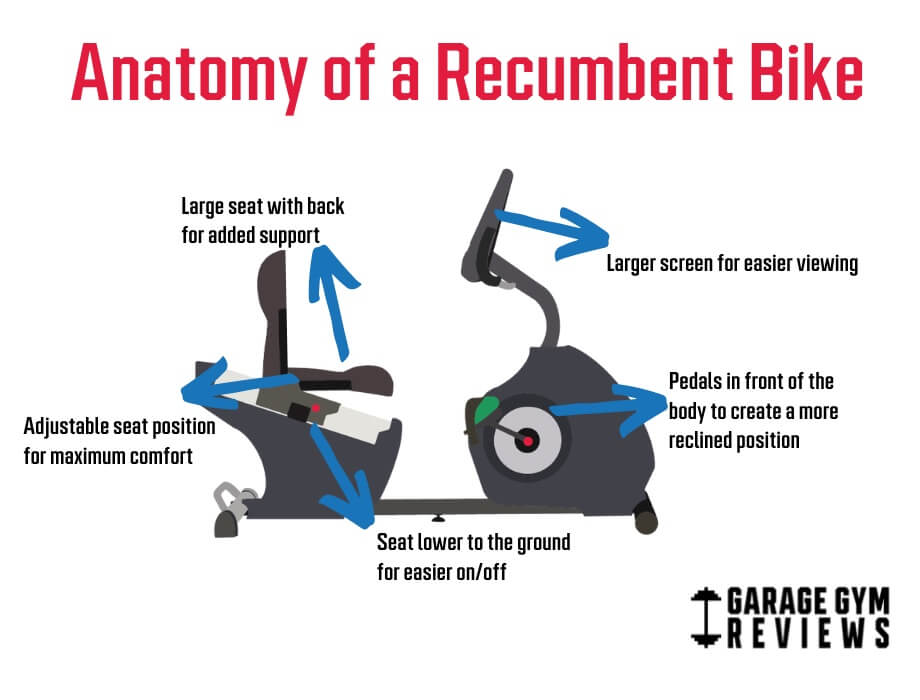
Recumbent bikes are a unique type of exercise bike because your body orientation is much different than what you’d experience atop a traditional indoor cycle. Rather than sitting over the pedals and drivetrain, a recumbent bike positions you in a horizontal plane with your pedals out in front of your center of gravity. The seat itself also differs from your typical bike saddle, showcasing a sturdy backrest for improved comfort and ergonomics.

The premise behind this cycling setup is to help take unnecessary stress off your joints and back. This, in turn can create a more comfortable workout setup and can be more accommodating to those dealing with injuries or imbalances. Recumbent bikes are often lower to the ground than other exercise bikes, too, making them more suitable for athletes with mobility concerns.
anatomy of recumbent bike
The common anatomy and design elements of your typical recumbent bike

8 Benefits of Recumbent Bikes

Now that we covered what a recumbent bike is and how it can be useful for folks of any fitness level, let’s go over how this top cardio machine can benefit you.

Low-Impact Exercise

Being in a more reclined position rather than upright orientation can put less strain on your lower joints like the hips and knees. According to studies1 in the Journal of Rheumatology, recumbent biking can reduce joint pain and stiffness while increasing muscle strength. This allows for a heart-pumping workout without the pain.

“Due to the reclined position, the recumbent bike will likely require less range from your hips and knees, and therefore be slightly easier on your joints,” says Doctor of Physical Therapy Michael Masi. “This may be the better option when working around swelling in the knee. Furthermore, you can adjust the seat setting to increase the distance from the pedals, which will also decrease the range of motion required at the knees.”

Easy for Beginners

The hands-free design without the complexity of working your upper body at the same time (like you’ll find on an air bike) makes recumbent bikes stand out from the rest. In fact, recumbent bikes are so easy to use that some models even come with screens equipped to play television while you ride. The ease of use, as well as not being too high-intensity, is what makes this bike perfect for easing into exercise.
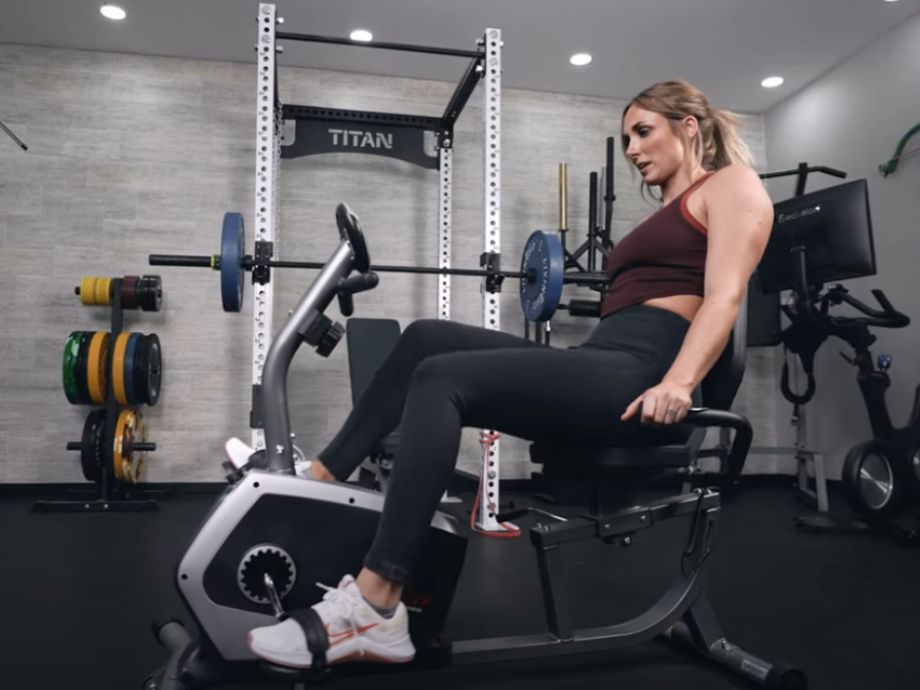
A person is shown riding a Sunny Health and Fitness Essential Recumbent Exercise Bike.
GGR Everything lead reviewer Lindsay Scheele using the Sunny Health and Fitness Essential Recumbent Bike

Comfortable Workout

The low bike seat design means less balance is required when getting on and off the bike, further building confidence for any novice biker. Another recumbent bike benefit stems from the fact that most profiles feature a step-through design; there’s no need to hoist your leg over the frame in order to hop in the saddle for your next workout.

Additionally, the seat is wider than the more standardized saddle of the best exercise bikes, providing a more comfortable experience for the user, overall. The adjustable pedals can also make for a custom ride; on may models, users can adjust the pedals to their preferred level of leg extension. 

Accommodates People With Back Injuries

“A recumbent bike takes significant strain off the back and hips when compared to your traditional indoor cycling bike,” adds Dr. Masi. This lessened strain can be attributed to a more relaxed core and upper body during workouts given the reclined seating orientation. As such, this can ideal for people with back injuries looking to reap the benefits of indoor cycling with less stress and soreness.

Works Lower-Body Muscles

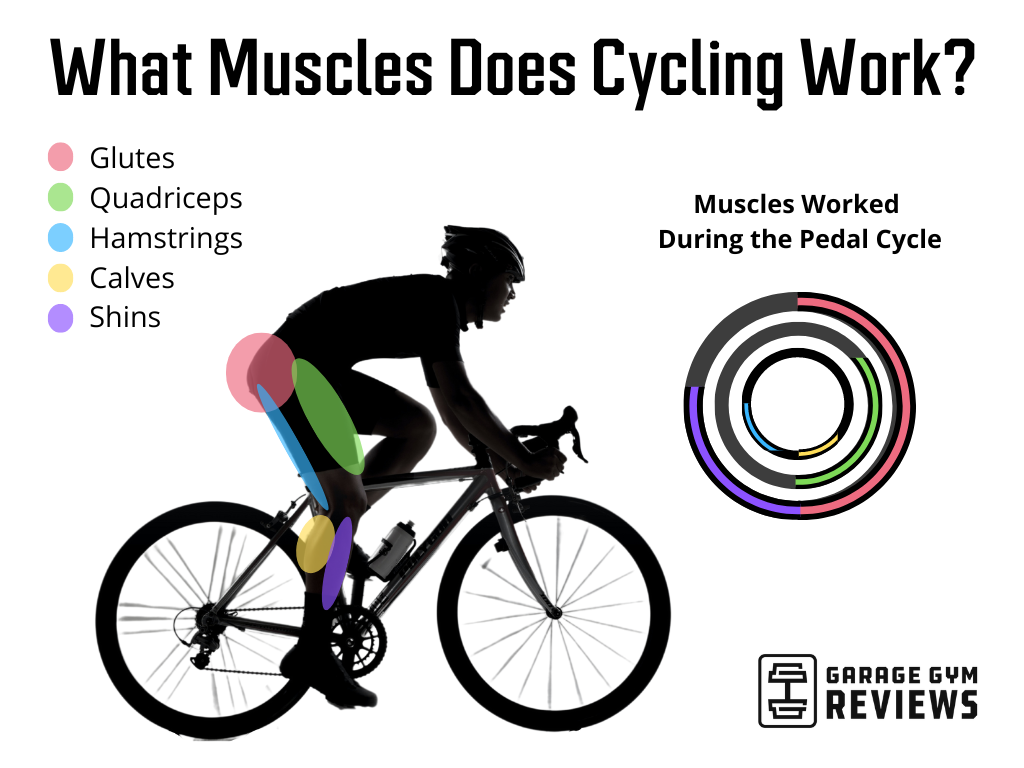
Just like any cycle bike, the recumbent bike works your hamstrings, calves, and glute muscles all while remaining low-impact. Not only do you have the opportunity to build and grow these foundational muscle, but you can also improve muscular endurance by using those muscle groups over an extended period of time. Who says you can’t exercise sitting down?
An illustration showing the muscles worked during a pedaling cycle
Muscles worked during a typical cycling workout

A Safe, Stable Cycling Experience

Besides being great for back and knee injuries, a recumbent bike workout can also be ideal for those with balance issues. Because the bike is lower to the ground, there is no need to climb up or awkwardly swing your leg over like on a traditional bike. Recumbent bikes can often feature step-through framing, too, making the process of getting into and out of the seat even more convenient. This simplified process can significantly lower the chance of injury for those prone to falling, making recumbent bikes a safe alternative to other cardio equipment options.

Great for Cardiac Rehabilitation

According to research2, exercise in the recumbent position puts less strain on your cardiovascular system versus the forward-leaning orientation common in upright cycling. Researchers also note that this more relaxed setup can help athletes return to their baseline heart rates more efficiently post-workout, and recumbent cycling, as a whole, may be beneficial for blood pressure. This means training with a recumbent bike can be great for senior athletes, those with cardiac limitations, and those recovering from a heart attack.
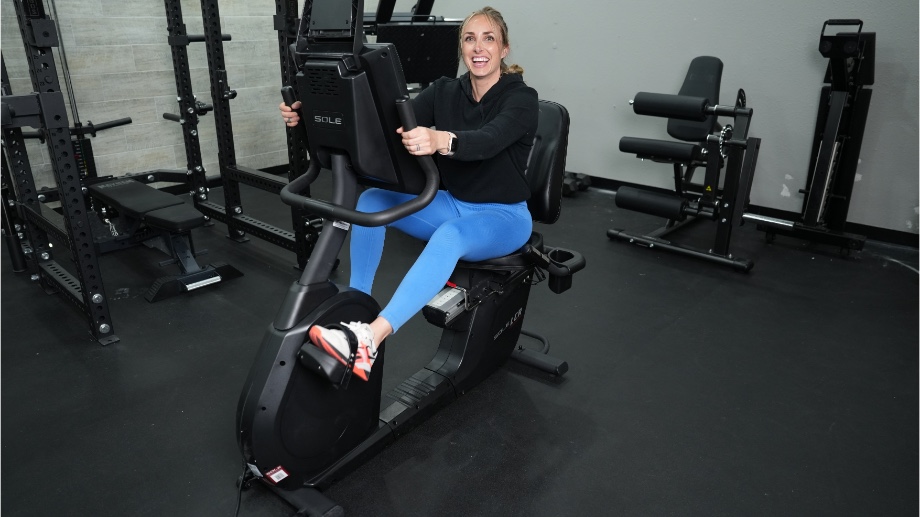
A person smiling while riding the Sole LCR Recumbent Bike.
Our tester enjoying some recumbent bike benefits in the GGR testing center

In another study3, recumbent bicycling was found to reduce the myocardial workload of patients who experienced atrial fibrillation. It also states that it can lower the workload while not disrupting the nervous system that regulates cardiac activity.

May Improve Range of Motion

Range of motion refers to how far you can stretch or move certain muscles or joints. People with injuries or arthritis may have a very limited range of motion compared to the rest of the population. Thankfully, recumbent bikes can be a solution for those interested in training around these perceived limitations.

RELATED: Best Mobility Exercises

A 2018 study4 showcased how recumbent biking helped rehab patients with arthritis in their hips. It was used as part of their treatment to stretch the muscles and increase circulation. Over time, this practice helped them regain range of motion, with some even seeing further improvements over their original limits.

Is a Recumbent Bike Workout Effective?

You can use a recumbent bike for any fitness goal, whether it’s building muscle or burning calories for weight loss. Biking alone can get your heart pumping, and adding resistance works your leg muscles.

“You can certainly work large muscle groups and burn calories on a recumbent bike,” says Michael Masi, DPT. “You can even do HIIT on a recumbent bike, provided your machine has adequate resistance levels.”

Effective workouts can also be interpreted as the workouts that you’re going to stick with. Beginners might gain confidence from using exercise equipment like the recumbent bike, resulting in a maintained workout schedule for continued progress and growth.
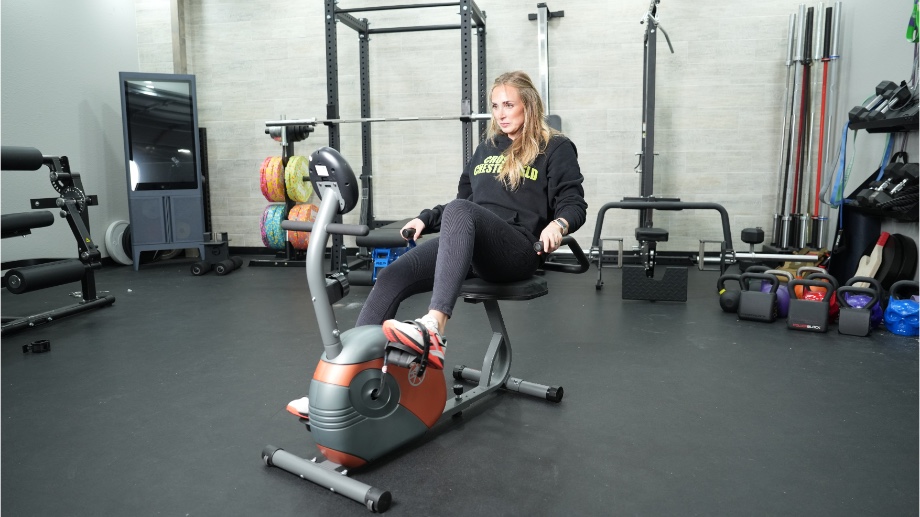
Our tester taking on another recumbent bike workout in the GGR central testing center

Disadvantages of Recumbent Bikes

Recumbent bikes can be a fantastic low-impact cardio option, but the same design features that make them comfortable and joint-friendly also result in a few notable trade-offs. If you’re on the fence about whether one fits with your goals, consider these common drawbacks:

Limited Upper Body Engagement

As a primarily leg-driven cardio tool, a recumbent bike doesn’t recruit your upper back, arms, or core as effectively as a rowing machine or elliptical. If you’re looking for a full-body workout, this is not the ideal choice. You’ll need to pair recumbent cycling with dedicated strength training sessions to stimulate muscle groups that don’t get much work during seated cycling.

Less Weight-Bearing Stimulus

With the seat supporting your bodyweight, recumbent cycling is a non-weight-bearing exercise that provides less skeletal loading than walking, running, or jumping. Weight-bearing activities—especially resistance training—are widely recommended for supporting bone health5 because loading helps stimulate the bone-building process. So, if increasing bone density is a priority, you’ll need to pair recumbent cycling with strength training or other weight-bearing forms of exercise.
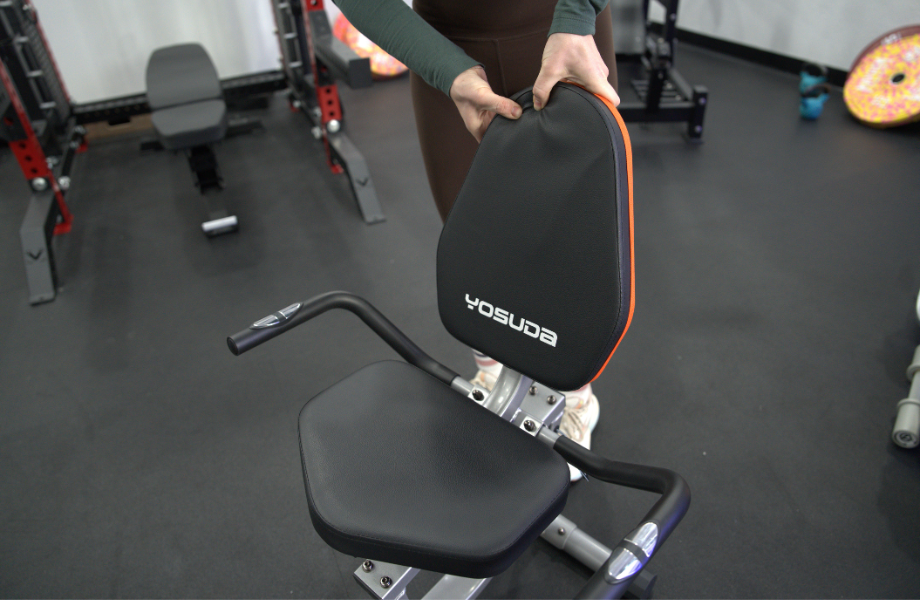
The YOSUDA Recumbent Exercise Bike's padded seat and backrest
A product tester assesses the cushioned backrest on the YOSUDA Recumbent Exercise Bike

Can Feel Repetitive

The smooth-and-steady approach may be great for low-impact conditioning, but anyone who’s spun their wheels for long cycling sessions can admit that recumbent biking can feel a bit monotonous. According to a 2022 study6 in Frontiers in Psychology, exercise enjoyment was positively associated with three key outcomes: exercise habit, intention to continue, and exercise frequency.

People who enjoy their workouts also reported stronger habit strength, greater intention to keep going, and working out more frequently. If you tend to get bored easily, you’ll need to get creative with your programming (we recommend employing one of the best cycling apps for intra-workout engagement) to avoid burning out from biking.

Larger Footprint

Recumbent bikes typically take up more floor space than upright bikes because of their extended frames. This matters if you have a small home gym or live in an apartment where real estate is precious. If you don’t have much room to begin with, you may get more bang for your “spatial” buck by investing in a more versatile piece of equipment than a recumbent bike, such as a functional trainer or all-in-one home gym.

RELATED: Best Compact Exercise Equipment

Who Should (and Shouldn’t) Use a Recumbent Bike

There are some cases where a recumbent bike is the ideal option. On the other hand, there are some situations where you’d be wise to go in a different direction. Here’s a high-level overview of who should (and shouldn’t) choose this low-impact cardio machine.

Who Should Use a Recumbent Bike

  • People with low-back issues: The backrest provides support, often reducing strain when compared to upright bikes.
  • Those with knee or hip irritation: The reclined position can feel gentler on your knees, hips, and other joints.
  • Beginners: Stable seating and a quick learning curve make recumbent cycling an easy pick for someone who’s just starting their fitness journey.
  • Older adults or anyone prioritizing stability: Recumbent bikes present a lower fall risk thanks to an easier mounting and dismounting process than upright bikes or an elliptical.
  • Rehab-focused users: Great for low-risk, steady-state work post-injury.

RELATED: Best Low-Impact Exercises for Post-Injury Training
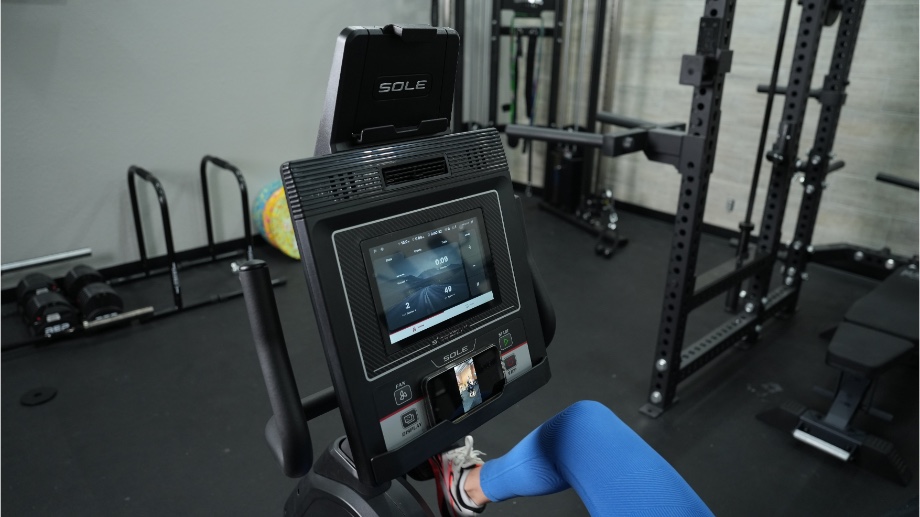
A good look at the screen on a Sole LCR Recumbent Bike.
A product tester tracks her workout on the Sole LCR Recumbent Bike

Who Shouldn’t Use a Recumbent Bike

  • People training for outdoor cycling performance: Serious cyclists should eschew the recumbent bike since the reclined position changes the pedaling mechanics (and muscle recruitment), creating an action that stray from the demands of riding a traditional bike outdoors.
  • Those who value efficiency: Many people can push higher power on an upright or spin bike, resulting in more calories burned in less time.
  • Users with limited hip flexion in the seated position: The seated hip angle can be uncomfortable for some, especially if you’re dealing with mobility restrictions.

RELATED: 8 Hip Flexor Stretches

Recumbent Bike Benefits: Final Thoughts

While maybe not the trendiest choice in bikes, recumbent exercise bikes have many advantages. You can get an effective low-impact workout, rehab injured muscles, improve your range of motion, gain confidence in working out, and secure a safe exercise option all from the comforts of a recumbent bike seat. While there are trade-offs in terms of potential workout intensity and upper body engagement, the good still outweighs the bad, in our humble opinion.

Recumbent bikes are so much more than just something in a physical therapist’s office. The next time you are at the gym choosing your cardio workout, hop on one and take it for a spin to see for yourself.

Recumbent Bike Benefits FAQs

Does a recumbent bike burn belly fat?

There is no way to do spot-fat reduction, but exercise with a recumbent bike can burn calories and support weight management goals. So, while recumbent bike training can burn fat, there’s no way to specifically target your stomach area for weight loss.

What are the disadvantages of a recumbent bike?

Recumbent bikes are typically longer machines than your average exercise bike, which can be detrimental to those training in smaller spaces. Additionally, those interested in high-intensity cycling may be left underwhelmed by the moderate resistance levels often found on these machines. For HIIT cycling circuits, we’d suggest looking at a spin or studio-style exercise bike.

Is a recumbent bike as good as walking?

Yes! With all the benefits of walking but being easier on the joints, you can argue that recumbent bikes could be better than walking. It all depends on your pace for both activities.

How long should I ride a recumbent bike?

The American College for Sports Medicine recommends doing 30 minutes of moderate cardio exercise five days a week. Taking a 30-minute spin on the bike during which you elevate your heart rate can be a great place to start.

References

  1. Alkatan, M., Baker, J. R., Machin, D. R., Park, W., Akkari, A. S., & Tanaka, H. (2016). Improved function and reduced pain after swimming and cycling training in patients with osteoarthritis. The Journal of Rheumatology, 43(3), 666–672. https://doi.org/10.3899/jrheum.151110
  2. Albarrati, A. (2017). Effect of body posture on cardiovascular performance and recovery during cycling exercise. Physikalische Medizin, Rehabilitationsmedizin, Kurortmedizin, 27(1), 53–57. https://doi.org/10.1055/s-0042-122145
  3. Kim, S. D., Lee, S. H., Lee, H. H., & Jeong, I. G. (2019). Effects of Recumbent Bicycle Exercise on Cardiac Autonomic Responses and Hemodynamics Variables in Patients with Atrial Fibrillation. Korean Journal of Health Promotion, 19(4), 248–254.
  4. Maxim, A., Apostu, D., & Cosma, D. (2018). A literature review: Physical therapy of the hip after septic arthritis. Balneo Research Journal, 9(3), 299–302. https://doi.org/10.12680/balneo.2018.200
  5. Hong, A. R., & Kim, S. W. (2018). Effects of Resistance Exercise on Bone Health. Endocrinology and metabolism (Seoul, Korea), 33(4), 435–444. https://doi.org/10.3803/EnM.2018.33.4.435
  6. Teixeira, D. S., Rodrigues, F., Cid, L., & Monteiro, D. (2022). Enjoyment as a Predictor of Exercise Habit, Intention to Continue Exercising, and Exercise Frequency: The Intensity Traits Discrepancy Moderation Role. Frontiers in psychology, 13, 780059. https://doi.org/10.3389/fpsyg.2022.780059

Kate Meier, NASM-CPT, USAW-L1, CF-L1

Kate Meier, NASM-CPT, USAW-L1, CF-L1

Head of Content, Gym Owner, Personal Trainer, Dog Enthusiast

About Author

Kate has nearly two decades of experience working in both the fitness and content industries. Personally, Kate enjoys competing in weightlifting and doing burpees.

On the content side, Kate’s background is in newspaper journalism. She branched into public relations for the American Red Cross for about five years and then moving into content marketing. Today, her work at Garage Gym Reviews blends her excitement for fitness and love of writing. If she isn’t reviewing fitness equipment, you can find her working out or spending time with her two children.

Education & Credentials

  • NASM Certified Personal Trainer
  • USA Weightlifting Level 1
  • CrossFit Level 1

Further Reading

Examining the Relationship Between Exercise and Stress

Examining the Relationship Between Exercise and Stress

Curious about the relationship between exercise and stress? Here’s what the current research from our fitness experts has to say.
Read More
CLMBR Review 2025: Will this Unique Cardio Machine Be The Next Big Thing?

CLMBR Review 2025: Will this Unique Cardio Machine Be The Next Big Thing?

Intrigued by all things technology-related? Check out our CLMBR review, where we’ll dive deeper into the functionality of this cardio machine.
Read More
Kettlebell Around the World: Revolutionize Your Core Workouts.

Kettlebell Around the World: Revolutionize Your Core Workouts.

Looking to revolutionize your ab workouts? A certified strength and conditioning specialist shows you how to give the kettlebell around the world a spin!
Read More
Body Rider Fan Elliptical Trainer Review (2025): Easy, Breezy, and Tiny

Body Rider Fan Elliptical Trainer Review (2025): Easy, Breezy, and Tiny

In this Body Rider Fan Elliptical Trainer review, I’ll tell you why this budget-friendly machine might be a good addition to your home gym––or not.
Read More

On This Page

What Is a Recumbent Bike?
8 Benefits of Recumbent Bikes
Is a Recumbent Bike Workout Effective?
Disadvantages of Recumbent Bikes
Who Should (and Shouldn’t) Use a Recumbent Bike
Recumbent Bike Benefits: Final Thoughts
Recumbent Bike Benefits FAQs
References

Connect With Your Community

  • Facebook
  • Instagram
  • YouTube
  • https://www.google.com

Get the Latest Reviews & Updates

  • About
  • Careers
  • Privacy Policy
  • Terms of Service
  • Expert Panel
  • Affiliate Disclosure
  • Contact
  • Do Not Sell My Info
Reviews
  • Yosuda Air Magnetic Rowing Machine Pro Review (2025): Dual Resistance Without the Frills

  • Sun Home Equinox Review (2025): “Literally Zero Complaints,” Per Our Tester

  • SaunaBox Solara Review (2025): A Solo Sauna Sanctuary with Red Light Therapy

  • Nike Grind Bumper Plates Review (2025): Are These Plates Worthy of a Spot in Your Garage Gym?

  • MERACH T12 Foldable Walking Treadmill Review (2025): A Compact and Affordable Option

Equipment
  • The Best Squat Racks for 2025: Our Top Picks After 500 Leg Days

  • The Best Creatine Supplement in 2025, According to Trainers and Dietitians

  • The Best Ellipticals of 2025, Tested and Reviewed by Personal Trainers

  • Best Water Rowing Machine: 5 Options To Make Your Workout Go Swimmingly

  • The Best Exercise Bikes of 2025: Cycle Smarter With Our Expert-Approved Picks

Guides
  • Infrared Saunas Buyer’s Guide: Everything You Need to Know to Break a Sweat With Confidence

  • The Ultimate Sauna Guide: Expert Tips on Benefits, How to Use, and More

  • What Foods Have Probiotics? Colon-Ize Your Plate with Help From a Dietitian

  • Home Gym Con 2025 Recap: The New Equipment We’re Most Excited About

  • Tariffs Affecting Gym Equipment Prices (2025)

DIY
  • Your Expert Guide to Making Budget-Friendly DIY Ankle Weights  

  • Homemade Protein Powder: The Right Whey to Do Home-Cooked Protein

  • Building a DIY Rowing Machine: How to, Why, and Should You?

  • Try These DIY Cold Plunge Ideas To Jump-Start Your Recovery 

  • DIY Mass Gainer: You Make the Shake, and Your Body Makes the Muscle

The Most Trusted Voice in Fitness

© Garage Gym Reviews 2023 | All Rights Reserved.

GGR

  • About
  • Careers
  • Privacy Policy
  • Terms of Service
  • Expert Panel
  • Affiliate Disclosure
  • Contact
  • Do Not Sell My Info

The Most Trusted Voice in Fitness

© Garage Gym Reviews 2025 | All Rights Reserved.

Reviews
  • Yosuda Air Magnetic Rowing Machine Pro Review (2025): Dual Resistance Without the Frills
  • Sun Home Equinox Review (2025): “Literally Zero Complaints,” Per Our Tester
  • SaunaBox Solara Review (2025): A Solo Sauna Sanctuary with Red Light Therapy
  • Nike Grind Bumper Plates Review (2025): Are These Plates Worthy of a Spot in Your Garage Gym?
  • MERACH T12 Foldable Walking Treadmill Review (2025): A Compact and Affordable Option
Equipment
  • The Best Squat Racks for 2025: Our Top Picks After 500 Leg Days
  • The Best Creatine Supplement in 2025, According to Trainers and Dietitians
  • The Best Ellipticals of 2025, Tested and Reviewed by Personal Trainers
  • Best Water Rowing Machine: 5 Options To Make Your Workout Go Swimmingly
  • The Best Exercise Bikes of 2025: Cycle Smarter With Our Expert-Approved Picks
Guides
  • Infrared Saunas Buyer’s Guide: Everything You Need to Know to Break a Sweat With Confidence
  • The Ultimate Sauna Guide: Expert Tips on Benefits, How to Use, and More
  • What Foods Have Probiotics? Colon-Ize Your Plate with Help From a Dietitian
  • Home Gym Con 2025 Recap: The New Equipment We’re Most Excited About
  • Tariffs Affecting Gym Equipment Prices (2025)
DIY
  • Your Expert Guide to Making Budget-Friendly DIY Ankle Weights  
  • Homemade Protein Powder: The Right Whey to Do Home-Cooked Protein
  • Building a DIY Rowing Machine: How to, Why, and Should You?
  • Try These DIY Cold Plunge Ideas To Jump-Start Your Recovery 
  • DIY Mass Gainer: You Make the Shake, and Your Body Makes the Muscle