





Air bikes aren’t like most exercise bikes. Rather than the studio-style, music-backed workouts we’ve come to associate with indoor cycling, air bikes can be, shall we say, a bit more high-intensity. After all, the best air bikes have been commonplace in the CrossFit community for years given their ability to truly challenge your cardiovascular capabilities.
If you’re in the market for a new air bike for your home training setup, we have you covered. Our team of certified personal trainers, CrossFit Level-1 instructors, strength and conditioning specialists, and die-hard fitness enthusiasts has researched over 30 machines and personally tested 20 air bikes using our exercise bike testing methodology—all to curate this guide to the best air bikes on the market today.
Each product reviewer looks at every aspect of the bike profile, and while some of our comments may seem nitpicky, it just means we’re doing everything possible to provide you with the most thorough review of some of the best cardio machines. In 2025, we helped more than 34,000 people find their ideal piece of cardio equipment, and we’re confident we can put you in the right seat, too.
GGR Gold Pick — Best Air Bike
We selected the Rogue Echo Bike as the best in this category because of its rugged build, reliable performance, and excellent adjustability. Earning an impressive overall score of 4 out of 5, this popular air bike can be a staple in your cardio routine for years to come.
Best Air Bikes
- Best Air Bike Overall – Rogue Echo Bike
- Best Value Air Bike – Titan Fan Bike
- Best Value Air Bike Runner-Up – Bells of Steel Blitz Air Bike 2.0
- Best Budget Air Bike – AssaultBike Classic
- Best Air Bike for Beginners – Fringe Sport Raptor Air Bike
- Best Air Bike Without Arms – Concept2 BikeErg
Current Top Deals
- Rogue Echo Bike – Free shipping on select products
- Bells of Steel Blitz Air Bike 2.0 – Save 5% using the Home Gym Builder
How We Selected the Best Air Bikes
We check each bike’s dimensions, weight, and any built-in transport features like wheels or handles. Compact, easy-to-move models earn higher ratings, while larger, heavier bikes are rated lower. To score a 3 out of 5, the bike should be movable by one or two people without much effort.
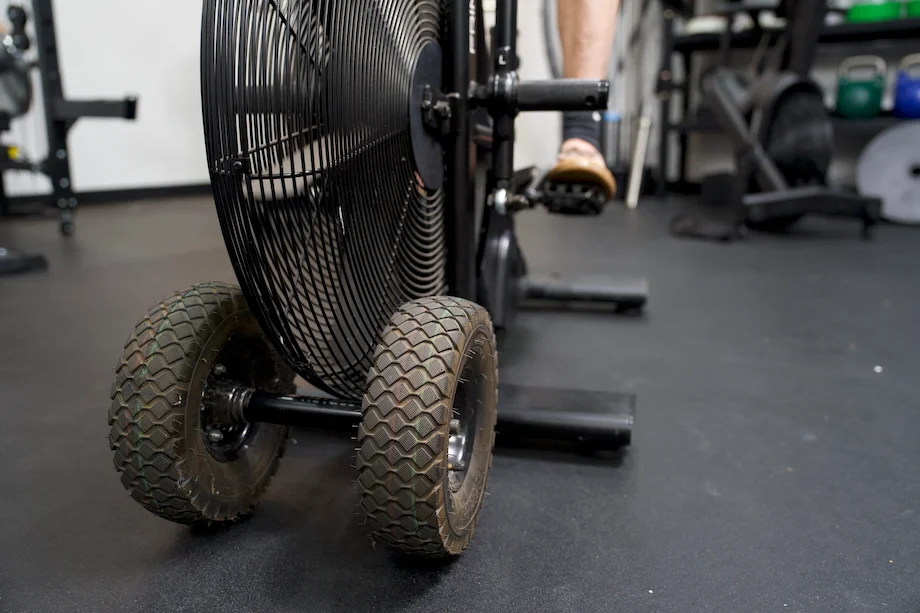
We examine frame quality, welds, resistance systems, and hardware across repeated rides. Bikes that wobble, creak, or wear quickly lose points. To reach a 3-out-of-5 rating, the bike should be able to support at least 275 pounds and feel stable when in use, even at high speeds.
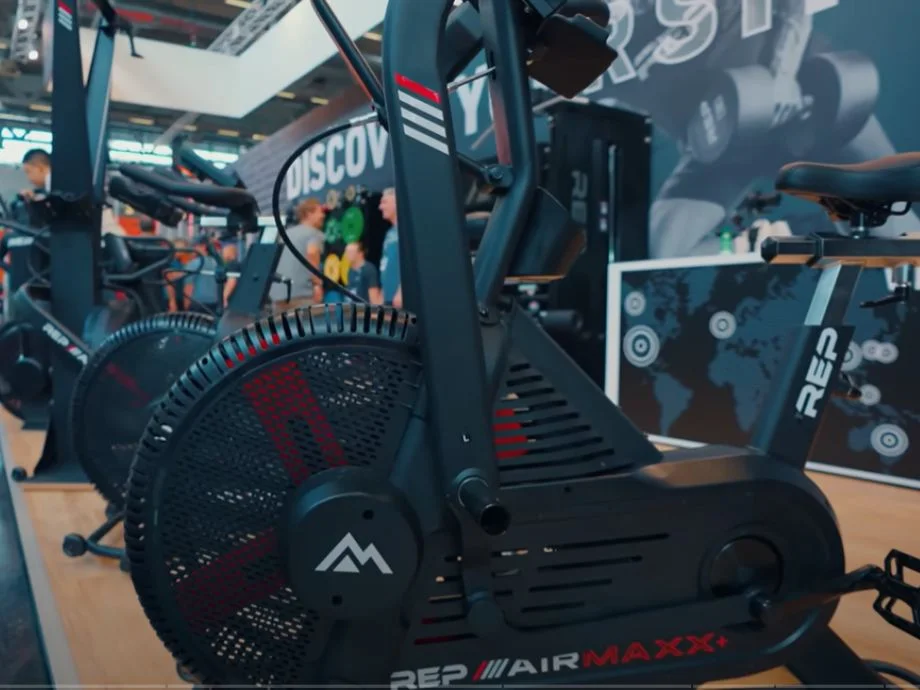
We review seat and handlebar adjustments, resistance range, and any software personalization such as user profiles or custom workouts. A bike earns at least 3 points here when it offers multiple adjustment options for both the seat and handlebars.
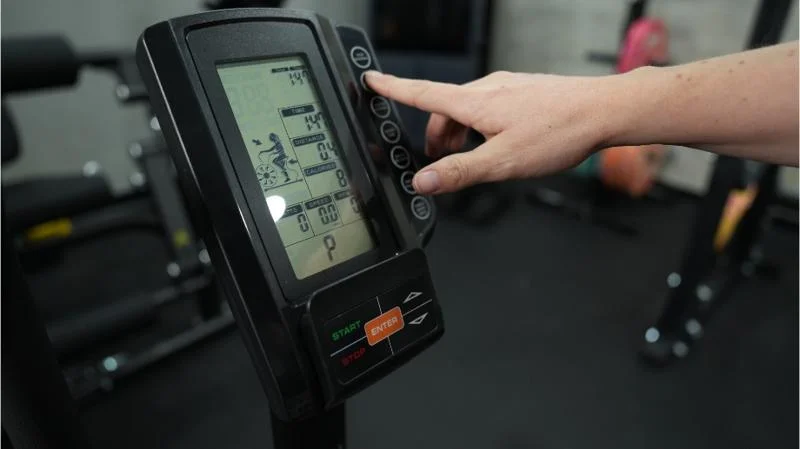
Our team of certified personal trainers, strength and conditioning specialists, and competitive athletes has tested 20 air bikes (and counting) using our multi-point exercise bike testing methodology. For this somewhat niche category, we assign scores on a 1-5 scale across several key categories, including ergonomics, customizations, conveniences, and more. This allows us to paint a complete picture of each profile you’ll find on our panel.
While our editorial team brings a ton of experience to the table, we also consult with industry experts for further insight that can help inform your decision. For this guide, we spoke with Chris Mohr, PhD, RD, about the benefits of aerobic exercise and high-intensity cardio training; both, of which, you can do on an air bike.
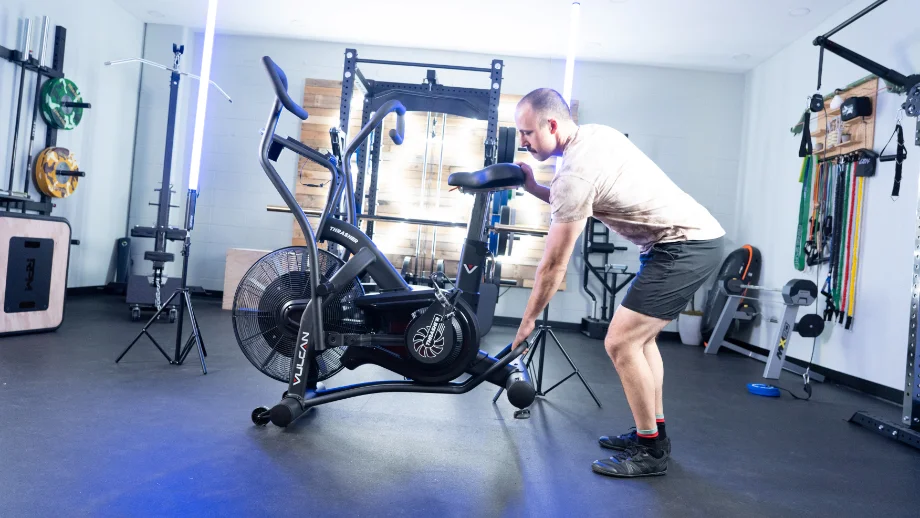
Latest Updates
In May 2026, we reviewed our list of the best air bikes to ensure we’re still featuring the top models on the market. We added more information on our testing process, as well as updated the current pricing and deals on these sets of wheels.
Best Air Bike Overall: Rogue Echo Bike
Updated by: Amanda Capritto, CPT, CES, CF-L1, CNC, CSNC
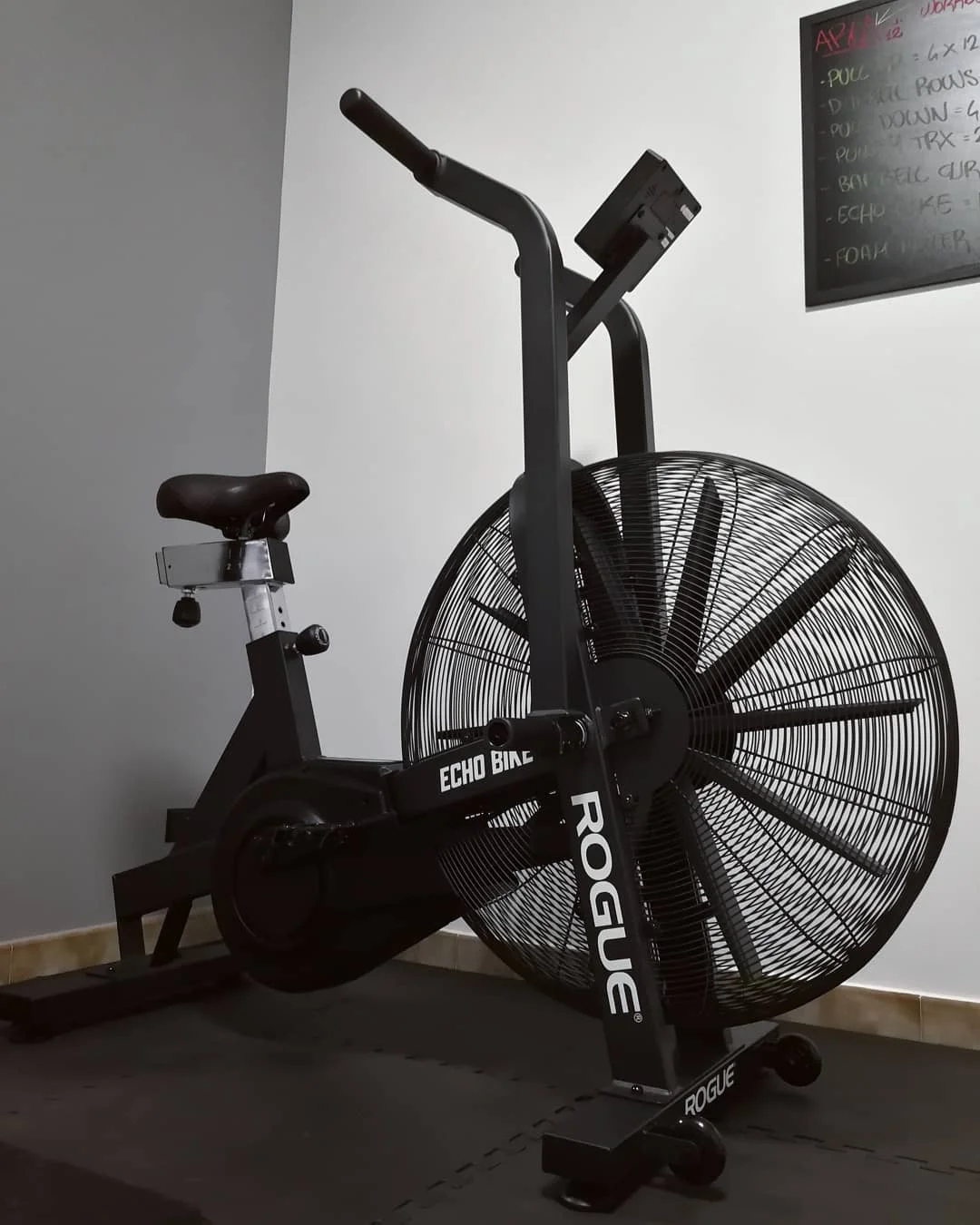
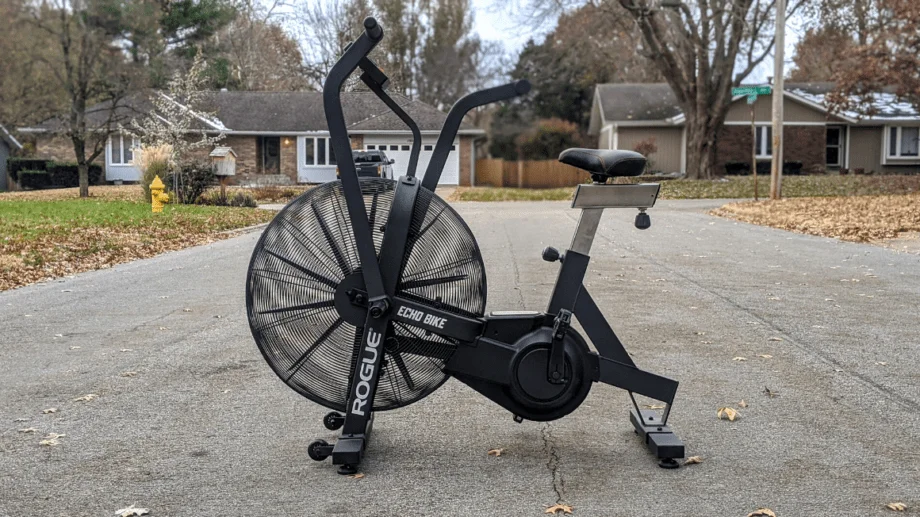
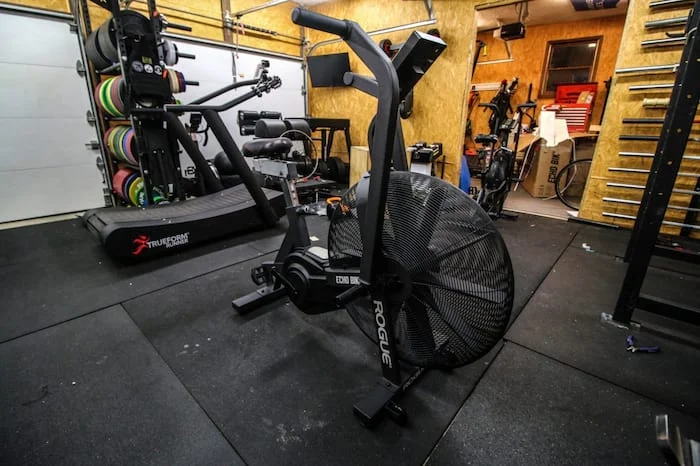
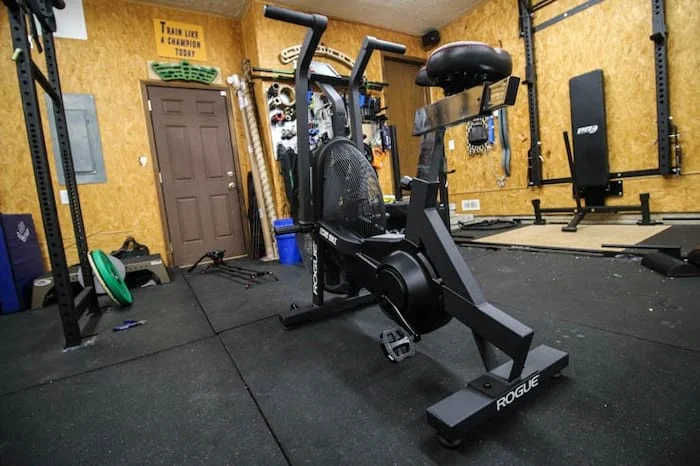
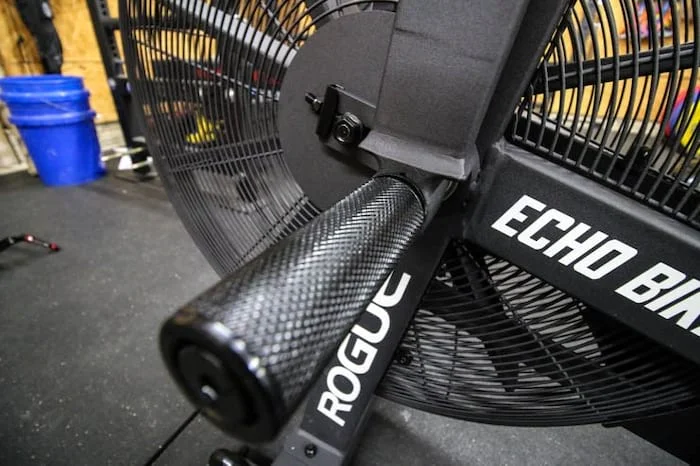
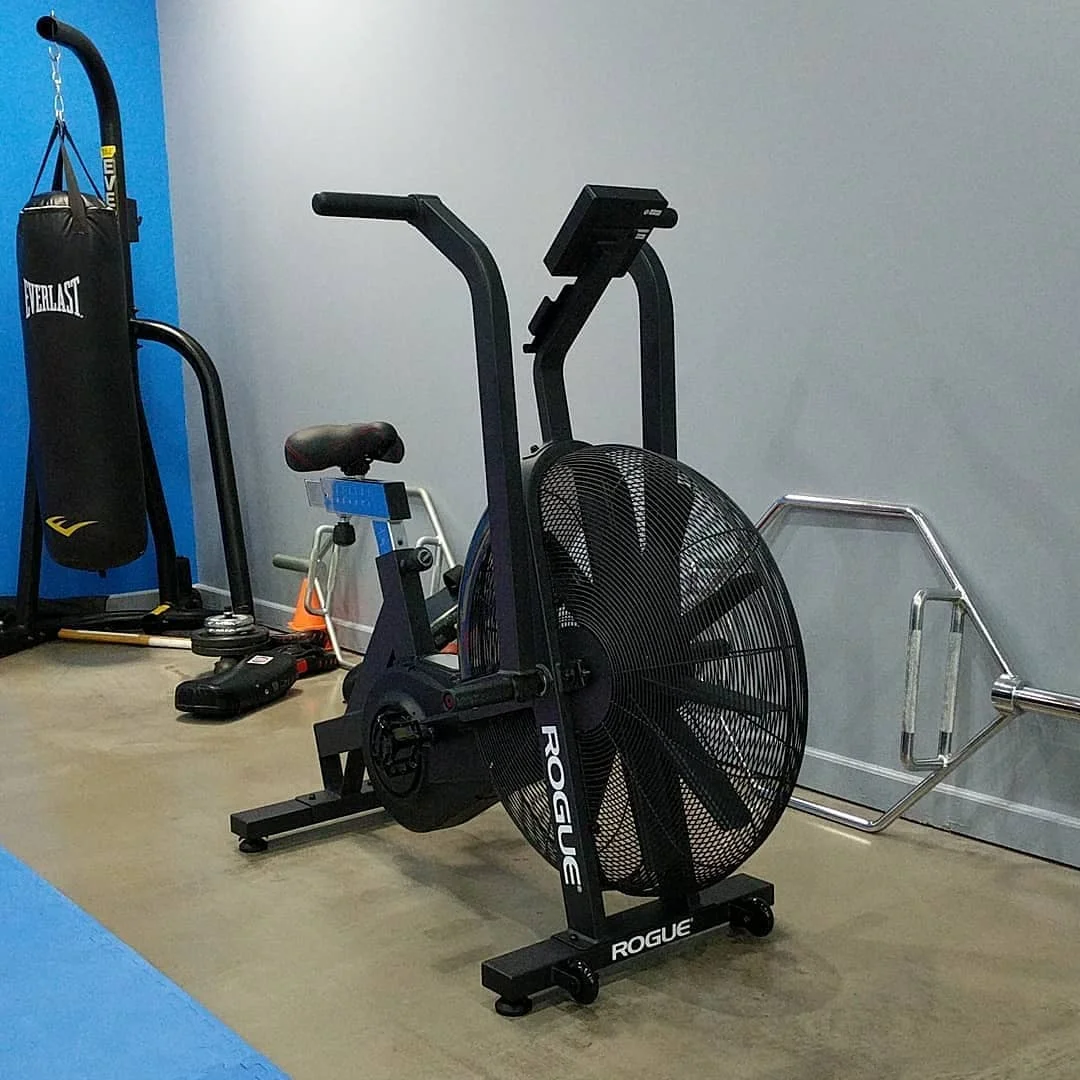









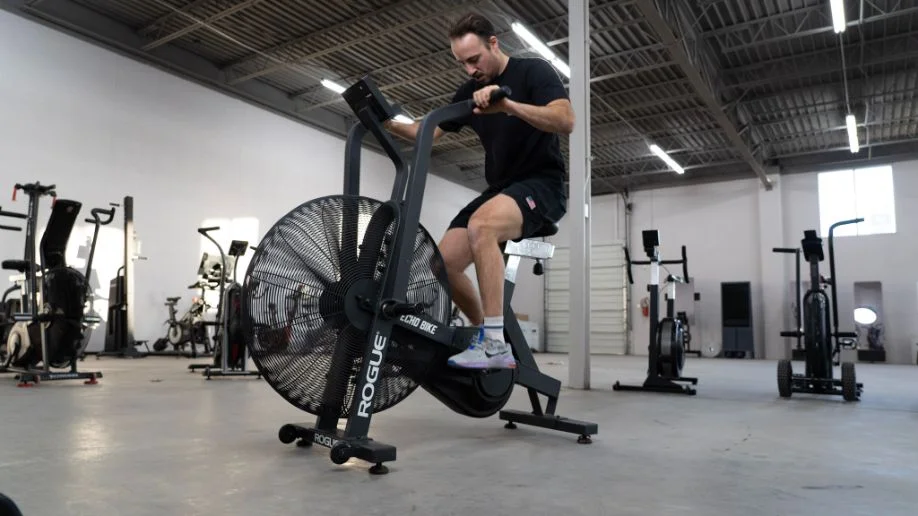
We’ve tested just about every air bike on the market, and the Echo combines many of our favorite features into one. The belt drive is much more durable and requires less maintenance than a chain drive. The size and weight make it extremely stable, and the price is much less than we’d expect for such a quality piece of equipment.
What our tester says:
“Call it beginner’s luck, but Rogue Fitness did a great job with their first-ever conditioning machine. This is a piece of equipment that will give people of all fitness levels a hardcore full-body workout, look great in their home gym, and last for many years.”
The Rogue Echo Bike is by far one of the best pieces of home gym equipment Rogue Fitness has ever released, GGR founder Coop Mitchell tells me. “Not only is this one of the most popular air bikes among home gym owners, but it’s also the main bike you’re likely to see in your local CrossFit affiliate,” he says. “Its features make this bike worthy of its title as the best overall air bike.”
Ergonomics: 4.5/5
Dynamic Programming: 3.5/5
Durability: 5/5
Why We Like the Rogue Echo Bike
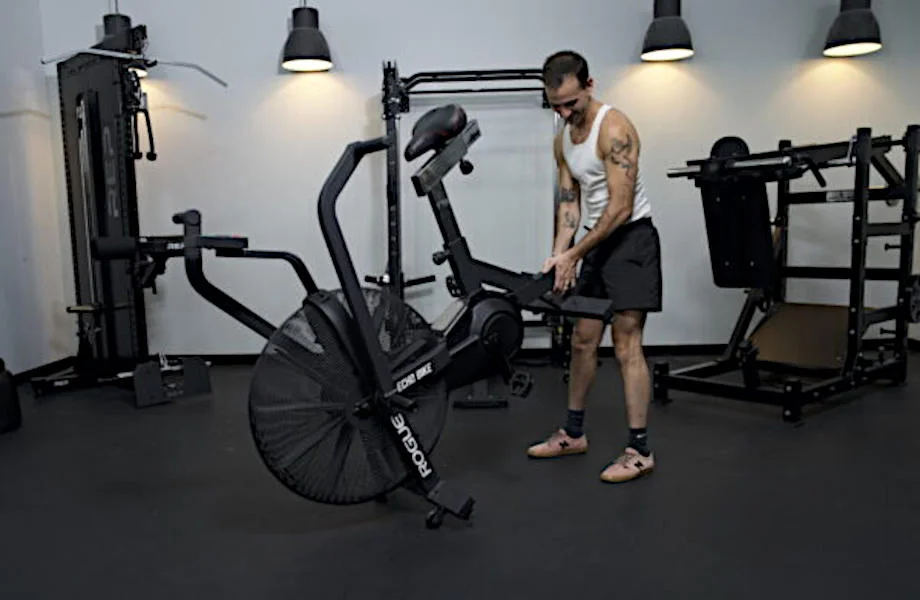
With so many air bikes available today, it’s clear as to what makes this Rogue offering the winner (in our eyes): impressive stability, less maintenance, quick responsiveness via the belt-driven drivetrain, an easy-to-use monitor, and multiple adjustment options to dial in the bike for different athlete heights. “The Echo Bike exceeds in all of these areas, and although there are competitors to the throne, there are none that top it,” says Coop.
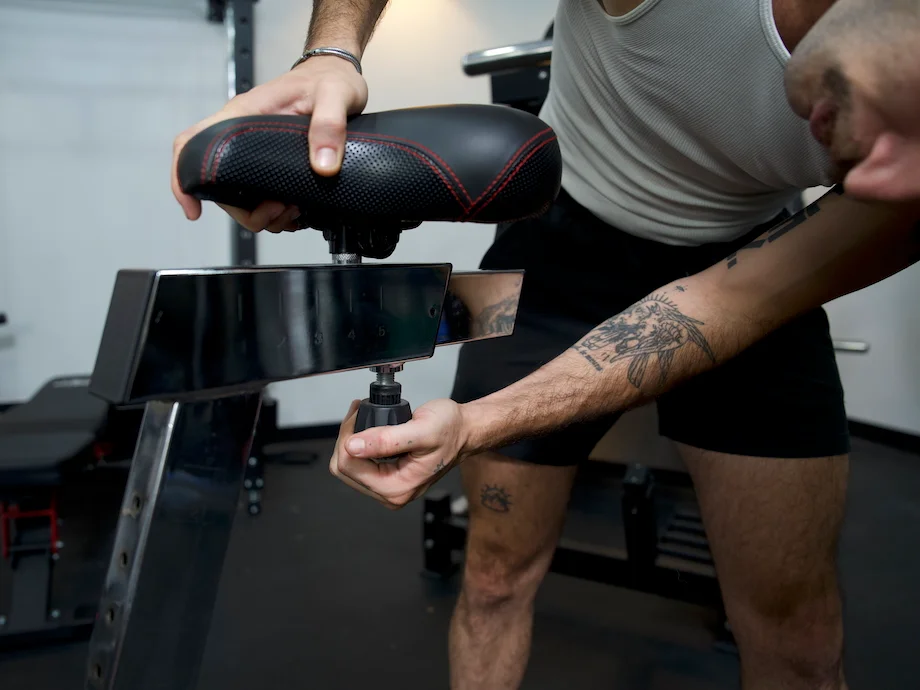
The Echo Bike had quite a bit of hype when it was released in 2017, and to be honest, the ease of use, quality, durability, and other aspects still exceeded all of our expectations. After years of using the Echo Bike, our testers still give it 4 stars or higher for its durability (5 out of 5), adjustability and ergonomics (4.5 out of 5), and value (4.5 out of 5).
“Every part on the Echo Bike is beefy,” Coop says, “From the footpegs that feature knurling for added grip, to the fan blades that are pieces of formed aluminum (compared to the plastic found on most other bikes).”
Rogue Fitness did a great job with this conditioning machine. This is a piece of equipment that will give people of all fitness levels a hardcore full-body workout, look great in their home gym, and last for many years.
Coop Mitchell, GGR founder and home gym expert
What We Didn’t Like About the Rogue Echo Bike
Although it doesn’t feature true dynamic programming—i.e., on-demand fitness classes you can stream through a smart device or monitor—we still gave it a 3.5 out of 5 in the category thanks to its built-in training options. You can hop into preset interval sessions, design your own interval structure, or set workouts based on time and distance goals. That said, because there’s no media shelf, you’d need a separate monitor to follow along to trainer-led sessions.
What you won’t get are creature comforts. There’s no water bottle cage, no phone holder, and no wind guard included, which earned this bike a 2 out of 5 for conveniences. Rogue does sell add-ons for all of these, but each one costs extra, typically between $10 and $30.
If you prefer an air bike that comes stocked with more convenience features right out of the box, the Fringe Sport Raptor Air Bike can be a better fit since you get a wind guard, water bottle holder, and phone holder free with your standard purchase.
Testing Breakdown
The Echo Bike scored highly across key categories like durability and ergonomics, with lower scores for tech capabilities and conveniences.
Vs. The Average
Slightly less expensive than average but with above-average features and durability, the Rogue Echo Bike easily wins our top overall spot.
| Rogue Echo Bike | Average Air Bike | |
| Price | $895 | $942 |
| Footprint | 44.5” L x 23.75” W | 49.6” L x 23” W |
| Weight Capacity | 330 lbs | 335 lbs |
| Seat Adjustments | 11 vertical, 5 horizontal | 9 vertical, 4 horizontal |
| Product Weight | 123 lbs | 108 lbs |
Read our full Rogue Echo Bike review for full details.
Best Value Air Bike: Titan Fan Bike
Updated by: Amanda Capritto, CPT, CES, CF-L1, CNC, CSNC
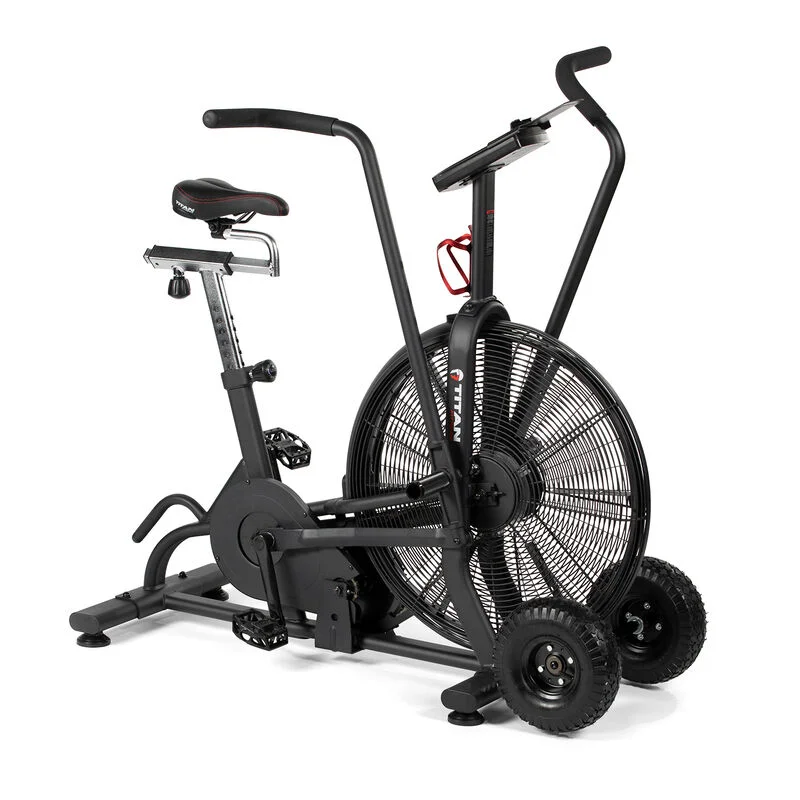








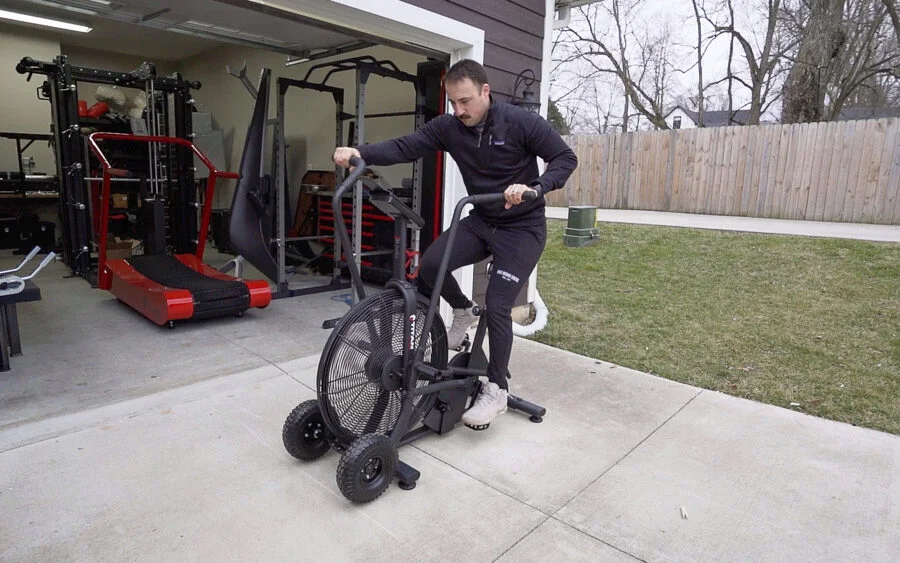
Priced around $900, the Titan Fan Bike is the best value air bike we recommend. “That doesn’t mean it’s the most budget-friendly air bike out there; there are some that are cheaper,” GGR founder and home gym expert Coop Mitchell tells me. “As Titan Fitness does with most of its products, they were able to create an air bike that looks good and is durable,” which is what wins it the “best value” title.
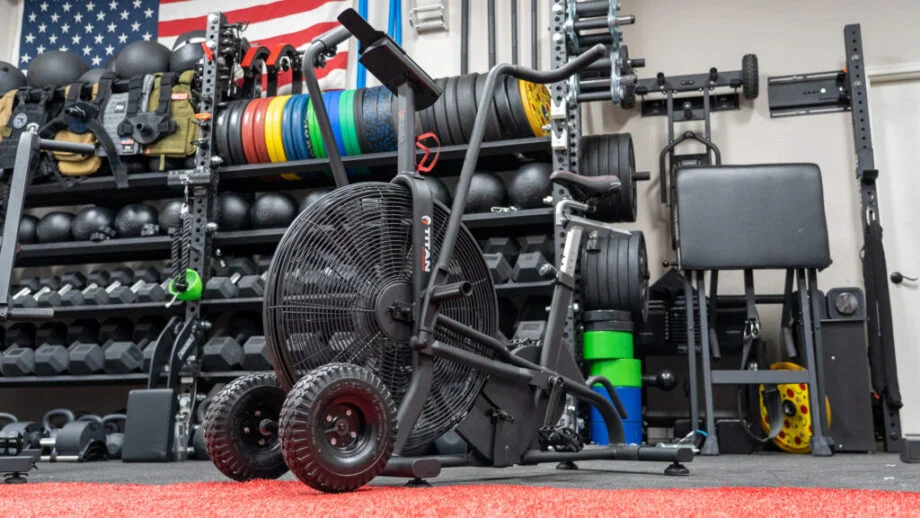
The frame and most of the components are made with heavy-duty steel, so it will remain stable and in good condition no matter how much you use it, according to Coop. Plus, you don’t need to worry about any shipping fees thanks to Titan’s free delivery services. When purchasing heavy cardio equipment, like an air bike, the shipping costs can really begin to weigh down your budget, so finding free shipping is a high-value win.
Value: 5/5
Dynamic Programming: 3/5
Durability: 4.5/5
Why We Like the Titan Fan Bike
When it comes to the best exercise bikes, easy assembly isn’t always the name of the game. The Titan Fan Bike, however, took just half an hour to assemble on our garage gym floor. “The bike comes mostly pre-assembled, which is a pleasant surprise,” Coop says.
He points out, “Extra metal pieces were included in the box to prevent shifting during shipping. While this adds some cost for Titan, it shows they’ve addressed past customer concerns about transit damage.” He gives it a 5 out of 5 for delivery and setup.
We’re also surprised by the amount of included conveniences with this air bike, as well. The Titan Fan Bike comes with a fair amount of extras, including a removable fan guard, a water bottle cage, and cell phone holder. These are conveniences you often have to pay extra for on other popular air bikes, so Titan gets a near-perfect 4.75 out of 5 stars for the category.
If you want a durable, solidly constructed air bike for a reasonable price with great accessories, you’ll want to pick up the Titan Fan Bike for your home gym.
Coop Mitchell, GGR founder and home gym expert
What We Didn’t Like About the Titan Fan Bike
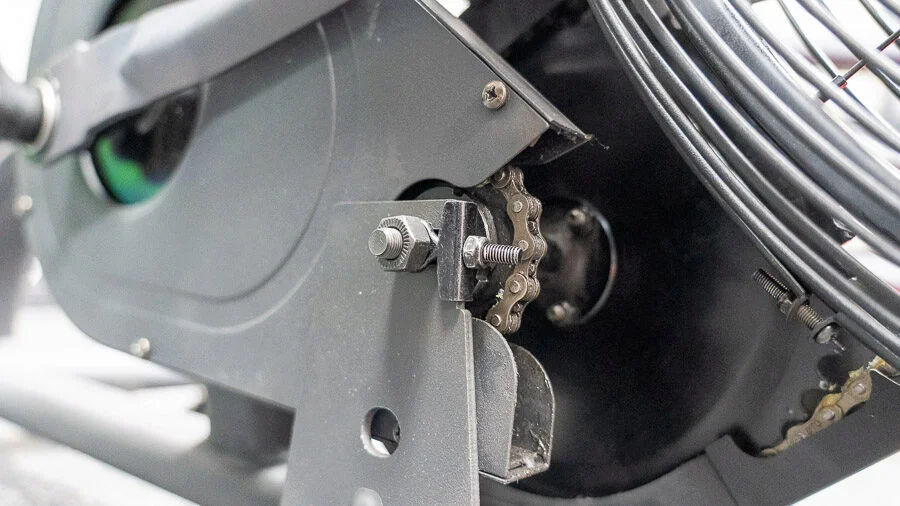
This bike uses a chain-driven system, which requires more maintenance than a belt drive. Chain-based drivetrains also create a lot more noise, which isn’t necessarily appealing given that air bikes are already louder than traditional spin bikes.
The LCD console is also incredibly bare-bones and only measures standard metrics like time and distance tracked. As such, we gave this Titan offering a 2-out-of-5 rating in the tech capabilities category. “If I’m to be frank, the monitor on the Titan Fan Bike is not good. The buttons are too small, and it’s not very intuitive,” Coop notes.
Though this bike is a great value at its $900 price point, if you need something even less expensive, the Assault Fitness AssaultBike Classic is our top budget pick at roughly $799.
Testing Breakdown
Between its beefy build, solid weight capacity, and multiple conveniences, the Titan Fan Bike is a great value. Here’s how it scored according to our testing methodology:
Vs. The Average
The Titan Fan Bike is pretty on par with most industry averages, albeit with a slightly lower weight capacity and price tag.
| Titan Fan Bike | Average Air Bike | |
| Price | $900 | $942 |
| Footprint | 50.25” L x 20.375” W | 49.6” L x 23” W |
| Weight Capacity | 330 lbs | 335 lbs |
| Seat Adjustments | 10 vertical | 9 vertical, 4 horizontal |
| Product Weight | 111 lbs | 108 lbs |
Read our full Titan Fan Bike review for more tester insights.
Best Value Air Bike Runner-Up: Bells of Steel Blitz Air Bike 2.0
Updated by: Amanda Capritto, CPT, CES, CF-L1, CNC, CSNC
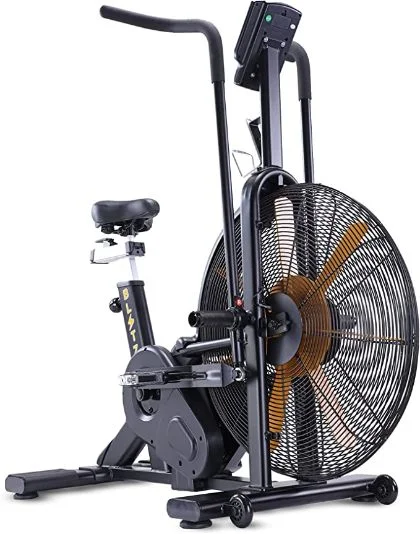



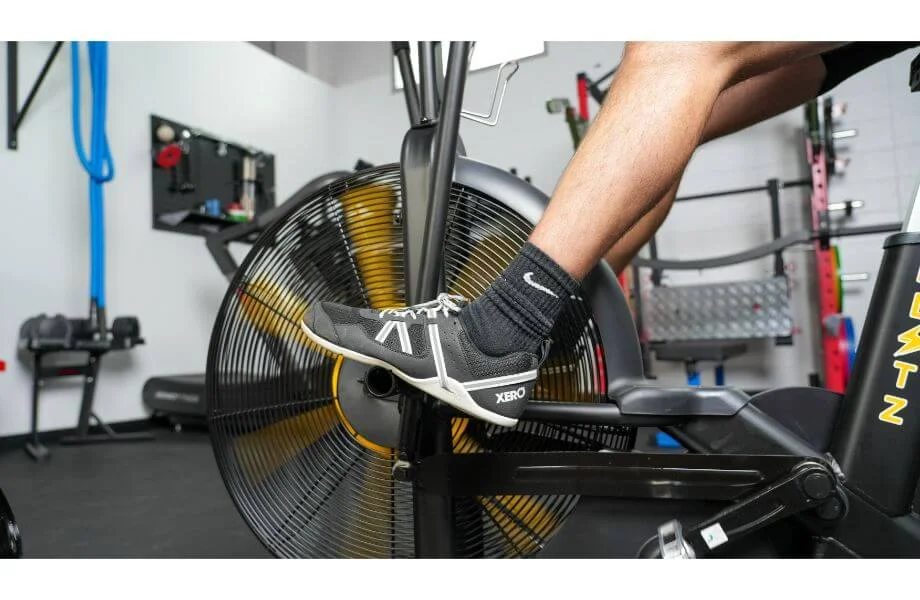
The Bells of Steel Blitz Bike is built like a tank and meant to be pushed hard. It’s an awesome choice for serious athletes looking to get the most out of their cardio sessions at home.
Air bikes aren’t cheap, so it’s important to make sure you’re getting what you want out of your purchase. As GGR founder and home gym expert Coop Mitchell puts it, “I love that for under $1,000, you get a lot of the higher-end features you’d find on a more expensive bike: a belt-drive system, wind guard, knurled foot pegs, and a high weight capacity of 350 pounds.” This earns the Blitz Air Bike 2.0 a 4.5 out of 5 in the value category, solidifying its title as the best runner-up for value.
While the Blitz Bike does carry a higher overall rating in comparison to the Titan Fan Bike—4.2 versus 4.0—we still feel the former is a more high-value option for athletes given its more affordable price tag.
Footprint & Portability: 4/5
Ergonomics: 5/5
Value: 4.5/5
Why We Like the Bells of Steel Blitz Air Bike 2.0
The Blitz Air Bike 2.0 is built almost entirely from steel with only a few rubber and plastic components, earning it a 4.5 out of 5 for durability. This is a major advantage, as Coop notes that steel tends to hold up much better over time compared to bikes that rely heavily on plastic.
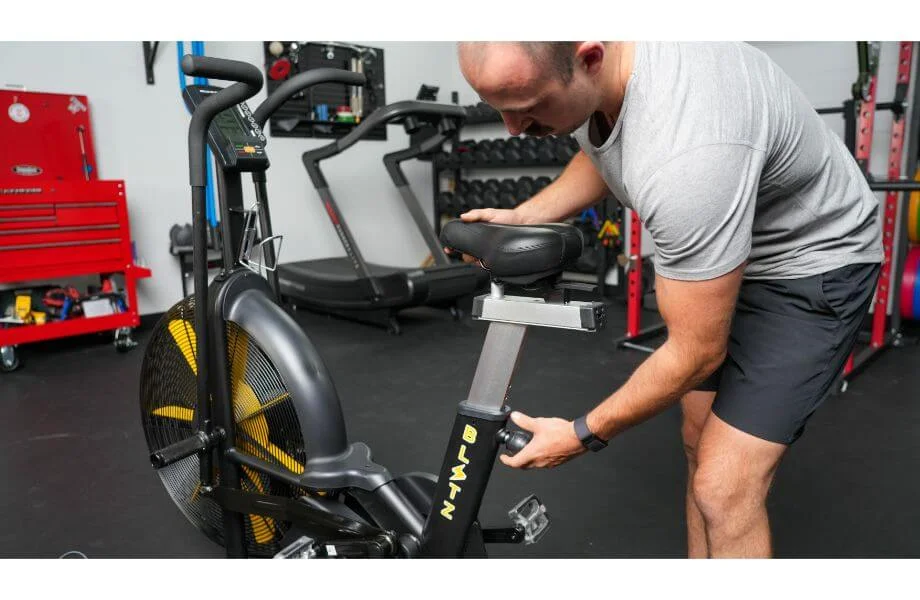
Another area where the Blitz stands out is its adjustability. The bike offers 10 seat height options, making it a solid fit for users of different statures. The seat also slides forward and backward, accommodating both shorter and longer legs comfortably, so it earns a perfect 5 out of 5 for adjustability and ergonomics.
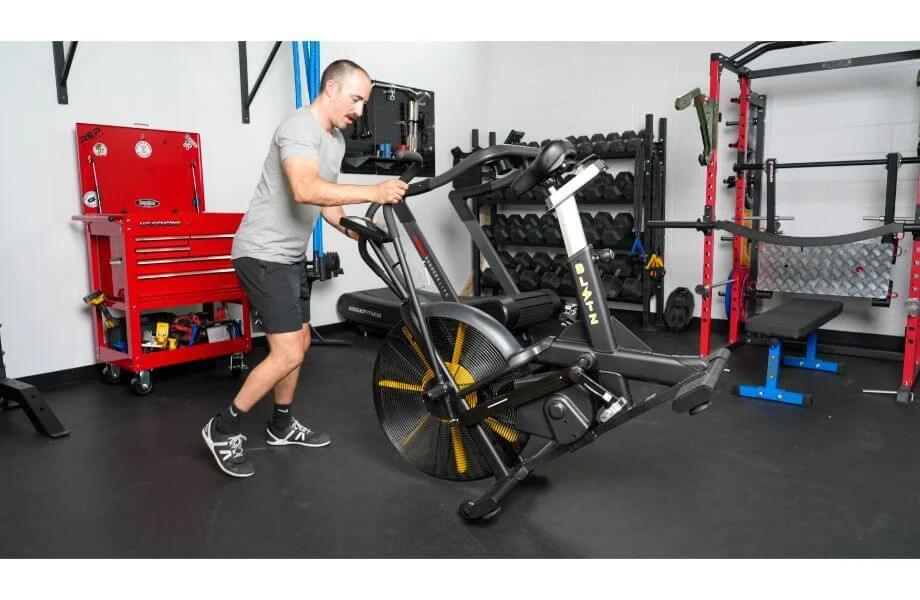
Weighing in at 118 pounds, the Blitz isn’t the lightest air bike on the market, but it’s also not the heaviest. It comes with two small transport wheels to make moving it around a gym or home setup an easier endeavor.
I was impressed with how hard I could go without the bike wobbling at all. I think this is likely due to the 23-inch feet on the front and back, which gives it a lot of stability.
Coop Mitchell, GGR founder and home gym expert
What We Didn’t Like About the Bells of Steel Blitz Air Bike 2.0
The air bike industry has generally lagged behind when it comes to tech features. The Bells Of Steel Blitz Air Bike 2.0 comes with a fairly standard LCD monitor with a few built-in workouts. The main tech feature is its compatibility with most heart rate monitors (sold separately). Beyond that, the display shows the usual stats, including RPM, distance, calories burned, watts, and speed. This still meets our benchmarks, earning it 3 out of 5 points for tech capabilities.
Coop says he’d like to see larger transport tires on the Blitz Bike, similar to the large turf tires on the Titan Fan Bike and Fringe Sport Raptor Air Bike. That said, the Blitz is still pretty easy to move around due to its more compact footprint, and it earned a 4 out of 5 for footprint and portability.
For the air bike that’s easiest to move around, check out the Concept2 BikeErg, which weighs under 70 pounds.
Testing Breakdown
The Bells of Steel Blitz Air Bike 2.0 earned near-perfect scores for value, footprint and durability. However, its lack of tech-heavy components influenced its overall rating.
Vs. The Average
The Bells of Steel Blitz Air Bike 2.0 is a bit more expensive than average, but it does have a higher weight capacity and more vertical seat adjustments.
| Bells of Steel Blitz Air Bike 2.0 | Average Air Bike | |
| Price | $963.99 | $942 |
| Footprint | 53” L x 23” W | 49.6” L x 23” W |
| Weight Capacity | 350 lbs | 335 lbs |
| Seat Adjustments | 10 vertical | 9 vertical, 4 horizontal |
| Product Weight | 120 lbs | 108 lbs |
Read our full Bells of Steel Blitz Bike 2.0 review for more information.
Best Budget Air Bike: Assault Fitness AssaultBike Classic
Updated by: Amanda Capritto, CPT, CES, CF-L1, CNC, CSNC
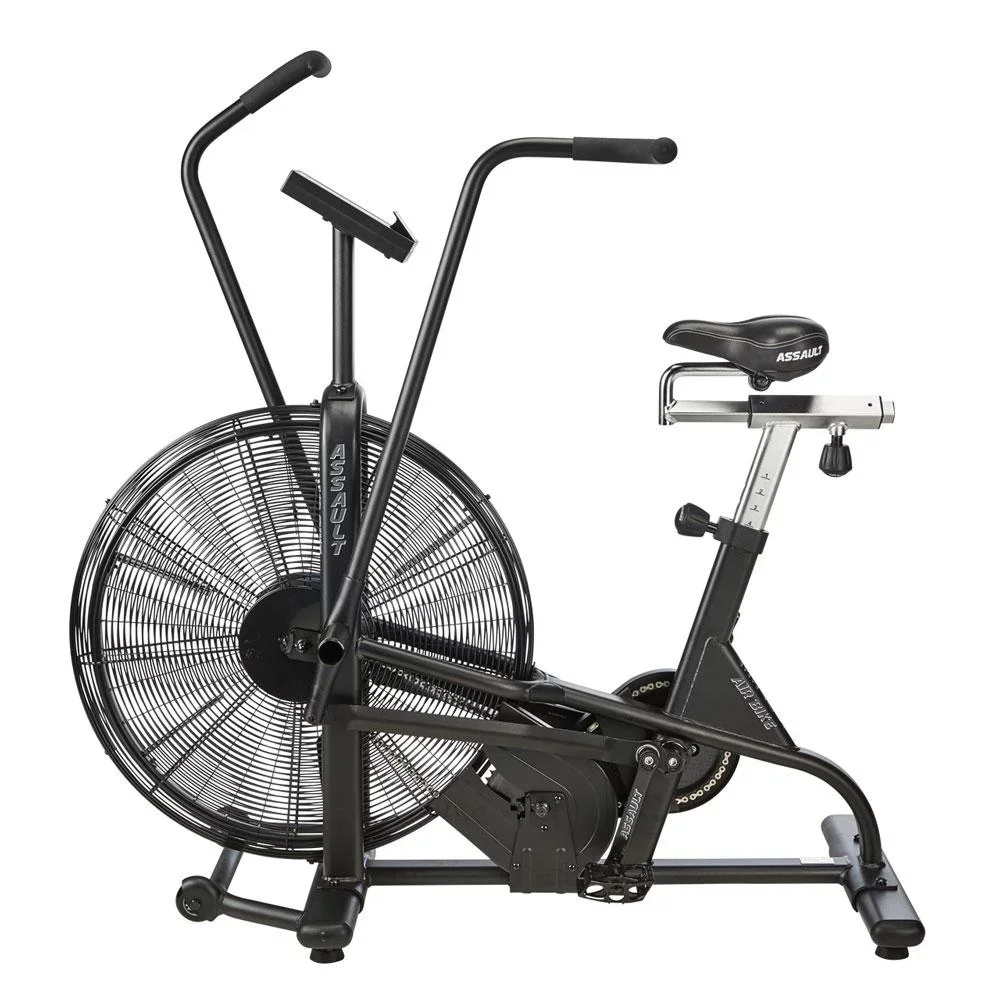
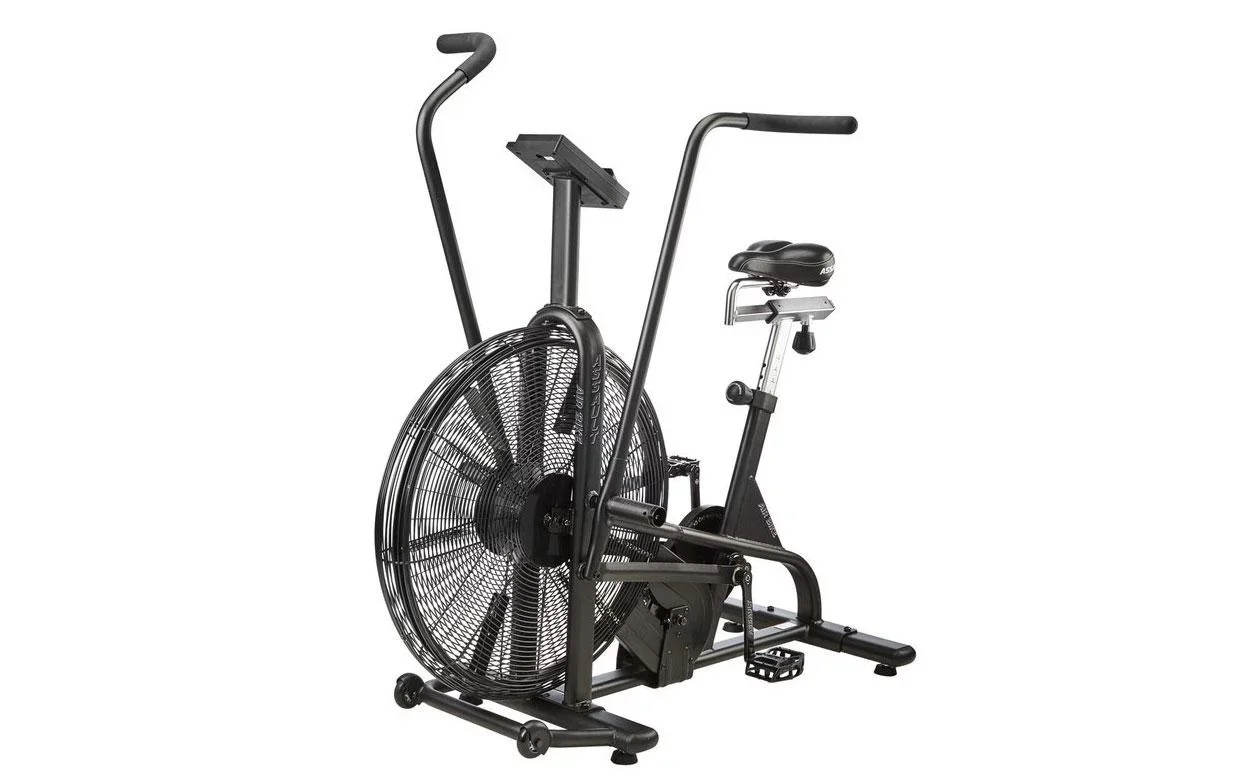
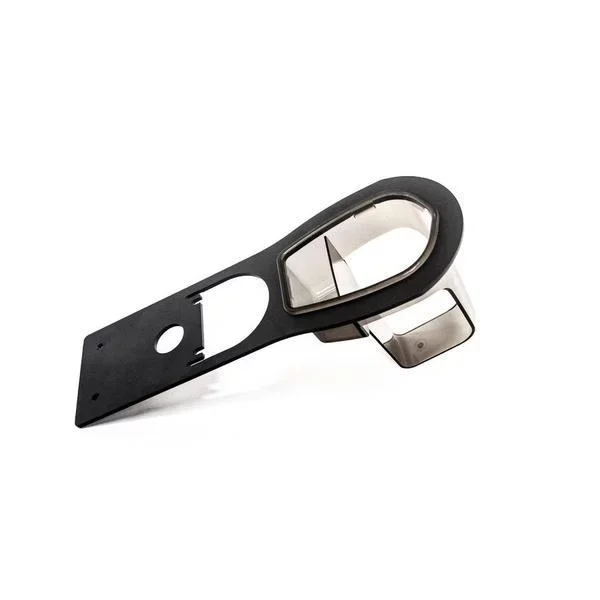
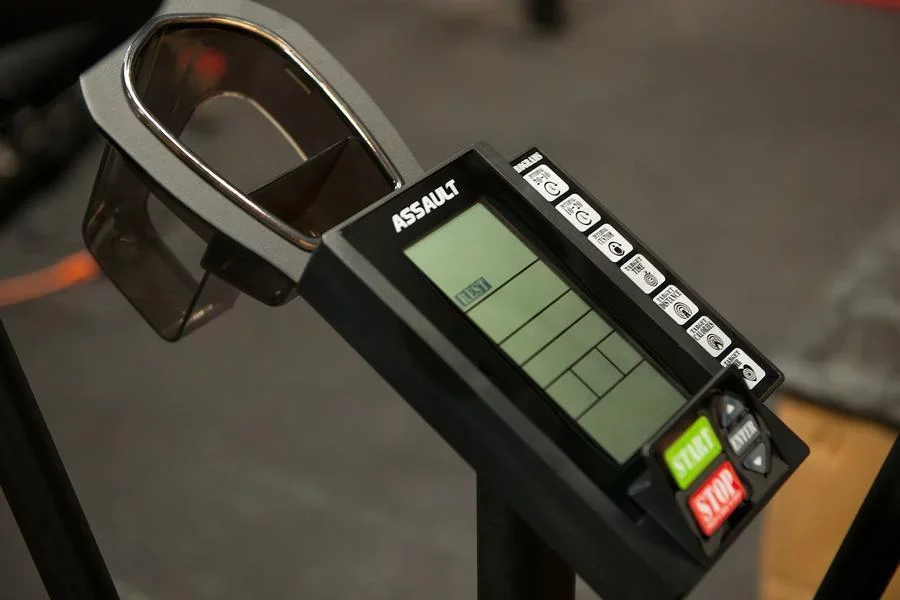
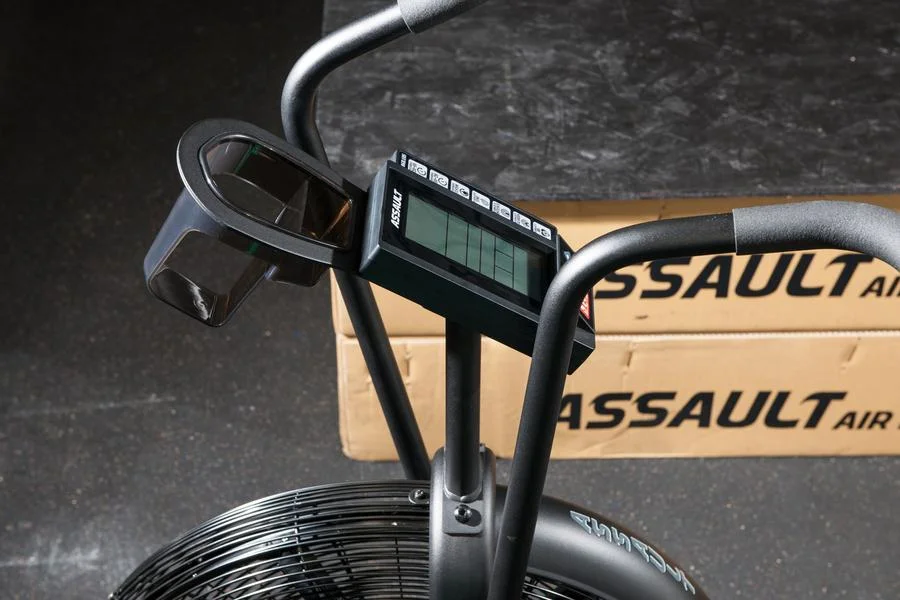
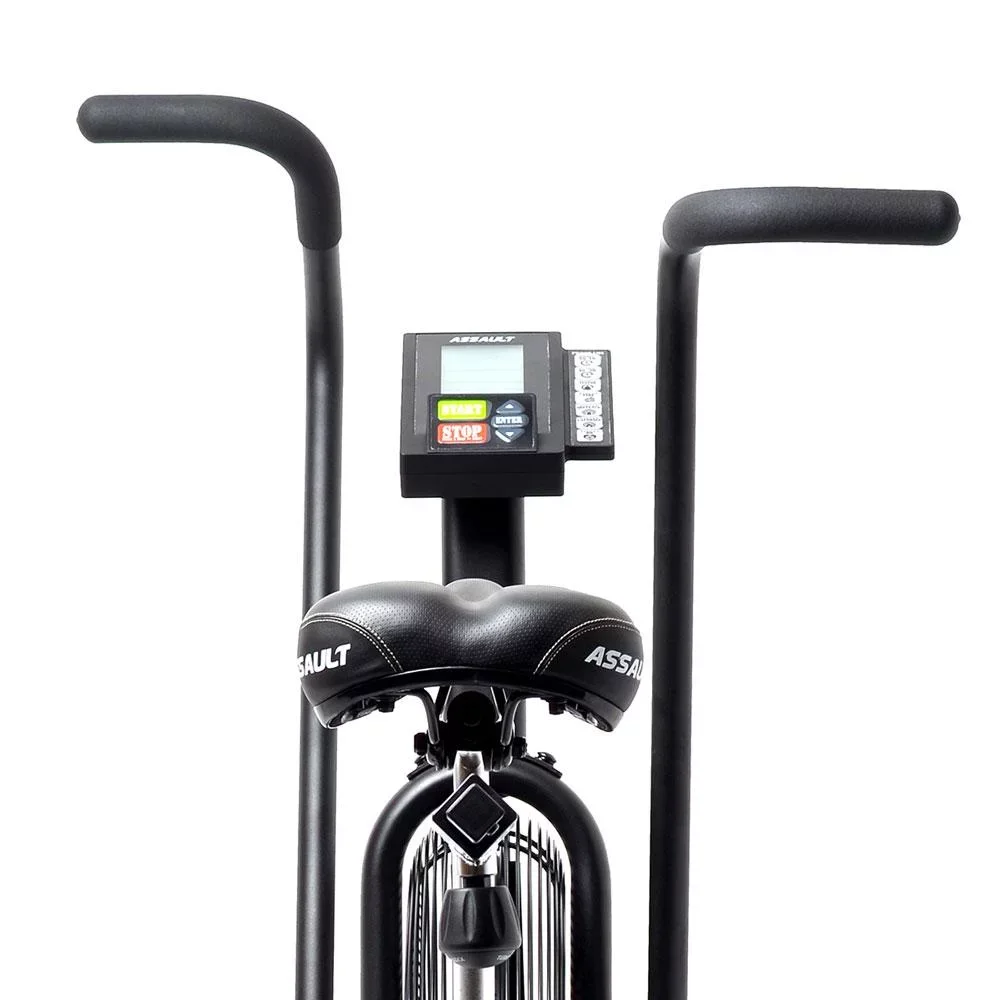
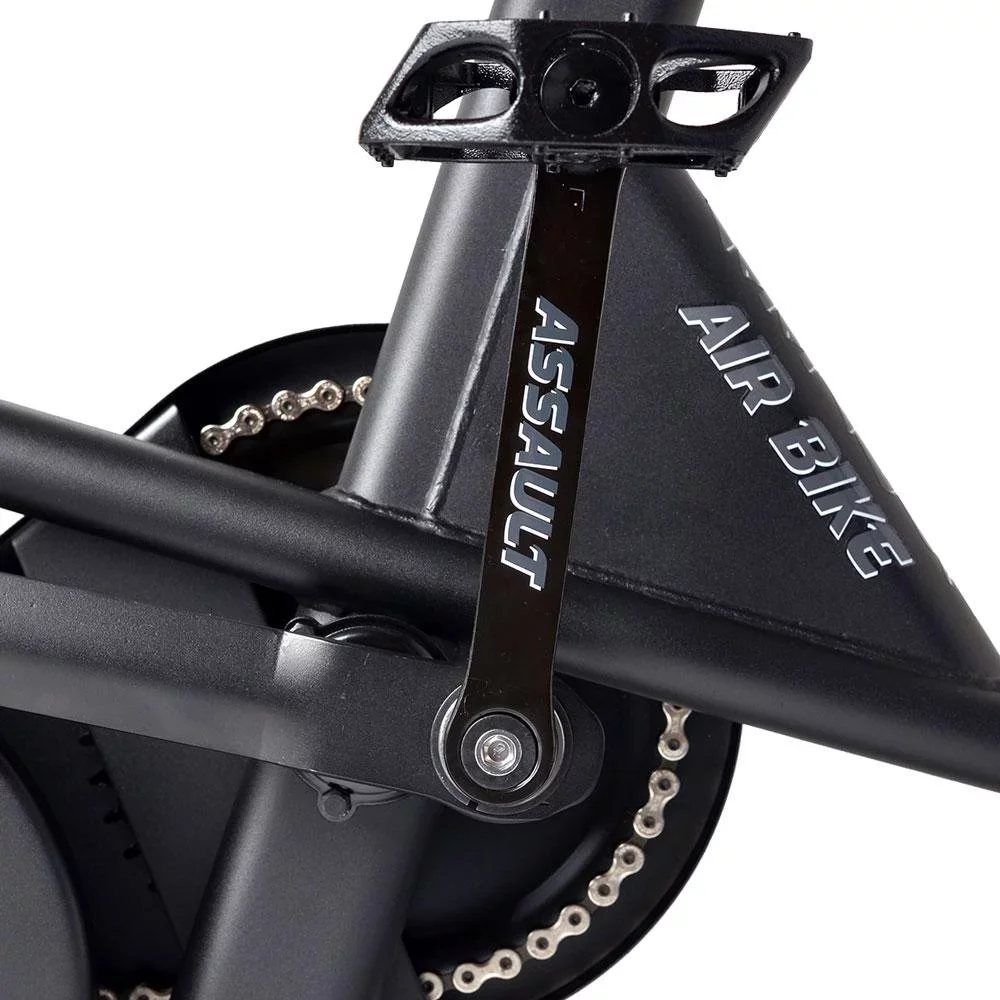
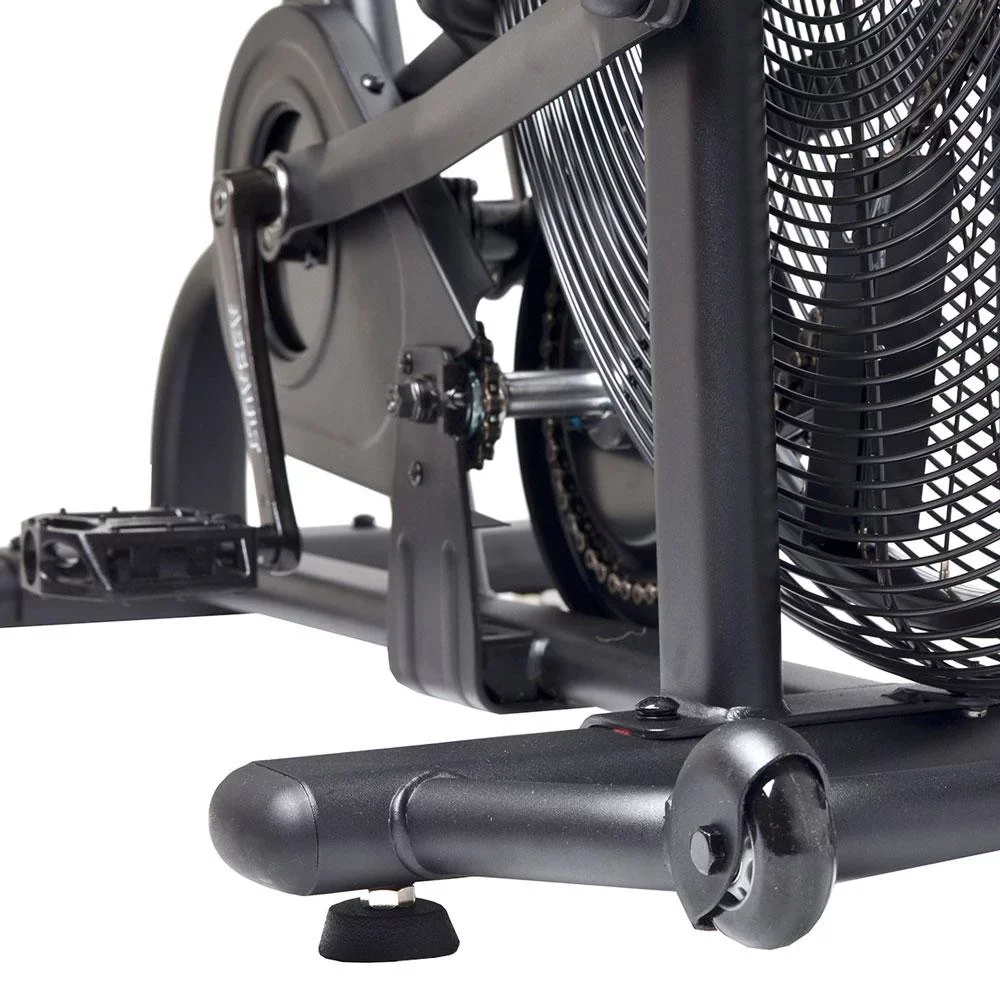
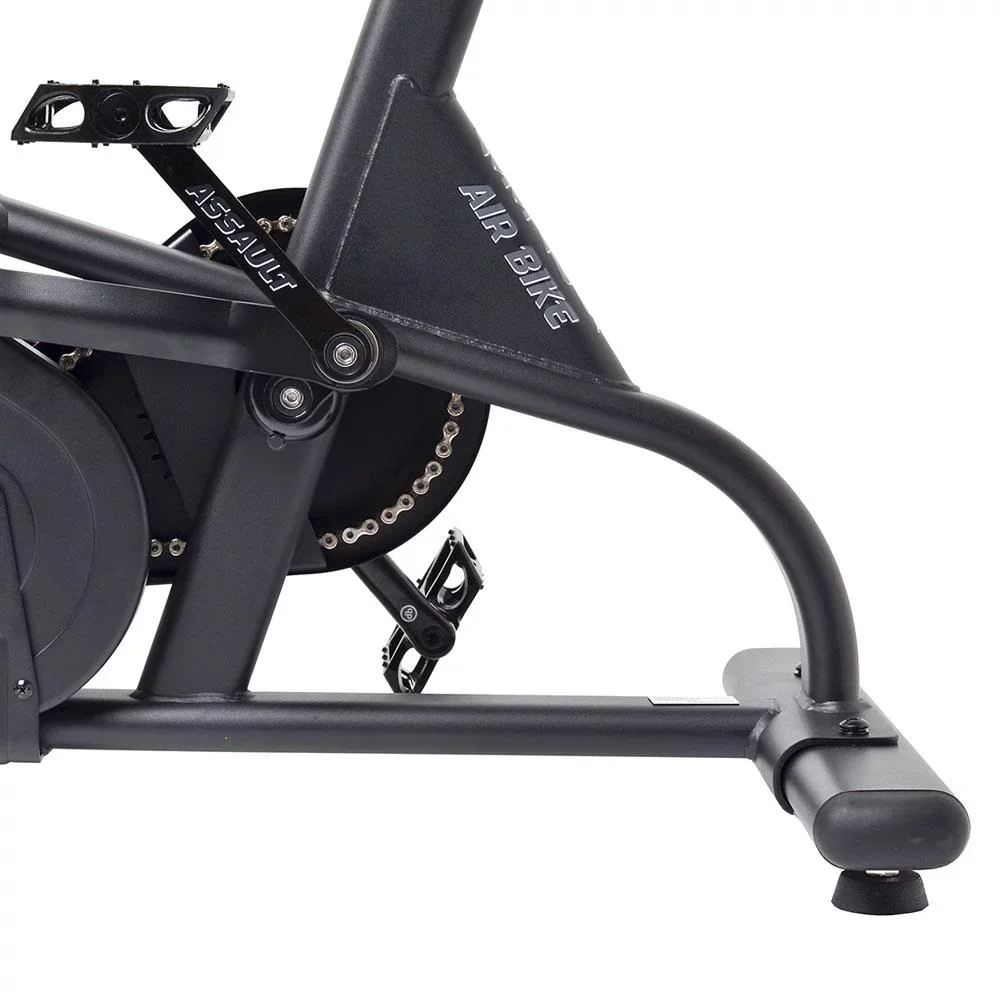
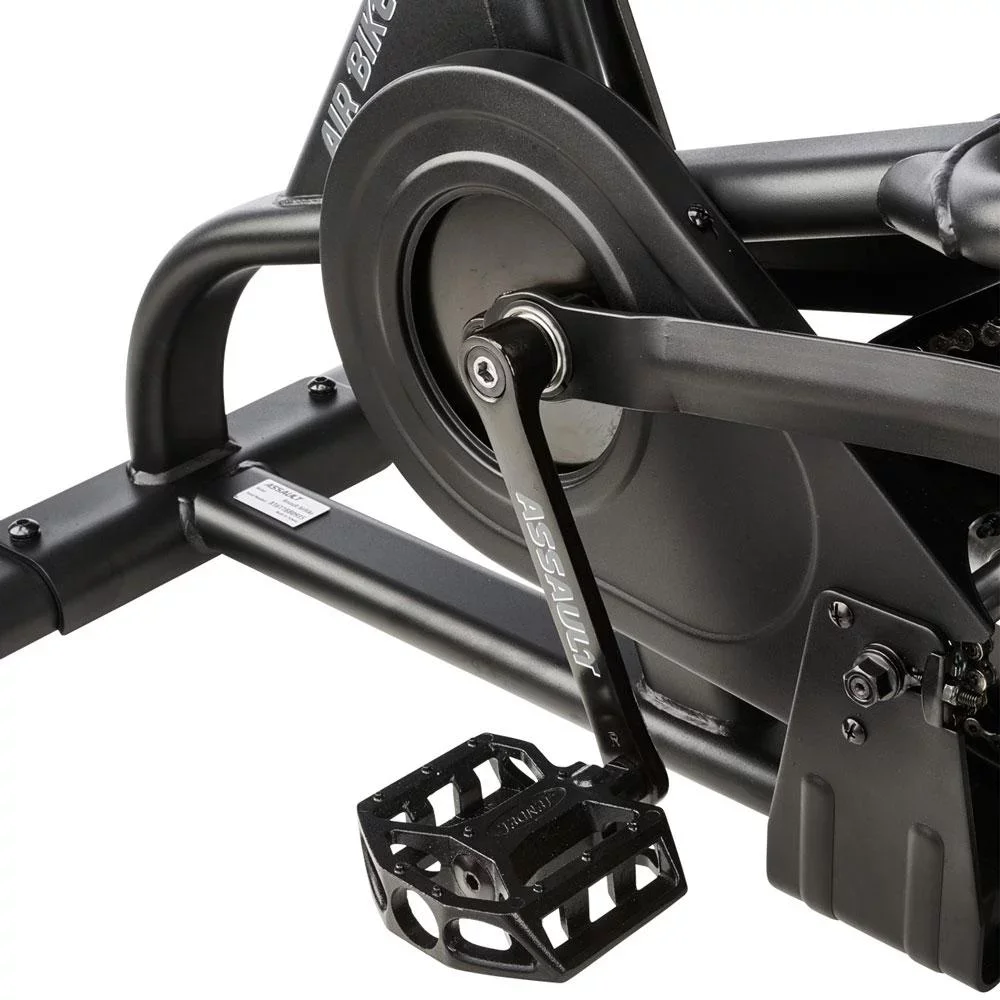
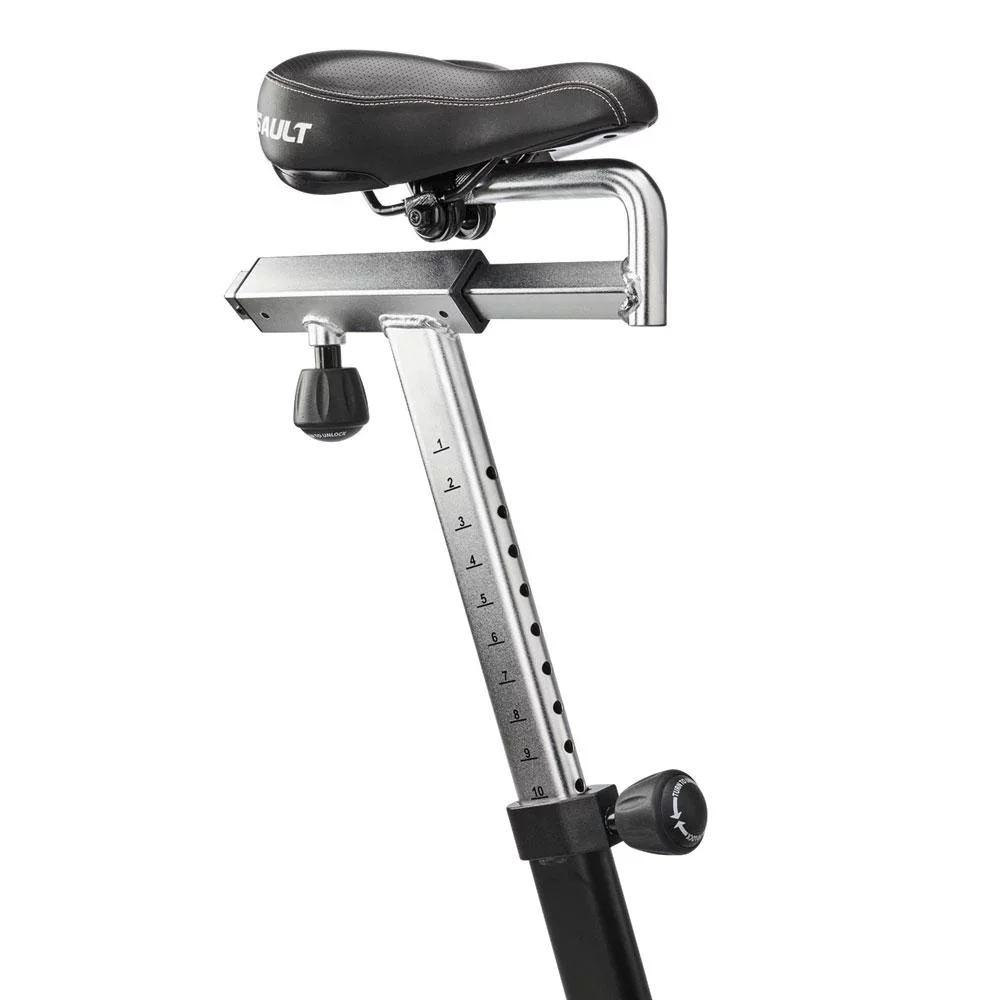
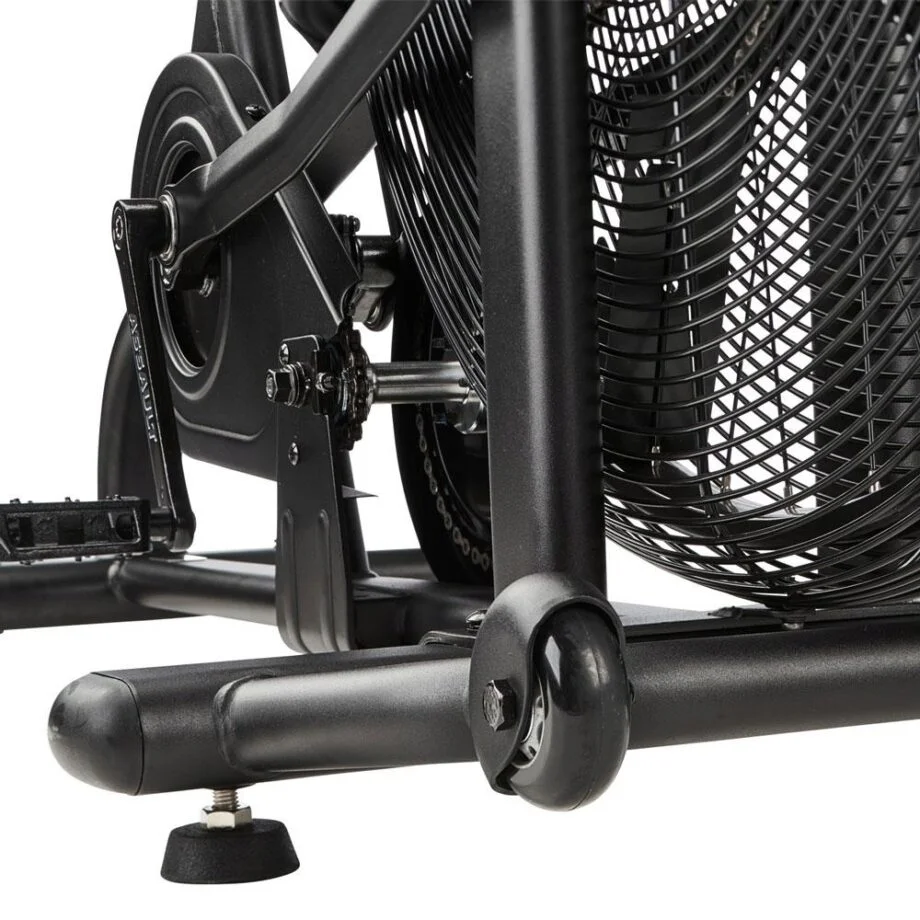
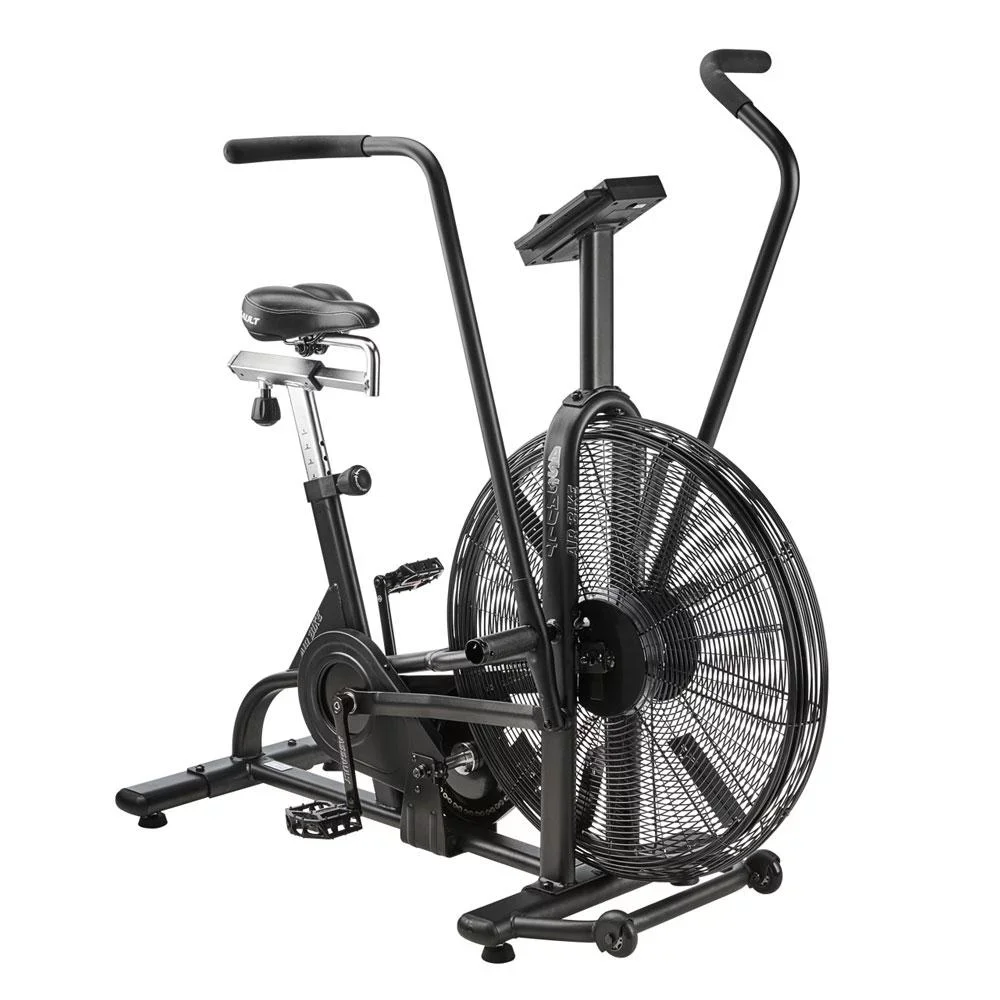
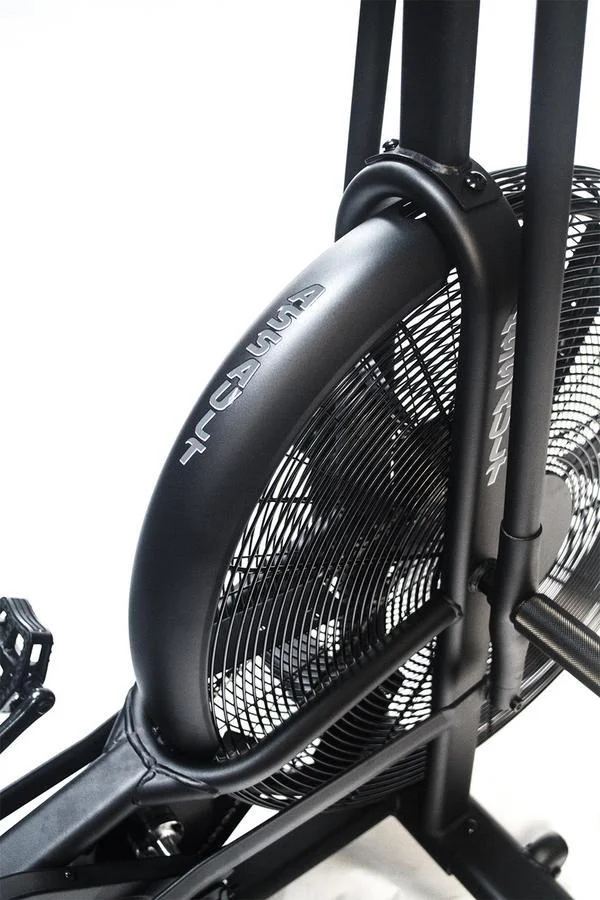
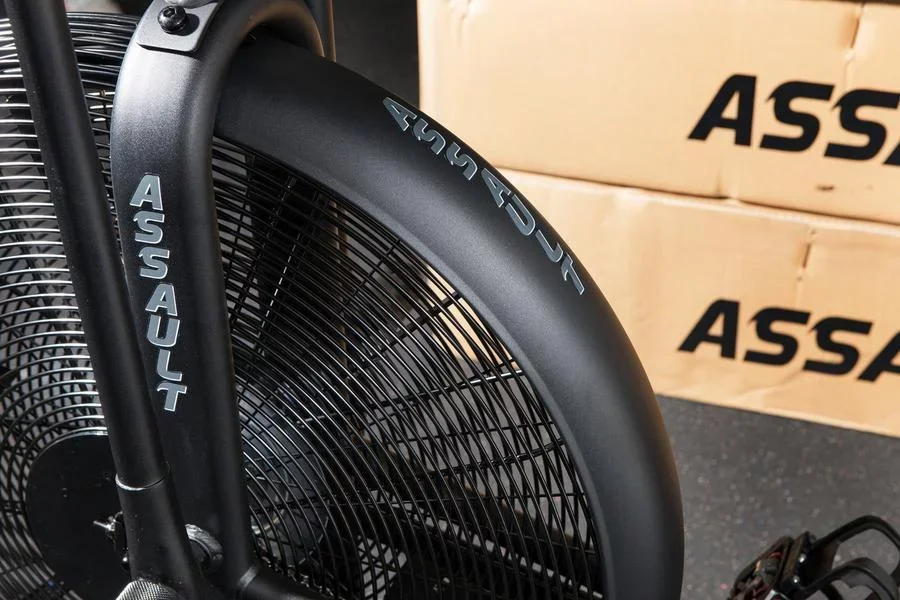
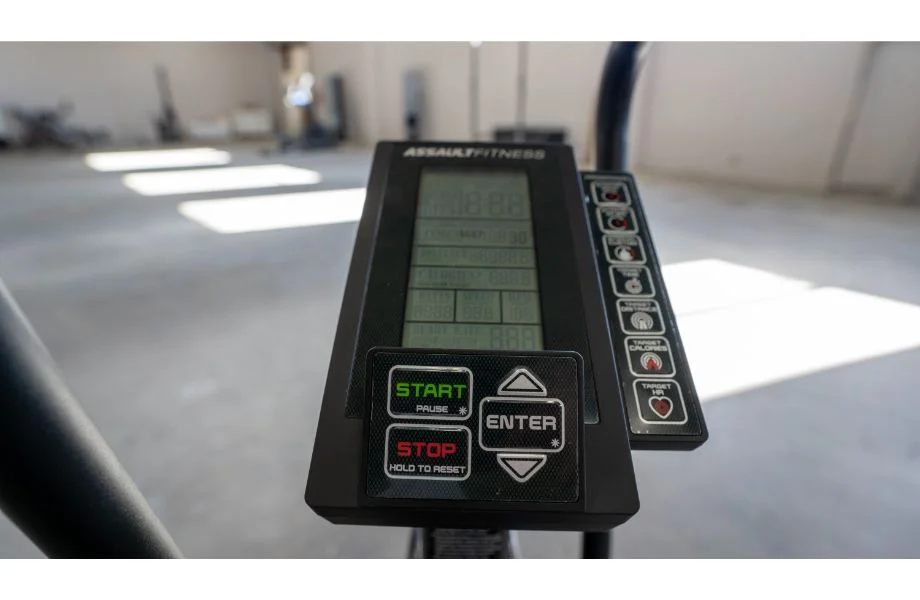
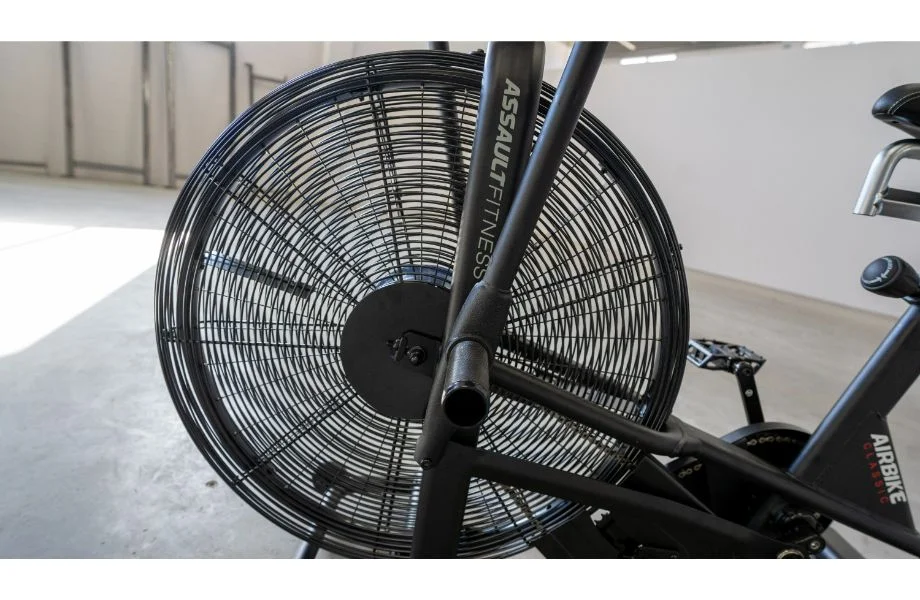
The Assault AirBike was once the standard air bike for CrossFit athletes. In our testing and reviews of the bike, we’ve found it to be durable and enjoyable (not in the traditional sense) to use.
What our tester says:
“If it can last many years being used by hundreds of people in a CrossFit box, it will last you a lifetime in your home gym.”
Calling this bike “budget-friendly” depends on your frame of reference, but if you want an affordable air bike that still performs well, the Assault AirBike Classic is a standout pick. It previously held the spot as the official air bike of the CrossFit Games before the pricier Rogue Echo Bike took over, but it hasn’t lost its bite (and value) even after stepping away from the competition stage.
As someone who’s used this bike model for years in CrossFit gyms, I can attest to its durability, even with high-volume use across plenty of intense workouts—all for under $800.
Footprint & Portability: 4.5/5
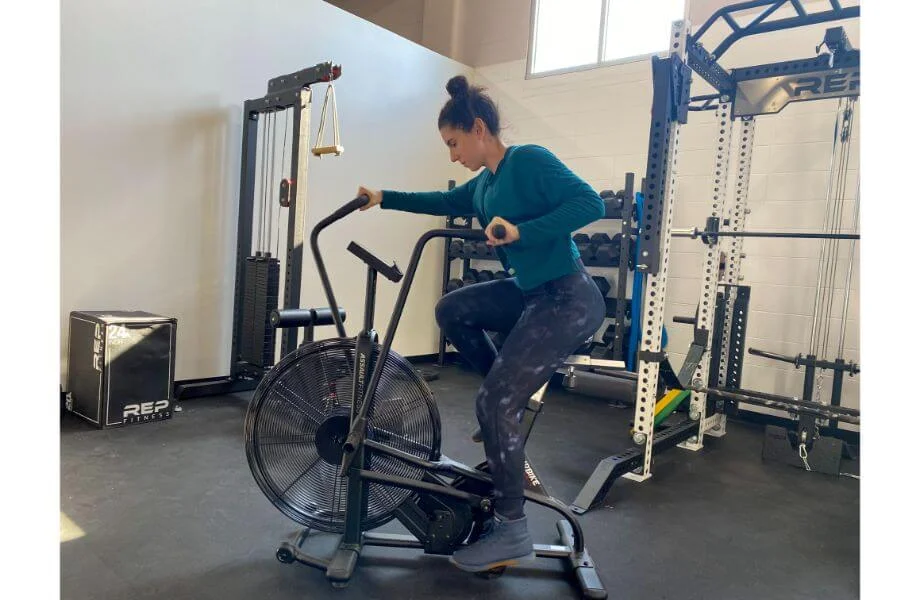
Tech Capabilities: 3/5
Value: 5/5
Why We Like the Assault Fitness AssaultBike Classic
The AssaultBike Classic is pretty bare-bones in the best way. Nothing flashy, nothing overly techy; just a straightforward air bike built for hard work. After years of using different air bikes, I honestly find the simplicity refreshing.
At around 96 pounds, it’s the most compact option in the AssaultBike lineup, yet even during intense CrossFit workouts, I’ve never felt unstable or wobbly. The 300-pound user weight limit, reinforced steel frame and seat post, and steel fan blades all contribute to its sturdy build, which earns a 4 out of 5 for durability.
RELATED: AssaultBike Elite Review
Additionally, the AssaultBike Classic earns 4.5 out of 5 points for footprint and portability, being that it’s one of the most compact air bikes available today. It weighs a solid 15 to 45 pounds less than other air bikes yet still sports built-in transport wheels that make it easy to move. If you have to have an air bike but you’re working with tight quarters, this is the one to get.
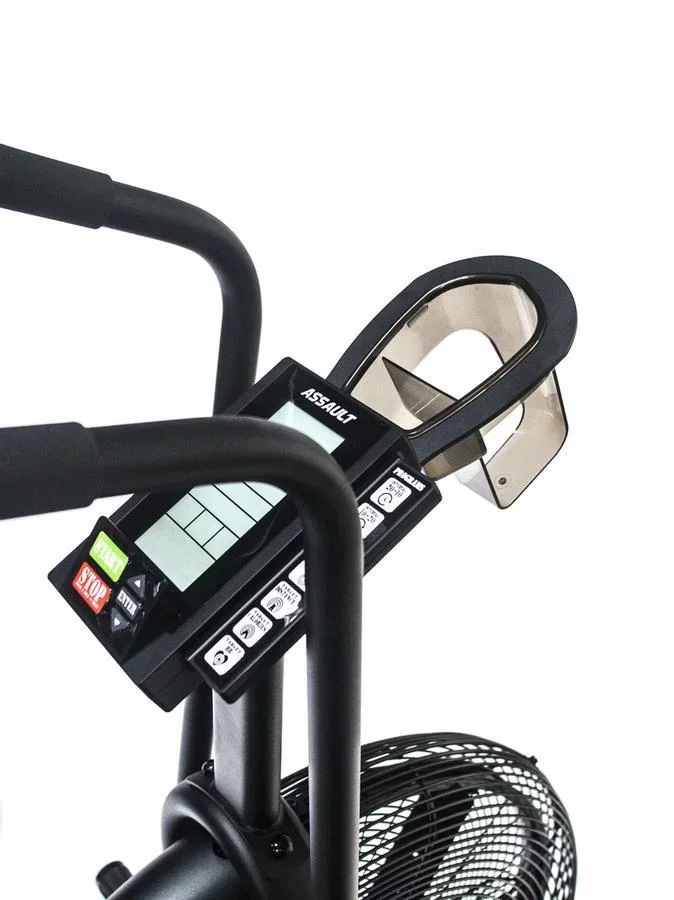
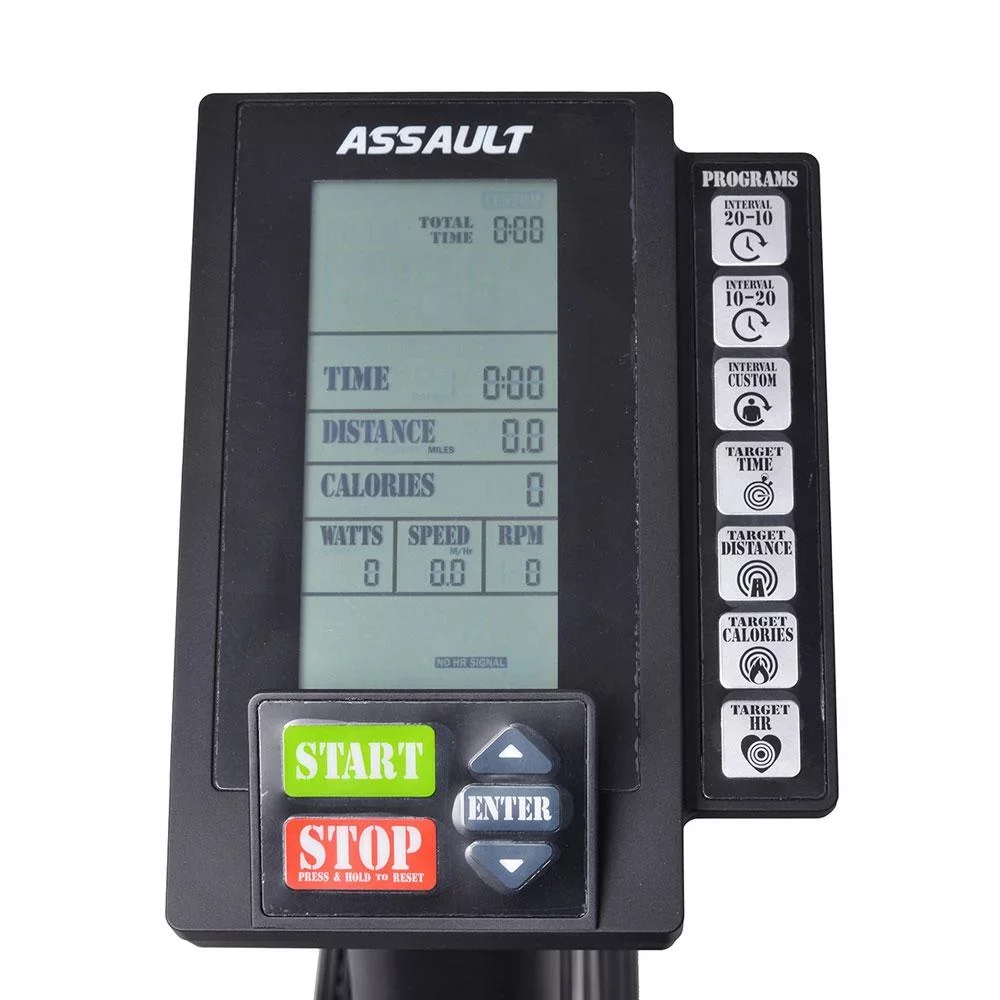
The Classic also meets our benchmarks for tech, earning a 3 out of 5 with its basic LCD display that reads out calories burned, distance in meters, and time passed. It has a handful of built-in workouts, and the display is legible for easier metric tracking .
“If it can last many years being used by hundreds of people in a CrossFit box, it will last you a lifetime in your home gym.
Amanda Capritto, CPT, CES, CF-L1, CNC, CSNC
What We Didn’t Like About the Assault Fitness AssaultBike Classic
One tradeoff is the chain-drive system. It’s louder than the belt-driven setup on the Rogue Echo Bike and other models, and needs more frequent maintenance to keep the chain in good working order. That chain drive is also part of how Assault Fitness keeps the price lower compared to belt-driven competitors.
In terms of adjustability and ergonomics, the bike earns a score of 3.5 out of 5 since it offers fewer fitment tweaks than some other air bikes. It’s adjustable enough to get comfortable for a long ride, but not as adjustable as some other stationary bikes out there. The seat post adjusts up and down with six height options, and the seat moves forward and backward across six adjustment notches. It still might be a struggle for super short or super tall people.
If you need greater adjustability, we recommend the Fringe Sport Raptor Air Bike, which adjusts 11 places both vertically and horizontally (nearly double the AssaultBike Classic).
Testing Breakdown
With standout scores for portability, durability, and value, the AssaultBike classic is an easy choice for those who want a no-frills, effective workout machine.
Vs. The Average
About $150 cheaper than average, the Assault Fitness AssaultBike Classic can be a great budget-conscious purchase.
| Assault Fitness AssaultBike Classic | Average Air Bike | |
| Price | $799 | $942 |
| Footprint | 50.9” L x 23.3” W | 49.6” L x 23” W |
| Weight Capacity | 300 lbs | 335 lbs |
| Seat Adjustments | 6 horizontal, 6 vertical | 9 vertical, 4 horizontal |
| Product Weight | 96 lbs | 108 lbs |
Read our full AssaultBike review for full details.
Best Air Bike for Beginners: Fringe Sport Raptor Air Bike
Updated by: Amanda Capritto, CPT, CES, CF-L1, CNC, CSNC
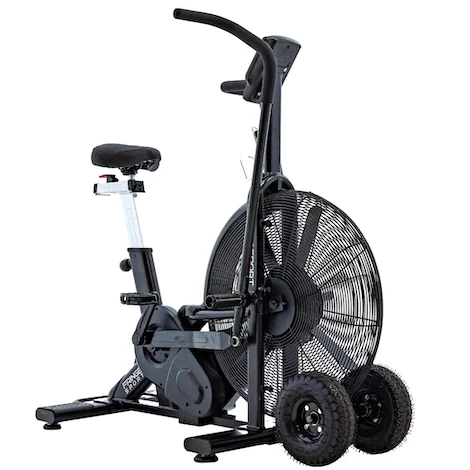

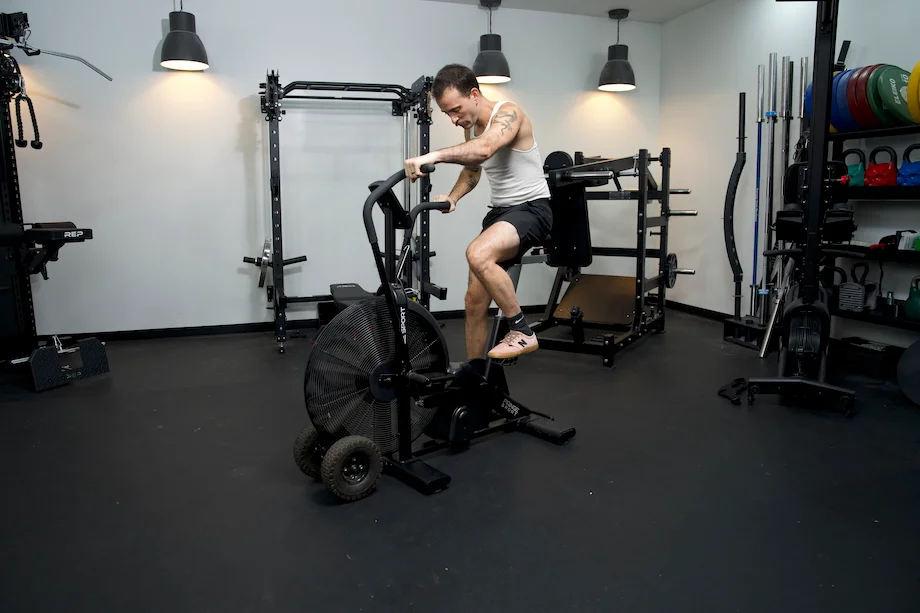
The Fringe Sport Raptor Air Bike may be an early entry into the cardio world for the company, but it’s a strong one. It’s ultra-stable, has an excellent warranty, and offers plenty of adjustability to accommodate different user heights.
What our tester says:
“I’ll just come out and say this is the air bike I’ll be keeping in my garage gym from now on.”
We chose this Fringe Sport model as the best air bike for beginners because it’s built like a tank, offers plenty of ergonomic adjustments, and feels stable no matter how hard you go in training. Our testers rate it highly overall (4.2 out of 5), thanks in part to its solid 130-pound frame that refuses to budge during high-intensity sessions.
RELATED: Stationary Bike Workouts for Beginners
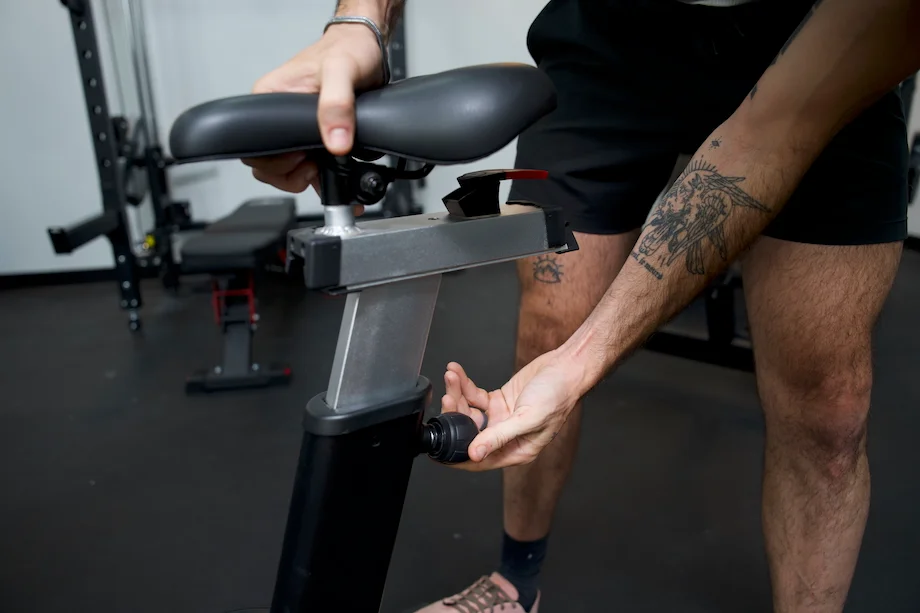
Unlike some bikes that tend to shake or wobble, the Raptor Air Bike stays steady. Another big win for newcomers is the user-friendly seat setup: You get 10 height options, making it feasible for riders of all shapes and sizes to find a comfortable position.
Conveniences: 5/5
Footprint & Portability: 3.5/5
Ergonomics: 4/5
Why We Like the Fringe Sport Raptor Air Bike
Our testers gave the Raptor Air Bike a strong 4.5 out of 5 for overall value, and it’s easy to see why. Sitting just below the $1,000 mark, it’s a sturdy, long-lasting machine loaded with thoughtful touches that make riding more enjoyable.
“This bike uses a belt drive system that is the most durable drivetrain I’ve seen. It uses nearly all metal components,” GGR founder Coop Mitchell told me, giving its durability a 5 out of 5.
He also scored the conveniences at 5 out of 5, which is very rare for air bikes. He notes, “You get a built-in water bottle holder, turf tires, phone holder, back handle, and a wind guard. You typically have to pay extra for all of these.” That’s another perk for beginners: It means you can keep your water bottle nearby and even stream workouts from your phone.
To get a sense of how heavy it feels when moved, our expert team checked the Raptor’s “felt weight” using a luggage scale. Despite its solid construction, it comes in at just 41 pounds when tilted and rolled, so most people should be able to move this comfortably without the need for assistance.
This is one of the best value bikes on the market. It’s built to last, has a tremendous warranty, uses a belt drive, and comes with a ton of extras that you have to pay for with Rogue’s bike. This is the new air bike I’ll keep in my garage.
Coop Mitchell, GGR founder and home gym expert
What We Didn’t Like About the Fringe Sport Raptor Air Bike
Our testers also checked the noise level by recording the sound from a light ride up to maximum effort. At peak intensity, this Fringe Sport air bike reached 83.2 decibels, making it one of the louder models we tested. This is a result of the wind resistance, which isn’t unique to this particular air bike, but something to be aware of (this may not be the one if you’re trying to work out next to a sleeping baby or appease cranky neighbors).
The bike keeps its programming and tech simple, earning 3.5 out of 5 stars for tech capabilities. It features a basic LCD screen and a handful of preset workouts, including Tabatas, sprints, and longer intervals. Despite the minimal tech, it can still work for those who don’t need advanced features.
If you’re looking for a more budget-friendly bike that still uses air resistance and a belt drive, we recommend the Titan Fan Bike.
Testing Breakdown
The Raptor impressed our testers with its strong build and many conveniences. Unfortunately, though, its warranty is only three years.
Vs. The Average
The Fringe Sport Raptor Air Bike is 22 pounds heavier than the average air bike and about $50 more expensive.
| Fringe Sport Raptor Air Bike | Average Air Bike | |
| Price | $995 | $942 |
| Footprint | 51” L x 24” W | 49.6” L x 23” W |
| Weight Capacity | 350 lbs | 335 lbs |
| Seat Adjustments | 10 vertical, 10 horizontal | 9 vertical, 4 horizontal |
| Product Weight | 130 lbs | 108 lbs |
Read our full Fringe Sport Raptor Air Bike review for complete tester insights.
Best Air Bike Without Arms: Concept2 BikeErg
Updated by: Amanda Capritto, CPT, CES, CF-L1, CNC, CSNC
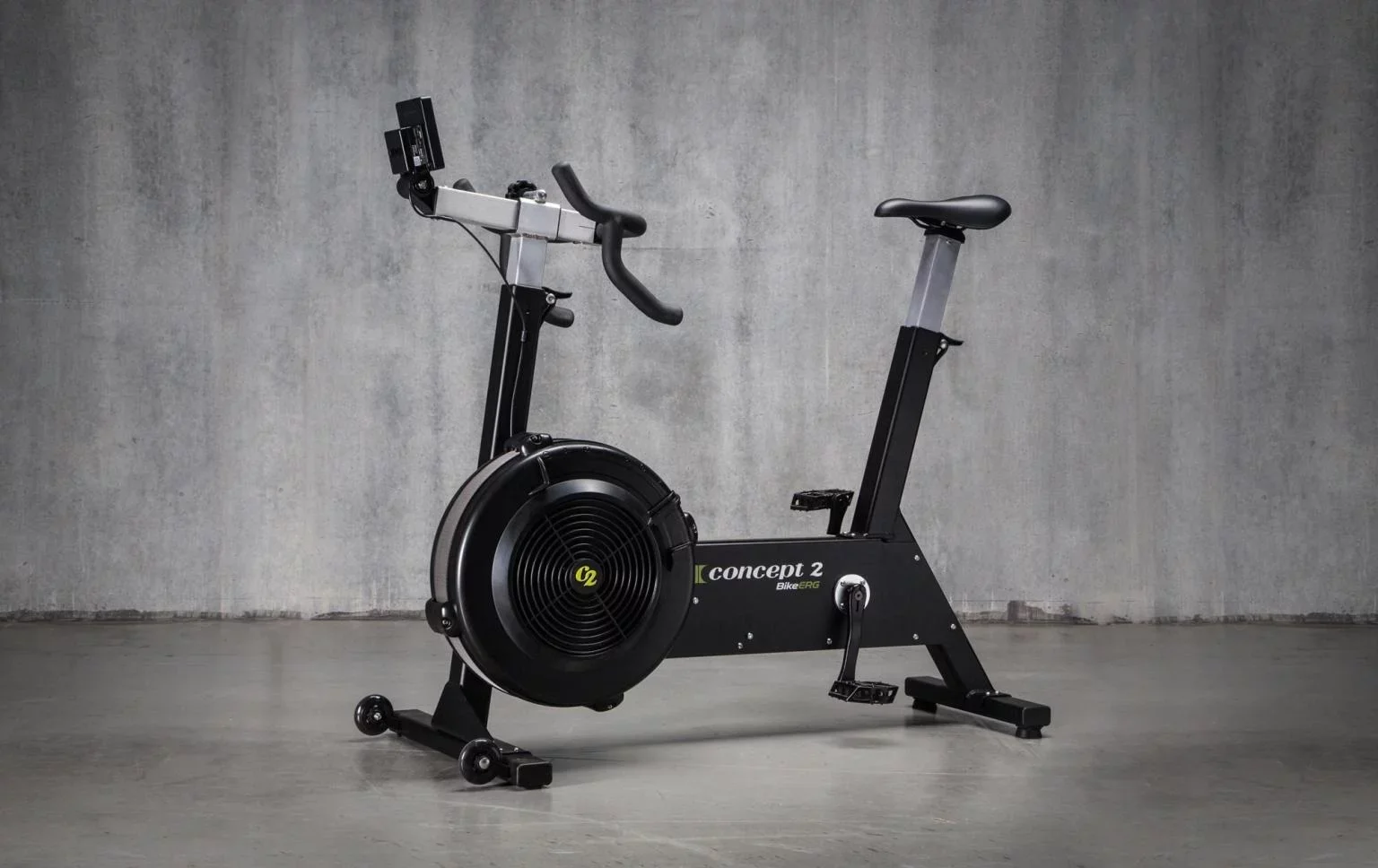
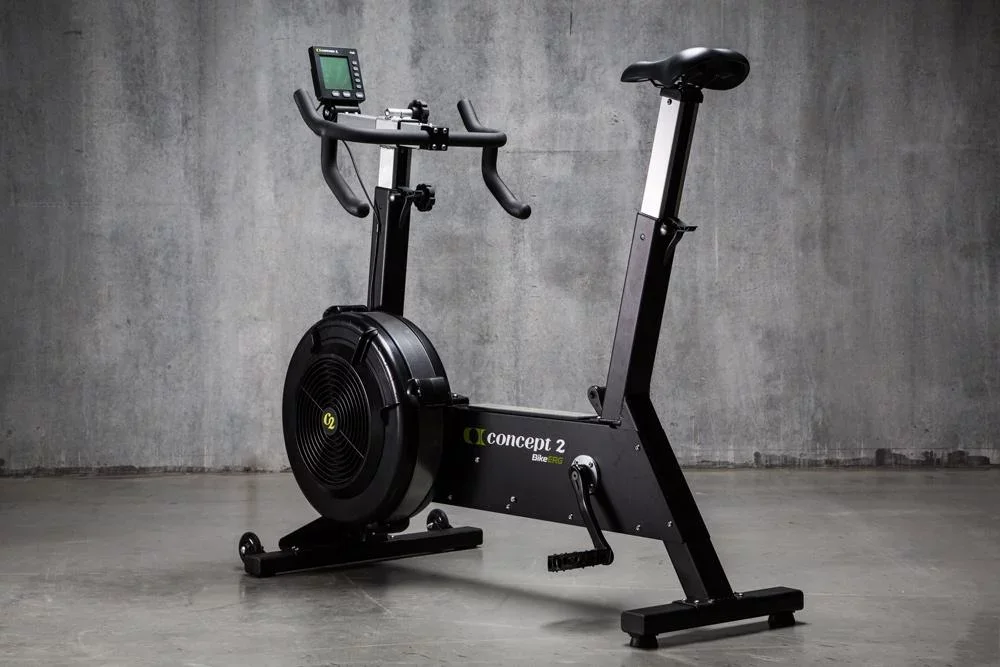
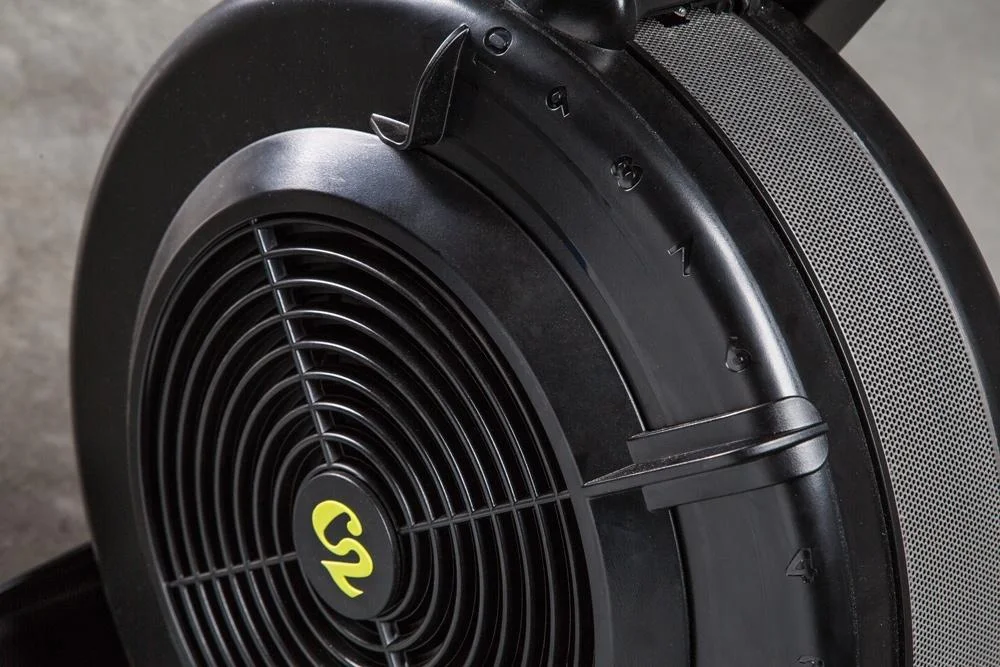
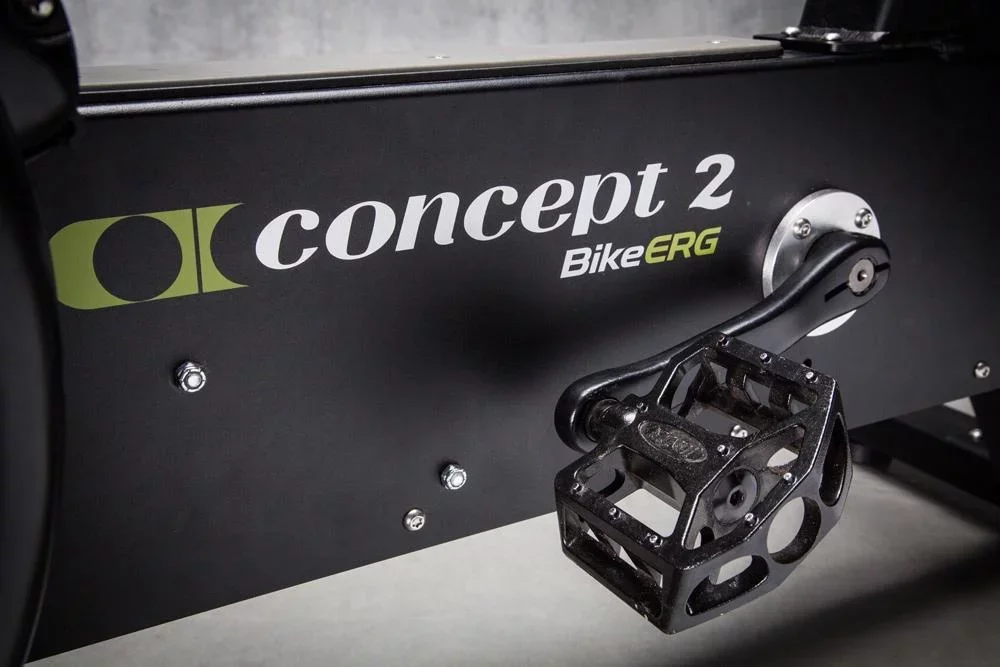
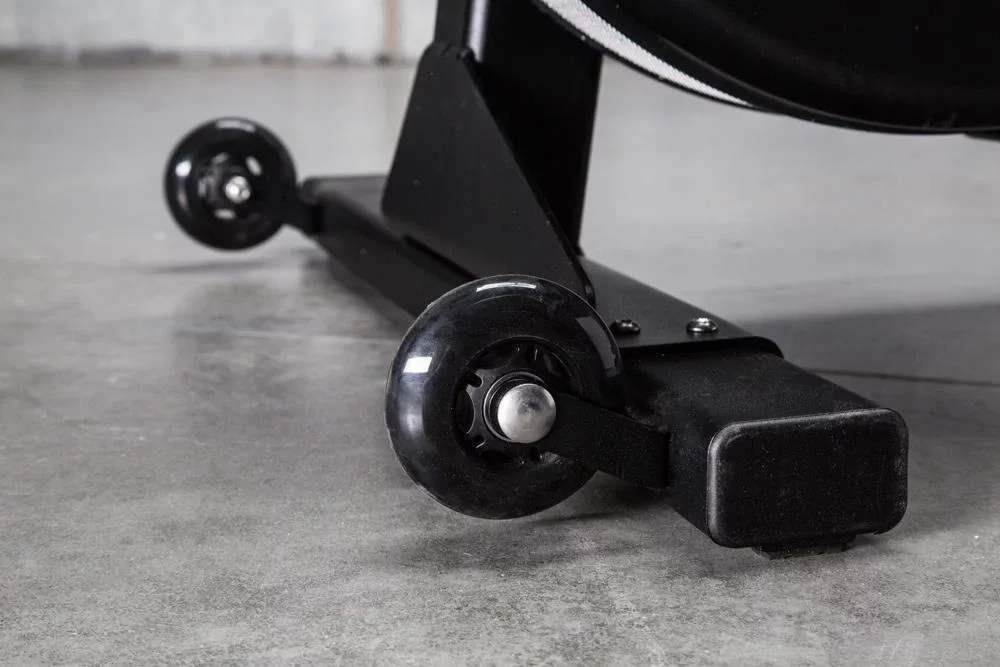
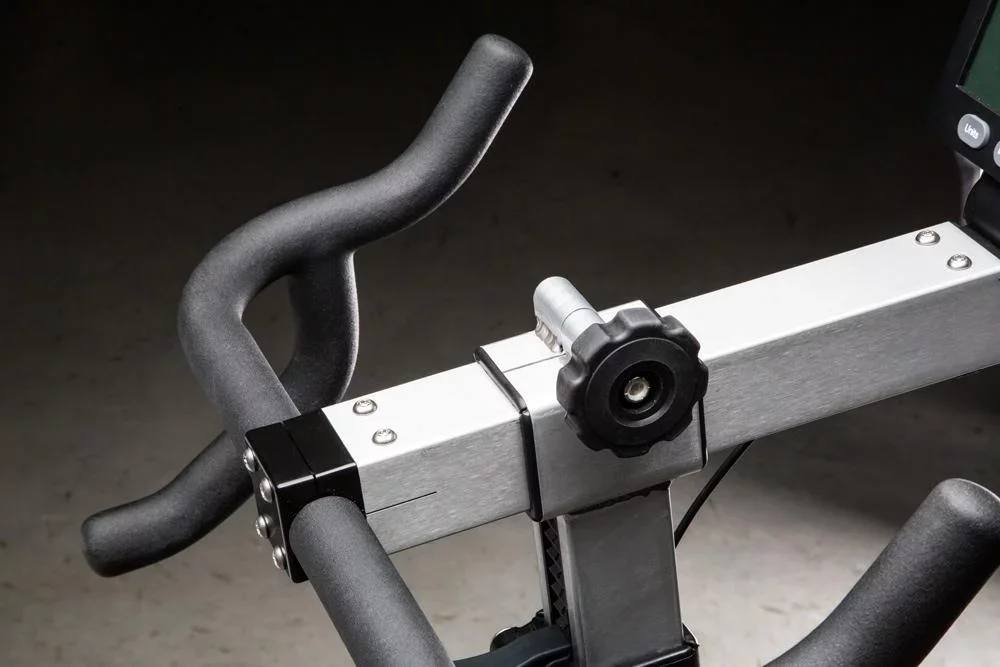
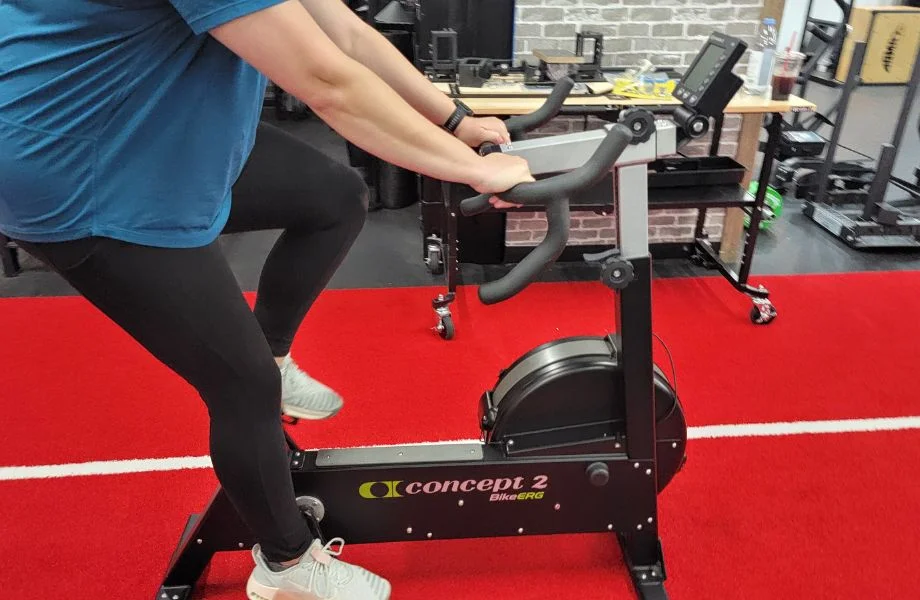
After using the Concept 2 BikeErg over the course of two years in a variety of workouts from sprints to long-distance bikes, we highly recommend it to anyone wanting an air bike. Although we like air bikes with arms, we actually prefer the BikeErg and have found it to be great for general fitness as well as simply blowing up the quads. The BikeErg is a Concept 2 product; we think that speaks for itself.
What our tester says:
“Even though there are some things it lacks, like a water bottle holder and dynamic programming, it feels really solid and sturdy and if it can hold up well in a warehouse where it gets abused a lot, I’m sure it would do just fine in a home gym setting.”
The Concept2 BikeErg is the best fan bike without arms, and to be honest, is one of the only options available in this air bike subcategory. Even without traditional air bike handlebars, it can deliver an effective workout akin to traditional indoor cycling sessions. When GGR editorial member and certified personal trainer Amanda Dvorak tried the BikeErg, she admitted it was more challenging than she expected. “It really lit up my quads—even more than my Peloton when I have the resistance up to the high 60s or 70s,” she tells me.
Tech Capabilities: 3/5
Ergonomics: 4/5
Customizations: 4/5
Why We Like the Concept2 BikeErg
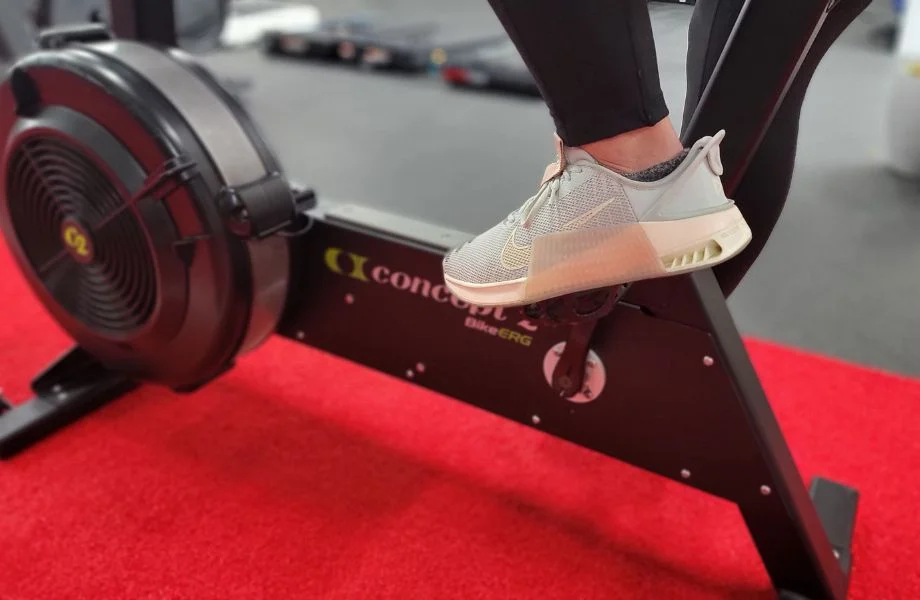
The build of the BikeErg is as good as we’ve come to expect from Concept2, and earns a 4.5 out of 5 for durability. Starting at the feet, the steel frame sits on four adjustable pegs that screw into the base that serve as stabilizers for when set up over less-than-level flooring.
Amanda also appreciates the stability of the entire cardio machine, saying, “I’m a bigger athlete, but I didn’t experience any wobbling or shaking on the bike. Plus, knowing how well my Concept2 RowErg is holding up despite my not being very gentle with it, I feel confident giving the BikeErg’s durability a near-perfect score.”
The BikeErg also earns a nearly perfect 4.5-out-of-5 score for footprint and portability. It’s by far the lightest and most compact bike on our list of the best air bikes, weighing under 70 pounds. The GGR team used a luggage scale to measure how heavy the BikeErg feels when tilted for moving, as well, and it registered only 26 pounds.
“I can vouch for this reading and in-hand feel—I was able to easily lift it up and roll it on turf and rubber gym flooring without any issues,” says GGR product tester Kate Meier, NASM-CPT, USAW-L1.
The combination of steel and aluminum provides enough stability for powerful sprints but is also light enough for easy movement and storage.
Coop Mitchell, GGR founder and home gym expert
What We Didn’t Like About the Concept2 BikeErg
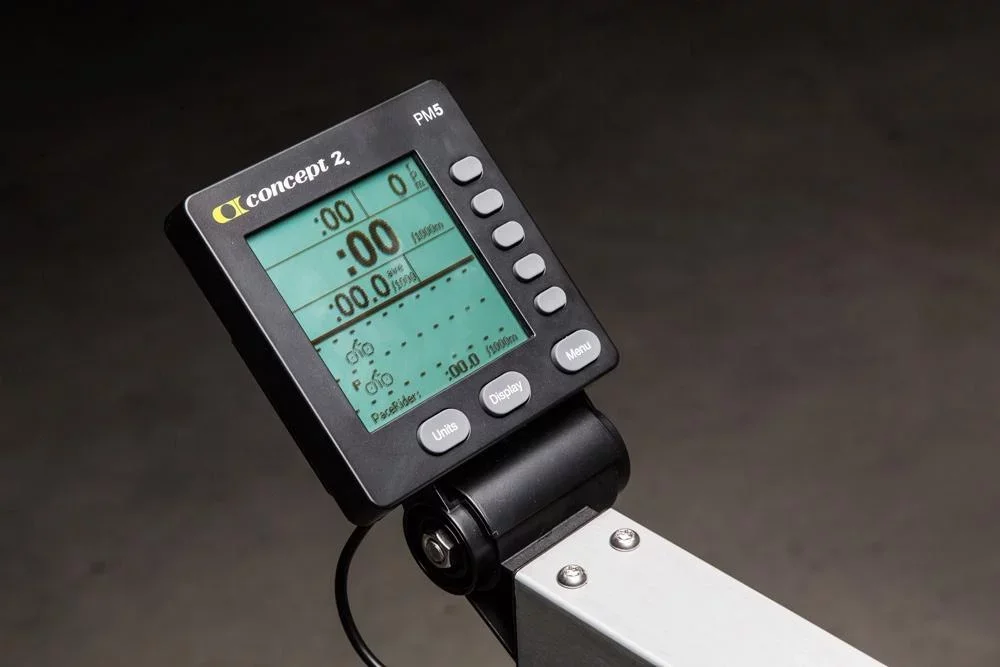
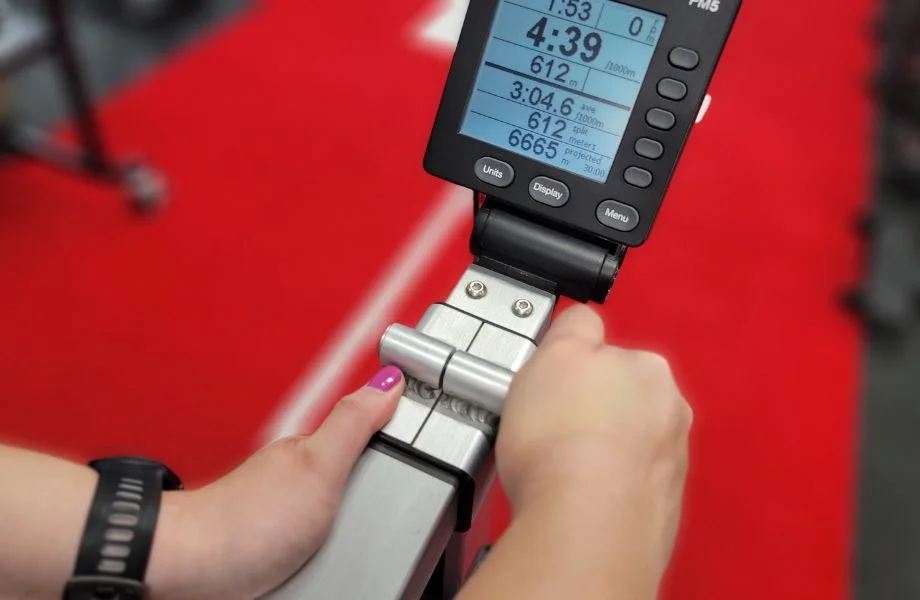
While it doesn’t offer on-demand classes like Peloton or NordicTrack bikes, the PM5 monitor includes several pre-programmed workouts and works with cycling apps like Zwift. Because of the limited tech, we gave it a 3 out of 5 for dynamic programming, which is honestly solid for an air bike.
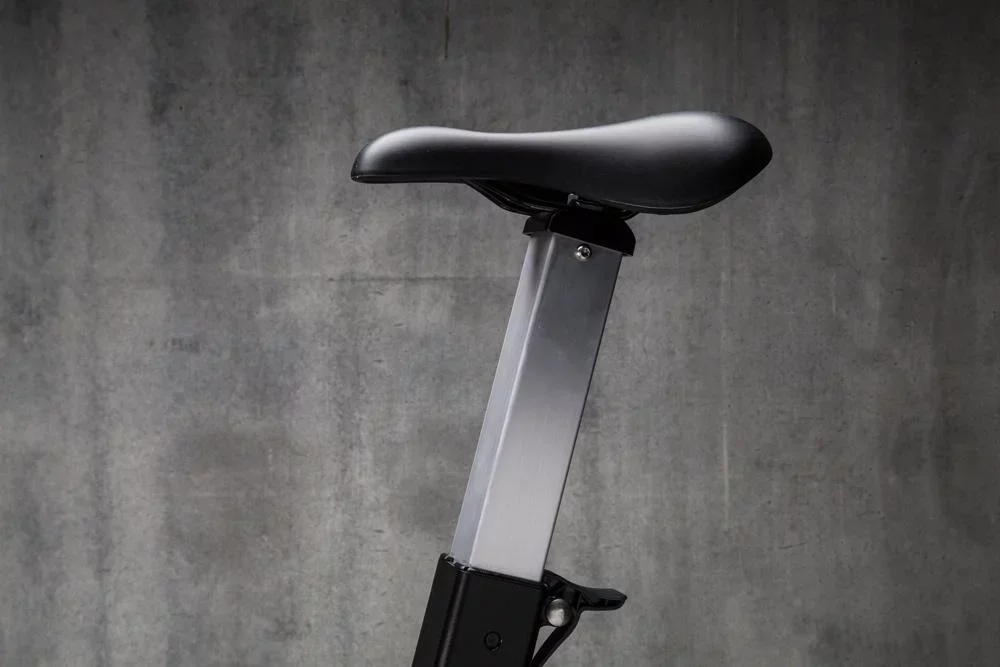
Some users have noted that the seat can be uncomfortable, though it’s pretty easy to replace with another saddle if you want. Concept2 states that most standard bike accessories are compatible with the BikeErg.
If you want a traditional air bike with moving arms, the Rogue Echo Bike is our top pick.
Testing Breakdown
The Concept2 Bike Erg wowed our product testers with its lightweight yet robust build, scoring highly for footprint and portability as well as durability.
Vs. The Average
A clear winner for those prioritizing compact builds, the Concept2 BikeErg features a smaller footprint and weighs 40 pounds less than the average air bike.
| Concept2 BikeErg | Average Air Bike | |
| Price | $1,100 | $942 |
| Footprint | 48” L x 24” W | 49.6” L x 23” W |
| Weight Capacity | 350 lbs | 335 lbs |
| Seat Adjustments | Not listed online | 9 vertical, 4 horizontal |
| Product Weight | 68 lbs | 108 lbs |
Read our full Concept2 BikeErg review for more info.
Other Air Bikes We Researched
Our top picks are far from the only air bikes we’ve tested and researched. Here are a few others we considered, but didn’t make the cut:
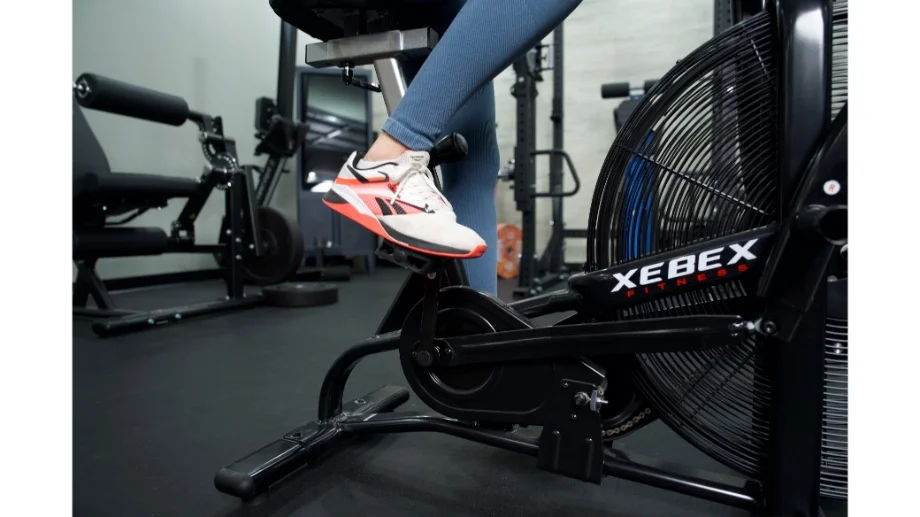
- Xebex Air Bike: Before Titan Fitness released the Titan Fan Bike, this Air Bike was our go-to budget-friendly option. However, the Xebex Air Bike is more expensive than the Titan Fan Bike and doesn’t come with as many extras. Because of this, we believe the Titan Fan Bike is a better value, though the Xebex Air Bike is still a great pick for certain users.
- Schwinn Airdyne AD6: The Schwinn Airdyne AD6 was Schwinn’s premier bike prior to the AD Pro. Although it’s a decent bike, it is prone to breakage and has a lot of plastic parts. If you want a Schwinn but don’t want to spend the amount that the AD Pro costs, then this is our recommendation.
- Marcy Fan Exercise Bike NS-1000: This is a decent budget-friendly bike, but we recommend it only if you really cannot afford something more expensive. This bike will work, but not for as long as you’d like.
How We Picked and Tested the Best Air Bikes
To compile our list of the best air bikes, we researched all of the major manufacturers, scoured top retailers, and reached out to industry experts who aided in the creation of these fitness equipment staples. In addition, we went to Garage Gym Reviews HQ to rank and test all of the bikes we were able to call in for trials. After researching and critiquing roughly 20 air bikes, we narrowed it down to the profiles we felt were worth your time and money.
During testing, we used the bikes in various time durations from sprints to longer rides. We tested the adjustability, ease of maintenance, monitored metrics, and noise levels, as well. All of these trials and tribulations culminated in category-specific ratings on a scale of 1 (lowest) to 5 (highest). Such rated categories include:
- Durability: Air bikes are designed to take years of high-volume from commercial CrossFit facilities and still work like the day they were purchased, so we’re tough with our durability ratings. To receive at least 3 points, air bikes must be made primarily from steel, have a minimum 275-pound weight capacity, and have good welds and strong upholstery on the seat.
- Adjustability: To earn at least a 3, bikes must have padded seats that adjust vertically, with bonus points being awarded for horizontal adjustment planes, as well. Handlebar adjustments can increase the score for this category, too. Essentially, the more adjustments available for customization, the better.
- Value: It doesn’t matter if the bike is $500 or $5,000, the value received is what we’re judging. In other words, how much do you get for the price you’re paying? Our best value pick, the Titan Fan Bike, comes with more extras than the Rogue Echo Bike, technically making it a better value, even though the Echo is less expensive.
- Portability: Bikes that are simple to maneuver get better scores, especially when it comes to finding suitable silhouettes for smaller home gyms. Bigger, heavier models with higher weight capacities are still highlighted for users with more space, though. To earn a benchmark 3-out-of-5 rating here, the bike should be manageable for one or two people to relocate without much strain.
- Warranty: Air bikes will occasionally break, and if they do so in a short amount of time, then the company should either repair or replace whatever the issue is. For benchmark scores, we look for a minimum of a five-year frame warranty, and like to see two years on parts and a year on labor, as well.
Air Bikes Vs Other Exercise Bikes
Not all exercise bikes are created equal. Some work well for one type of cycling workout but may not be well-suited for another. Here’s a comparison chart that’ll help you figure out which type of exercise bike works best for you.
RELATED: Different Types of Exercise Bikes
| Bike Type | Best For | Notable Drawbacks | Who Should Use It | Who Shouldn’t Use It |
| Air bike | CrossFit, HIIT, or conditioning workouts | Loud operation, less comfortable for longer rides | Athletes who want full-body, high-intensity cardio | Beginners or those who want quiet, less-intense cardio training |
| Indoor cycling bike | Athletic performance, weight loss, live and on-demand classes | Typically more expensive, may require a subscription to unlock all features | Riders who enjoy structured classes, cycling workouts, and something that offers a road-like feel | Individuals who have back, hip, or knee problems |
| Recumbent bike | Beginners, older adults, post-injury rehabilitation | Larger footprint, minimal upper-body engagement, lower intensity | People who need low-impact, joint-friendly cardio | Individuals seeking high-intensity, full-body workouts |
| Upright bike | General fitness | Less comfortable for long sessions, smaller seat, fewer tech features | Users who want a compact cardio option | Anyone dealing with back pain who may not feel comfortable in this riding position |
| Foldable bike | Small spaces, beginners, or casual users | Lower durability, fewer features, less stability | Folks who live in an apartment, casual exercisers | Serious cyclists or high-intensity trainees |
Benefits of Air Bikes
Air bikes are some of the most versatile conditioning tools you can add to a home gym. Because resistance automatically scales with your effort—thanks to the fan mechanism—you can use the same bike for gentle recovery rides or all-out sprints. This makes them equally suitable for beginners building endurance and advanced athletes looking for high-intensity interval training.
Aerobic Exercise
Aerobic exercise refers to movement that raises your heart and breathing rates for an extended period, which improves cardiovascular health1. Biking is one type of aerobic exercise. “Even gentle, low-intensity exercise can offer real benefits for both the body and mind,” says Chris Mohr, PhD, RD. “While higher-intensity workouts may produce quicker changes in how you feel, lighter activity still helps release endorphins, encourages relaxation, and can improve sleep quality, all of which boost mood.”
High-Intensity Cardio Exercise
Air bikes truly shine during high-intensity interval training. The resistance increases instantly with your effort, so when you push harder, the fan pushes back, creating a natural, self-adjusting challenge that can be ideal for sprints. This responsiveness makes air bikes perfect for HIIT workouts, Tabata intervals, and metabolic conditioning commonly used in CrossFit and sports performance training.
These short, intense bursts can improve anaerobic power, boost calorie burn, and increase cardiovascular capacity in a fraction of the time required for traditional steady-state cardio, per research2. According to Mohr, “High-intensity interval training is effective for weight loss due to its ability to burn many calories in a short period and increase metabolic rate post-exercise.”
Upper-Body Workout
Unlike regular exercise bikes, air bikes incorporate handlebars that move dynamically with your effort, allowing you to drive power through both the arms and core. This can turn every ride into a full-body workout, engaging the shoulders, chest, back, and arms while the legs continue pedaling.
You can even shift the emphasis if you want by pushing harder through the arms for more upper-body work, pulling to activate the back, or pedaling alone to give the arms a break. That versatility makes air bikes a great option for people wanting conditioning equipment that can also help build upper-body strength and muscular endurance.
Related: Air Bike Vs Stationary Bike
Durable
Air bikes are built to withstand intense training sessions and heavy use. Most models use steel frames, high-quality welds, and tough fan assemblies designed for commercial gyms, CrossFit affiliates, and military-style conditioning programs.
That durability translates well to home environments, where owners want equipment that lasts for years without needing frequent repairs. With fewer electronic components than many cardio machines (and simpler mechanics, overall) air bikes typically hold up well over time—even through daily high-output workouts.
No Electricity Required
Air bikes run entirely on human power, which means you can place them anywhere without needing a power outlet. This flexibility makes them ideal for garage gyms, basements, patios, or spaces with limited outlets.
Since there’s no motor to maintain or electronics to power the resistance, the bike remains reliable and consistent regardless of where it’s set up. Not relying on electricity also eliminates one of the major failure points common in treadmills and ellipticals, keeping long-term maintenance low.
Related: Best Folding Exercise Bikes
Simple Operation
One of the biggest advantages of air bikes is their ease of use. There are no complicated settings or resistance knobs to fiddle with. The fan naturally adjusts based on how hard you pedal and push. You can hop on, start moving, and immediately get a productive workout without navigating menus or learning a complicated interface.
Most consoles offer straightforward metrics and interval timers, but you don’t need them to get started. Just hop on and go.
Buying Guide: What to Look for in Air Bikes
Make sure to note these factors as you browse through air bike models.
Stability
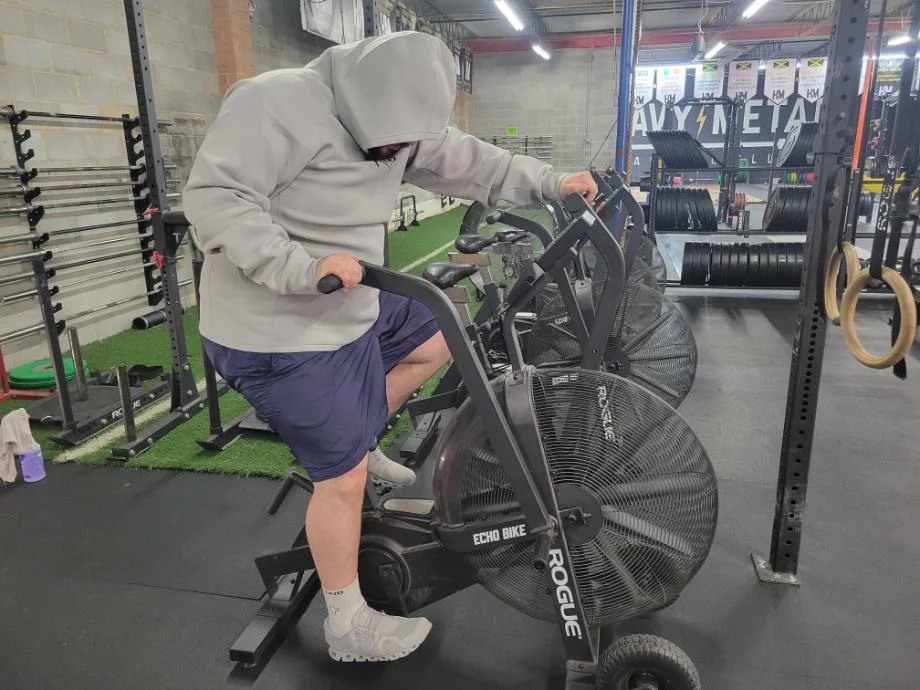
A solid, steady frame is essential on an air bike, especially since these machines demand both upper- and lower-body effort. When you’re pushing, pulling, and sprinting, any wobble can throw off your rhythm or even become a safety issue. Heavier bikes generally sit more securely to the floor and resist shifting during hard intervals. Wide bases, levelers, and high-quality welds also contribute to overall sturdiness.
Related: Best Mini Exercise Bikes
Belt Drive
Most high-end air bikes now use belt drives instead of chains. A belt system runs smoother, stays quieter, and doesn’t require the routine lubrication that chains do. It also handles sudden power spikes more gracefully (think HIIT intervals or Tabata workouts). Belt drives usually last longer under heavy use, as well, making them ideal for CrossFit-style or HYROX-type training.
Seat Comfort
You’ll spend a lot of time in the saddle, so comfort matters. Look for a seat with adequate padding and a shape that feels supportive during both steady-state rides and max-effort bursts.
Customizations
Just as important is adjustability: A good air bike should offer both vertical and horizontal seat adjustments so riders of different heights and leg lengths can find an efficient position. Proper fit can also reduce joint stress and keep you comfortable for longer sessions.
Monitor
A clear, easy-to-read console makes workouts more effective. At minimum, the monitor should track key metrics like RPM, time, speed, calories, and distance. Better models include preset interval modes (like 20/10 or 30/30), custom interval programming, heart-rate compatibility, and Bluetooth connectivity. If you like structured training or data-driven conditioning, prioritize a bike with robust tracking and intuitive controls.
Related: Best Exercise Bike With Screen
Space
Air bikes can introduce big conditioning potential into a small home gym—but only if they fit your space. Check the bike’s footprint and overall height to make sure it works with your layout. If you plan to tuck it away between sessions, transport wheels or built-in rollers are game changers. A heavier bike is more stable, but those mobility features keep it from becoming a permanent anchor in the middle of your garage or spare room.
FAQs About the Best Air Bikes
What is an air bike?
An air bike is a type of stationary bike that uses a fan flywheel and manual power to increase resistance. Instead of using a wheel, the force is provided by spinning a fan. The greater the acceleration, the greater the pressure provided by the fan. As a result, the air bike is also sometimes referred to as a fan bike.
Are air bikes worth it?
An air bike is worth it if you do a lot of CrossFit workouts or want to perform cardio workouts that are more challenging than regular bike rides. Unlike traditional exercise bikes, air bikes work both the upper and lower body. For those wanting a full-body conditioning workout, an air bike can be worth the investment.
What are the disadvantages of an air bike?
Air bikes are completely user-driven, which means the harder you pedal, the more resistance you’ll create, whereas on a regular exercise bike, you can adjust the resistance manually. Air bikes are also noisier and typically bigger than traditional exercise bikes. Lastly, air bikes don’t often come with dynamic programming available, so if you’re someone who likes virtual classes, air bikes are likely less suitable for your preferences.
Is an air bike the same as an AssaultBike?
The AssaultBike is an air bike from the brand Assault Fitness. It was the first air bike to become ultra-popular in CrossFit gyms and was the official air bike of the CrossFit Games for quite some time. That’s why the name is synonymous with air bikes, in general.
References
- National Heart, Blood, and Lung Institute. Physical Activity and Your Health.
- Atakan MM, Li Y, Koşar ŞN, Turnagöl HH, Yan X. Evidence-Based Effects of High-Intensity Interval Training on Exercise Capacity and Health: A Review with Historical Perspective. Int J Environ Res Public Health. 2021;18(13):7201.