




Out of all the best muscle recovery tools at your disposal, a cold plunge tub offers unique benefits that can help you feel refreshed and rejuvenated for your next workout. While this frigid form of hydrotherapy isn’t for the faint of heart, it can be a useful way to reduce inflammation, support your immune system, and manage stress.
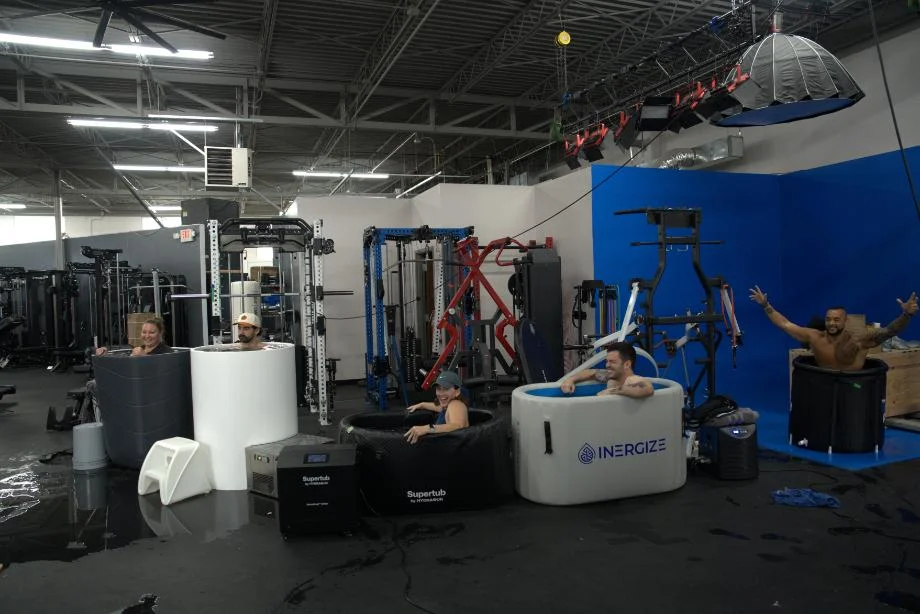
Our team of certified personal trainers, competitive athletes, and CrossFit coaches tested more than 20 of the best cold plunge tubs and researched dozens more to see which would deliver the best cold plunge experience.
We also consulted with Dr. Mike Masi, a doctor of physical therapy (DPT), to assess the merit of this recovery method and examine each tub using our cold plunge testing methodology. After that, we had the content medically reviewed by Dr. Bilal Ahsan, a resident physician in Physical Medicine and Rehabilitation (PM&R) who specializes in musculoskeletal, neurological, and sports-related conditions. Dr. Ahsan helped ensure accuracy throughout the article.
To narrow down our list, we used a 1-5 scoring system to rate key factors such as:
- Footprint and Portability: How much space does the tub take up? Is it easy to move when not filled with water?
- Durability and Construction: Does it feel stable when getting in and out of the water? Does the material retain temperature well?
- Draining and Cleaning: How easy is it to dump the water and ensure cleanliness?
- Conveniences: Is there a way to monitor or regulate the temperature? Are there added features, such as a phone holder or lights? These can help enhance your cold plunge experience.
Whether it’s massage guns, saunas, or another tool, we’ve helped more than 650,000 athletes connect with high-quality recovery equipment. Let’s dive into our picks so you can choose the right cold plunge tub based on your needs, budget, and space.
GGR Gold Pick — Best Cold Plunge Tub
We awarded the Plunge 4.23 stars out of 5 and named it the best cold plunge overall, thanks to its spacious design, durable construction, and indoor/outdoor versatility.
Best Cold Plunge Tubs of 2026
- Best Cold Plunge Tub Overall – The Plunge
- Best Luxury Cold Plunge – Sun Home Cold Plunge Pro
- Best Hot and Cold Plunge – Renu Therapy Cold Stoic 3.0
- Best Budget Cold Plunge – Polar Dive PRO
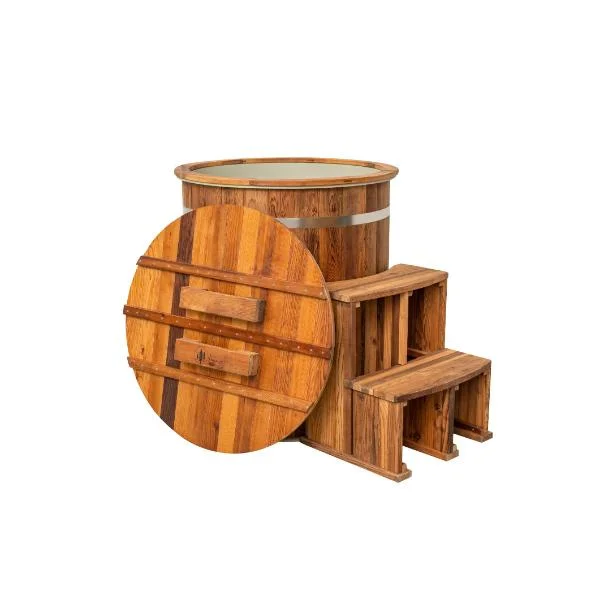
- Best Outdoor Cold Plunge – Redwood Outdoors Alaskan Cold Plunge Tub
- Best Vertical Cold Plunge – Nordic Wave Viking Premier
- Best Inflatable Cold Plunge – Sun Home Cold Plunge
- Best Cold Plunge Tub for Small Spaces – Nordik Recovery Ice Bath
- Best Smart Cold Plunge – Plunge All-In
- Best Portable Cold Plunge – Cold Life Plunge
- Best Indoor Cold Plunge – Hydragun Supertub Cold Plunge
- Best Customizable Cold Plunge – Inergize Cold And Hot Plunge Tub
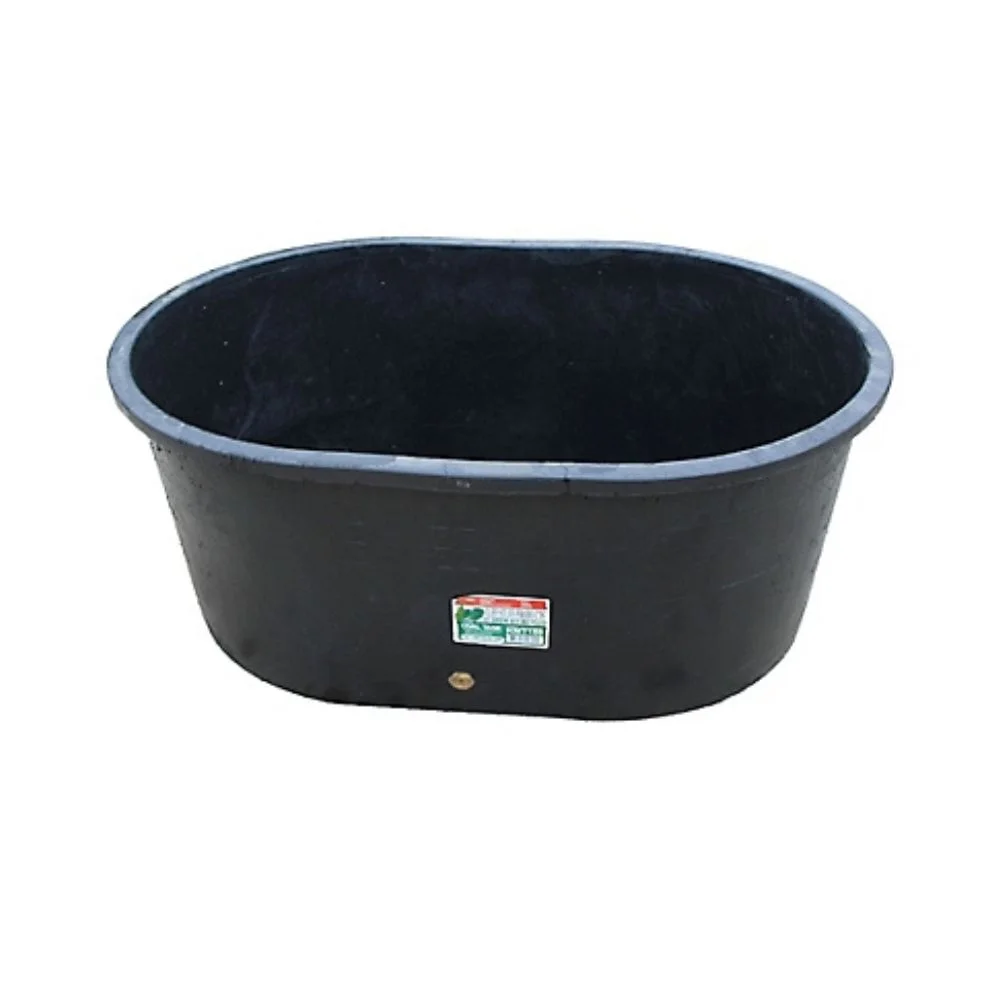
- Best DIY Cold Plunge – Tuff Stuff Super-Duty Oval Stock Tank
Current Top Deals
- Sun Home Cold Plunge Pro – Up to $2,300 off + free shipping
- Cold Life Plunge – $1,000 off cold plunges with code VDAY
- Redwood Outdoors Alaskan Cold Plunge Tub – Save $1,000 on select cold plunges
- Nordic Wave Viking Premier – $1,000 off Viking Cold Plunges
- Polar Dive PRO – Get up to 50% off
Latest Updates
In April 2026, we added the Renu Therapy Cold Stoic 3.0 as our favorite hot/cold plunge model. This impressive tub got high marks for its ergonomics and convenient tech features.
Best Cold Plunge Tub Video Review
Compare Best Cold Plunges Side By Side
 |  |  |  |  |  |  |  |  |  |  |  |  | |
| The Plunge | Sun Home Cold Plunge Pro | Renu Therapy Cold Stoic 3.0 | Polar Dive PRO | Redwood Outdoors Alaskan Cold Plunge Tub | Nordic Wave Viking Premier | Sun Home Cold Plunge | Nordik Recovery Ice Bath | Plunge All-In | Cold Life Plunge | Hydragun Supertub Cold Plunge | Inergize Cold And Hot Plunge Tub | Tuff Stuff Super-Duty Oval Stock Tank | |
Rating | |||||||||||||
| Type | Tub made of acrylic and fiberglass with a metal base | Stainless steel tub | Metal tub with composite wood deck | Inflatable tub | Wood barrel | Barrel made of HDPE plastic | Inflatable tub | Inflatable tub | Acrylic tub | Aluminum barrel | Inflatable tub | Inflatable tub | LDPE tub |
| Footprint | 67” L x 31.5” W x 24” H | 78″ L x 34″ W x 33″ W | 70” L x 33” W x 35” H | 32″ D x 36″ H | 40.5” H x 37” D | 36″ W x 30″ D x 41″ H (tub) | 6.4ft L x 2.3ft W x 2.1 ft H | 53.1″ L x 23.6″ D x 31.5″ H | 76.75” L x 31.5” W x 28.75” H | 43″H x 33″ D | 52” L x 28” W x 24” H | 51” L x 28” W x 30” H | 53” L x 36” W x 20” H |
| Capacity | 100 gal | 150 gal | 95 gallons | 106 gal | 130 gallons | 95 gal | 95 gal | 105 gal | 105 gal | N/A | 60 gal | 60-70 gal | 110 gal |
| Filled Weight | 1,000 lbs | 1,500 lbs | 1,155 lbs | N/A | 1,300 lbs | N/A | N/A | Not disclosed | 1,150 lbs | N/A | N/A | 600-700 lbs | N/A |
| Temperature | 37 to 103 F | 32 to 48 F | 37 to 104° F | 39 F | N/A | 35 to 104 F | 37.5 to 104 F | 37 – 113 F | 37 ° F to ~104 ° F | 37 F | 33.8 to 108 F | 37 to 105 F | N/A |
| Power Req. | 120 V | 120 V | 120V | N/A | N/A | 120 V | 120 V | N/A | 15A circuit | 110 V | Yes | 120 V | N/A |
| Warranty | 1-year standard; extended available | 1-year residential limited warranty | 5 years | 1 year | 1-year standard | 5-year warranty on tub, 1-year warranty on chiller | One-year limited warranty | 2-year limited warranty | 1 year | 1-year standard; extended options available | 1-year warranty | 1 year | |
Best Cold Plunge Tub Overall: The Plunge
Updated by: Stephen Sheehan, CPT, CNC
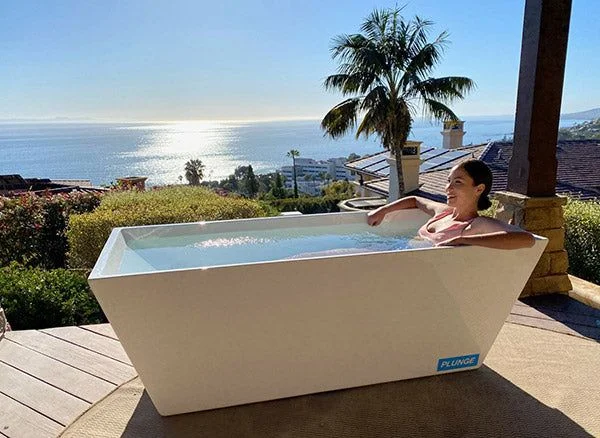









Plunge is a user-friendly cold-immersion therapy tool that’s easy to clean and maintain. The $5,000 price tag may just be too much for many people.
What our tester says:
“The biggest benefit is that you don’t have to go to the store and get a lot of bags of ice and fill up a tub. Honestly, if you plan on taking consistent ice baths, this is by far the ideal option, even though it’s costly up front.”
At A Glance
- Premium cold plunge tub with hot/cold capability
- Chills to 37° F, heats to 103° F
- Built-in filtration and ozone sanitation
- Indoor/outdoor use with easy setup
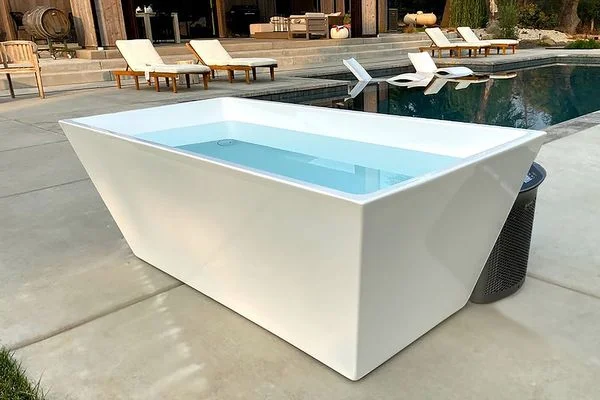
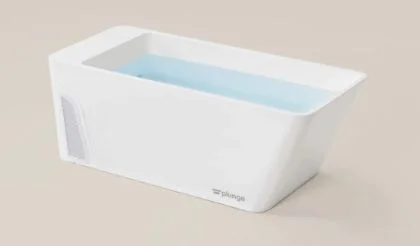
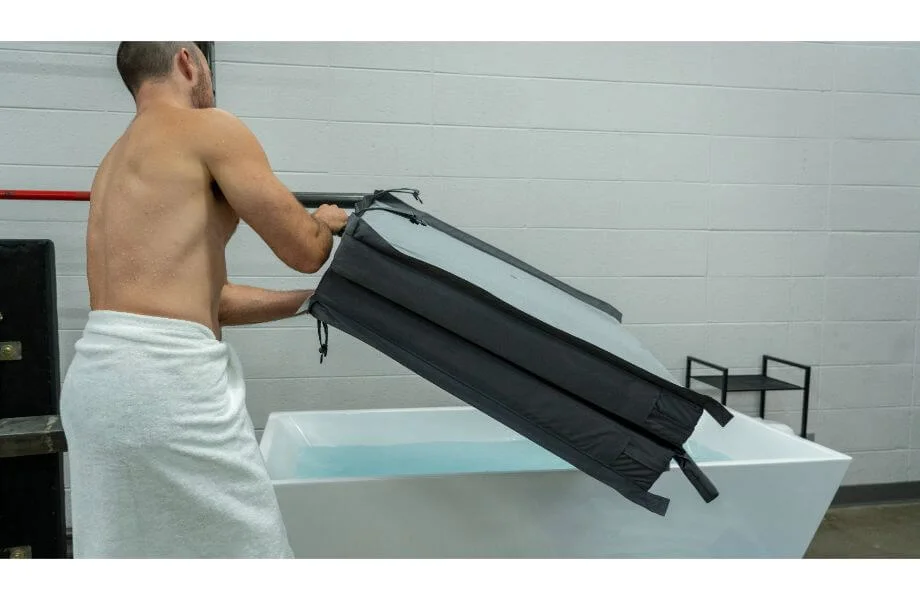
The Plunge, formerly called the Cold Plunge, is the best cold plunge tub overall because it’s spacious and comfortable, can be used indoors or outdoors, has a circular filtration system, and includes plenty of conveniences. Easy to use and built to last using high-quality materials, this popular cold plunge tub looks like it belongs in a luxury spa, especially since it includes an LCD screen where you set your desired temperature. Even with an MSRP of roughly $7,000, The Plunge provides great value, earning a 4-out-of-5 score in this key category.
Convenience: 4/5
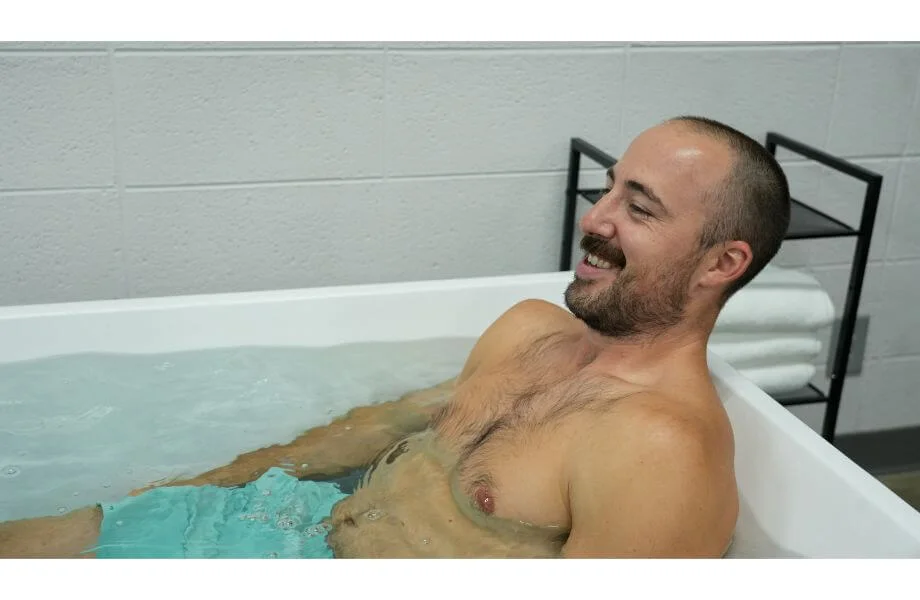
Ergonomics: 4/5
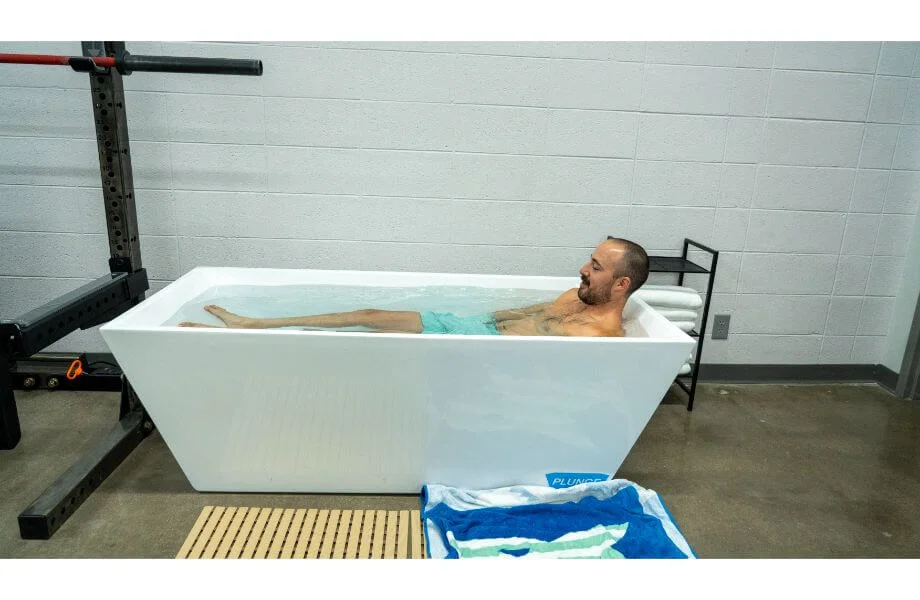
Footprint & Portability: 3/5
Why We Like The Plunge
The Plunge checks many boxes we look for in the best cold plunge tubs, earning high scores for durability (4.5 out of 5), ease of use (5 out of 5), and conveniences (5 out of 5). One of our favorite aspects is the 20-micron filtration system that ensures you’ll have clean water free of impurities. With a simple temperature control system that allows you to set The Plunge as low as 39 degrees Fahrenheit, it’s a great investment if you’re an active gym-goer looking to boost your recovery and wellness efforts.
“Cold water immersion can help with muscle recovery because it reduces the inflammation from working out and provides less perceived soreness,” says Dr. Mike Masi, an experienced physical therapist.
Honestly, if you plan on taking consistent ice baths, this is by far the ideal option, even though it has a costly price point.
GGR founder and expert product tester Cooper Mitchell
Alternatives
If you’ve got space or budget limitations, I recommend you look elsewhere. While The Plunge earned high marks almost across the board, we rated the footprint and portability at just 3 out of 5. This tub is big, heavy, and requires 20 square feet of space. Furthermore, it requires electricity to operate—another factor to keep in mind if you’re trying to keep costs down. Finally, we’d be remiss without mentioning Plunge’s paltry one-year warranty. We expect better coverage for a product that costs well over $5,000—even when on sale.
If you’d prefer to cold plunge seated vertically instead of reclined back, take a look at the Nordic Wave Viking, which is priced similarly to the Plunge.
Testing Breakdown
Here’s how The Plunge performed across all categories based on our extensive testing experience.
Vs. The Average
The Plunge falls in line with the average water capacity and temperature range of other tubs. It’s more than a foot longer than your average cold plunge, though, making it more accommodating to taller users.
| The Plunge | Average Cold Plunge Tub | |
| Price | $6,990 | $3,999 |
| Footprint | 66.625” L x 31.5” W x 26” H | 51.5” L x 23.7” W x 25” H |
| Temperature range | 37° F to 103° F | 35.8° F to 97.1° F |
| Water capacity | 105 gallons | 100.9 gallons |
| Warranty | 1 year | 1 year |
Now available in a modern or classic tub design, you can read more about our hands-on experience with the original classic model in the Plunge review.
Best Luxury Cold Plunge: Sun Home Cold Plunge Pro
Updated by: Stephen Sheehan, CPT, CNC
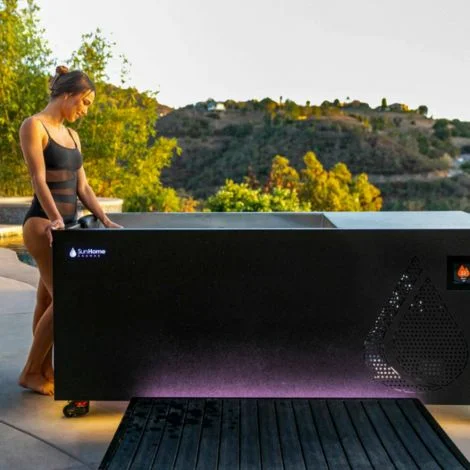
The Sun Home Cold Plunge Pro is a sleek, high-end cold plunge option that can be used indoors or outdoors. It has a powerful chiller that can cool water down to 32 degrees in a matter of minutes. While it has a modern look with the chiller integrated into the design, the price point is about $15,000.
What our tester says:
“There was literal ice everywhere in the tub and hot damn that water is cold! It’s also incredibly sturdy, this will never lose its shape.”
At A Glance
- Cools to 32° F
- Built-in filtration, ozone and UV sanitation
- 150-gallon stainless steel design
- Indoor/outdoor use with caster wheels
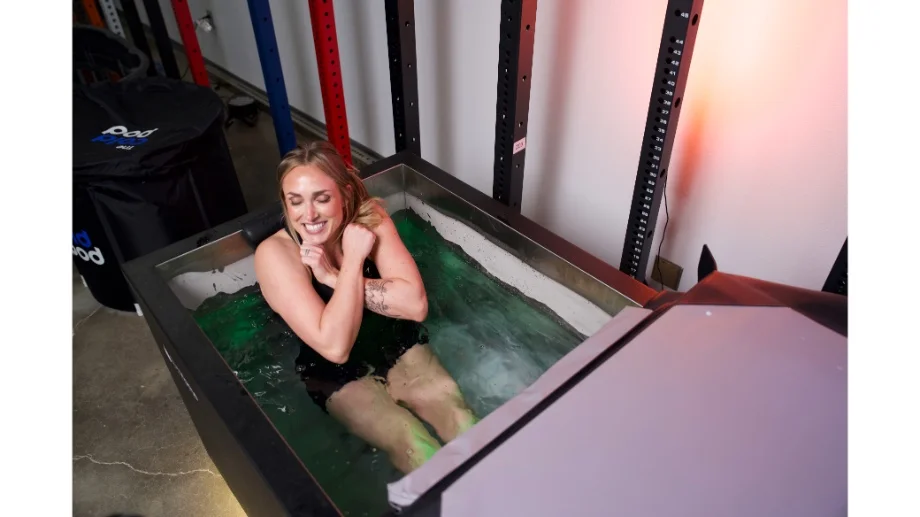
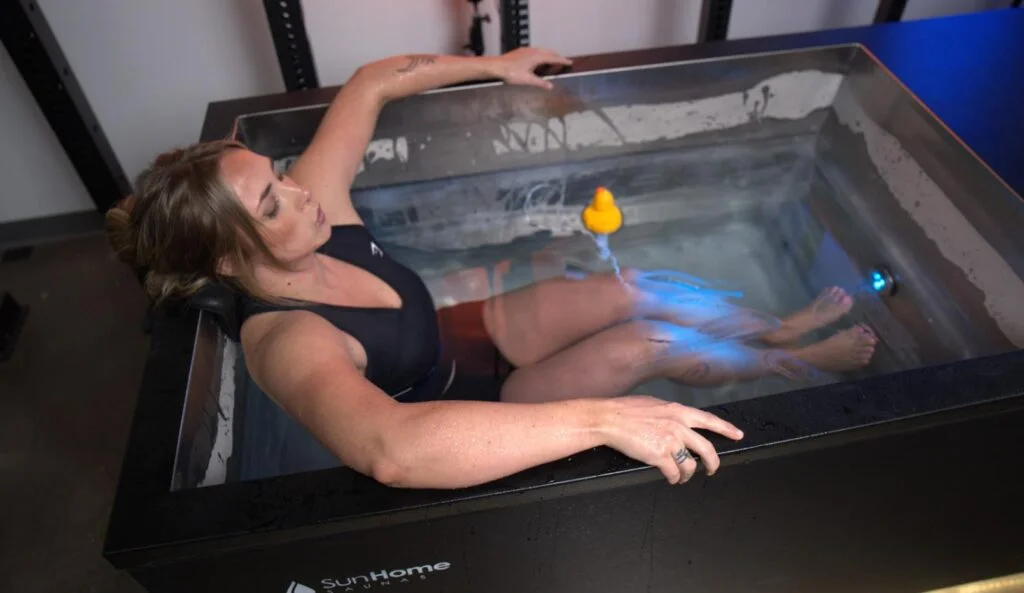
Although it costs almost $15,000, the Sun Home Cold Plunge Pro is worth every penny. This high-end unit comes with more bells and whistles than the average cold plunge tub, including an integrated ice generator, advanced filtration purification system, and ultraviolet disinfection system. You get a lot for the price, which is why our team gives the Cold Plunge Pro a near-perfect score of 4.5 out of 5 for value.
Durability: 5/5
Ergonomics: 5/5
Footprint & Portability: 2/5
Why We Like the Sun Home Cold Plunge Pro
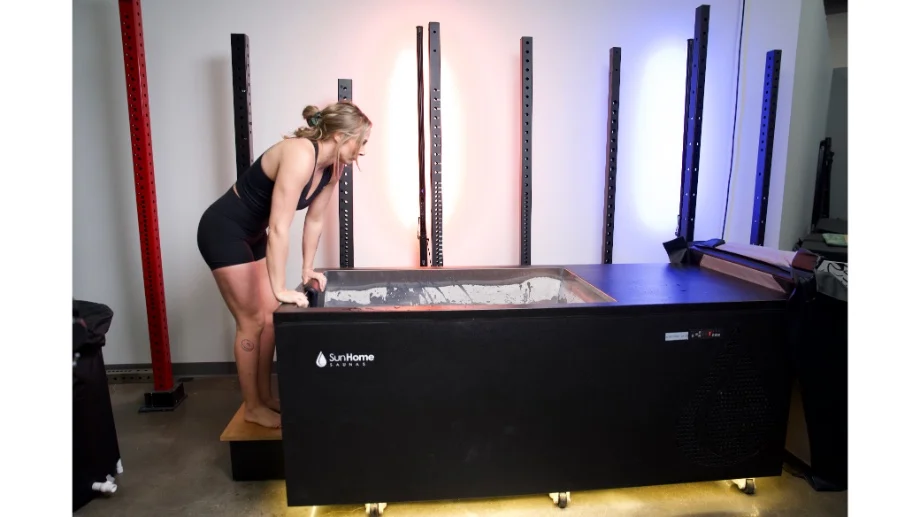
With a larger footprint—it’s 6.5 feet long and nearly 3 feet wide—and more features than the average cold tub, the Sun Home Cold Plunge Pro accommodates users of all heights and gives you substantial control over your experience. A built-in chiller provides a fast cooldown process that can bring water down to 32 degrees in just a matter of minutes. Having an integrated chiller saves on space and is generally more efficient than external chillers, as GGR Everything lead reviewer Lindsay Scheele can personally attest to. “There was literal ice everywhere in the tub, and hot damn that water is cold,” she says.
Earning a 5-out-of-5 score for durability, the rock-solid Cold Plunge Pro “will never lose its shape” according to Lindsay. Featuring a durable exterior coating that’s UV- and weather- resistant, this tub is built for indoor or outdoor use. Another element we appreciate is the powerful filtration system that picks particles that are 20 microns wide—roughly a couple hundredths of a millimeter. This helps the Cold Plunge Pro earn a score of 4 out of 5 for conveniences and reinforces why you get excellent value, too.
The cost is justified on this, just from all the added conveniences of filtration and sanitation. Plus, it has the highest horsepower we’ve seen from a cold plunge tub.
Lindsay Scheele, GGR Everything lead reviewer and certified personal trainer
Alternatives
The Cold Plunge Pro is not designed for small spaces, as it earned a poor footprint and portability score of 2 out of 5. Measuring more than 6 feet long and nearly 3 feet wide on the exterior and weighing 345 pounds without any water, it’s not the easiest to move, even with its built-in caster wheels.
The only other area where the Cold Plunge Pro earned lower than a 4 out of 5 is delivery and setup. Although the tub comes fully assembled, it’s only delivered curbside, so you will need a dolly or some type of transport tool to move it to your desired location. As a result, we docked some points for setup and delivery, giving this tub a 3.5 out of 5 in the category.
Looking for a more budget-friendly option? Try an inflatable cold tub, like the Hydragun Supertub, priced at about $4,000 with a chiller.
Testing Breakdown
The Sun Home Cold Plunge Pro received high marks across a number of key categories, with just a few areas of weakness.
Vs. The Average
Being a luxury item, the Sun Home Cold Plunge Pro is well over the average price for a cold plunge tub at more than $14,000. However, it can reach freezing temperatures and has a higher water capacity than most tubs, so the cost may be worth it for those who have a bigger budget.
| Sun Home Cold Plunge Pro | Average Cold Plunge Tub | |
| Price | $14,599 | $3,999 |
| Footprint | 78″ L x 34″ W x 33″ W | 51.5” L x 23.7” W x 25” H |
| Temperature range | 32° F to 46° F | 35.8° F to 97.1° F |
| Water capacity | 150 gallons | 100.9 gallons |
| Warranty | 1 year limited | 1 year |
One cool bonus feature we like is the underwater light for a truly spa-like feel or for use at night. We have more details in our in-depth Sun Home Cold Plunge Pro review.
Best Hold and Cold Plunge: Renu Therapy Cold Stoic 3.0
Updated by: Jay Serafino





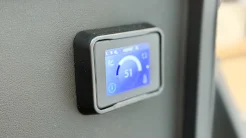
The Cold Stoic 3.0 from Renu Therapy can reach chilled temperatures as low as 37 degrees and offers a sturdy, aesthetically pleasing exterior with a slew of available design options. Plus, the internal chiller unit helps clean up the look (no hoses or drains running across the side) and you can conveniently control your tub’s settings through the intuitive touchscreen or Wi-Fi enabled app.
At a Glance
- Temperature range of 37° F to 104° F
- Available in multiple colors
- Has a built-in chiller
- Can be difficult to get into, per our tester
Can’t decide whether you want to chill out or warm up? The Renu Therapy Cold Stoic 3.0 covers your bases with a hefty temperature range from 37 to 104 degrees Fahrenheit. This is all thanks to the built-in 0.5-HP chiller and heater that you can control remotely through the company’s app.
“This was such a comfortable experience,” our tester notes in reference to their 4-out-of-5 overall rating. “I don’t typically cold plunge, but I did not mind this at all.”
Conveniences: 4.5/5
Value: 3/5
Draining & Cleaning: 4.5/5

Why We Like the Renu Therapy Cold Stoic 3.0
The main reason we like the Cold Stoic 3.0 is its versatility. It can cool down comparatively with the best cold plunges on this list and can also warm up as high as any hot tub. Even better is the fact that the 0.5-HP chiller/heater is built right into the unit, meaning you’re not lugging around a separate component or paying an additional fee to add it on.
With this high-end chiller comes plenty of creature comforts, too, and the Cold Stoic 3.0 is packed with quality-of-life features to make every plunge a breeze. First, you can control the temperature and manage your plunges from an app or the sleek touchscreen panel. This is enough to give the tub a 4.5 out of 5 for conveniences.
Secondly, the unit features a dual-stage filtration system for added peace of mind. There’s an external filter designed for large debris that you can clean out. Then, there’s the internal filter meant for finer debris and pollutants. The additional ozone purification system helps the Cold Stoic 3.0 earn a 4.5 out of 5 for draining and cleaning.
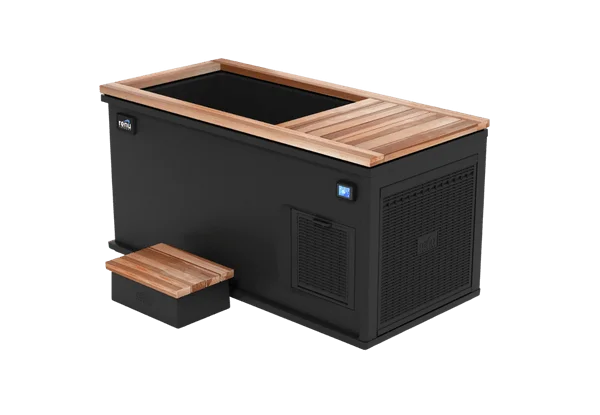
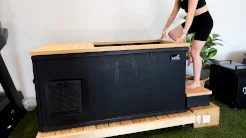
Outside of the practical features, the Cold Stoic 3.0 is also just nice to look at. There are six base colors and six deck colors to choose from, and you’ll have plenty of options to fit the vibe you’re going for. Plus, the deck itself is made from composite wood, so you’re not just getting surface-level quality.
“This tub is so nice,” our tester says, rating the tub a 5 out of 5 for ergonomics. “Between the wooden paneling and the nice wood step, I thought overall it was very comfortable. The plastic wasn’t slippery and had a nice grip to it, but wasn’t uncomfortable on my feet at all. It was like a more secure bathtub.”
I would love to add this to my home. Not only is it pretty, but it’s super functional and comfortable.
Our expert product tester
Alternatives
There are a few areas where the Cold Stoic 3.0 doesn’t quite hit the mark. The main one comes from the stool to get into the tub itself, which our tester found a little too short for comfort.
“For the height, it was definitely too high even with the stool,” they told me. “I had to hoist myself up. I think [the tub] was perfect for me at 5’5”, but any shorter, you would have trouble putting your arms on the sides.”
The footprint is also pretty hefty on this tub. Measuring in at 70 inches long by 33 inches wide by 35 inches tall, this model comes in well over the average. Plus, it weighs 360 pounds on its own and 1,155 pounds when filled to the 95-gallon capacity. Unless you turn green when you’re angry, you’re not moving this on your own. All things considered, we gave the Cold Stoic a 3 out of 5 for footprint and portability.
Next comes the big one: the price. At roughly $11,700, the Cold Stoic 3.0 is one of the more expensive models on this list. And while there are plenty of high-end aspects, you can likely approximate the quality with a less expensive model. As such, we score it a 3 out of 5 for value.
You could consider the $6,990 Plunge as a cheaper alternative. It has similar hot/cold functionality, but gets there at a lower price with similar filtration and tech features.
Testing Breakdown
This tub received high marks for its conveniences, durability, and ergonomics, but the value and footprint ratings fell a bit short.
Vs. The Average
The Renu Therapy Cold Stoic 3.0 is pricier and larger than most, but it makes up for it with a powerful chiller/heater and a lengthy warranty.
| Renu Therapy Cold Stoic 3.0 | Average Cold Plunge Tub | |
| Price | $11,699 | $3,999 |
| Footprint | 70” L x 33” W x 35” H | 51.5” L x 23.7” W x 25” H |
| Temperature range | 37° F to 104° F | 35.8° F to 97.1° F |
| Water capacity | 95 gallons | 100.9 gallons |
| Warranty | 5 years | 1 year |
Best Budget Cold Plunge: Polar Dive PRO
Updated by: Matt Dustin, CSCS, PN1-NC


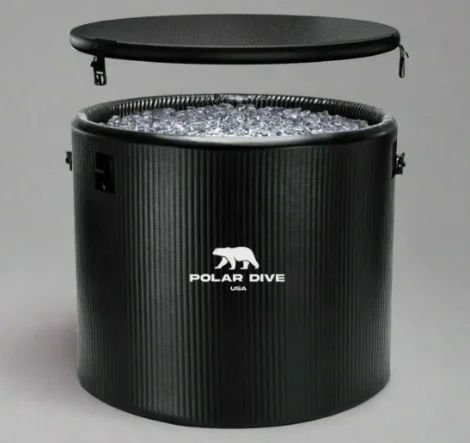
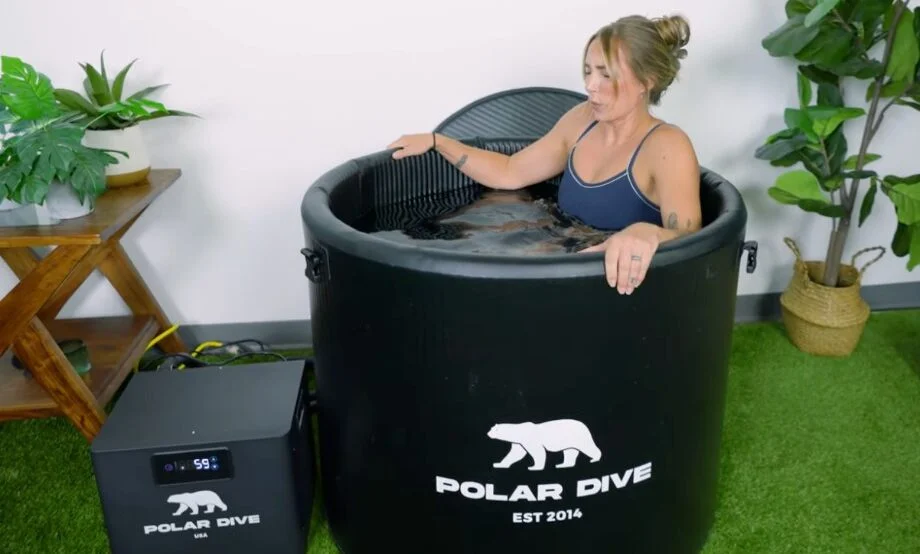
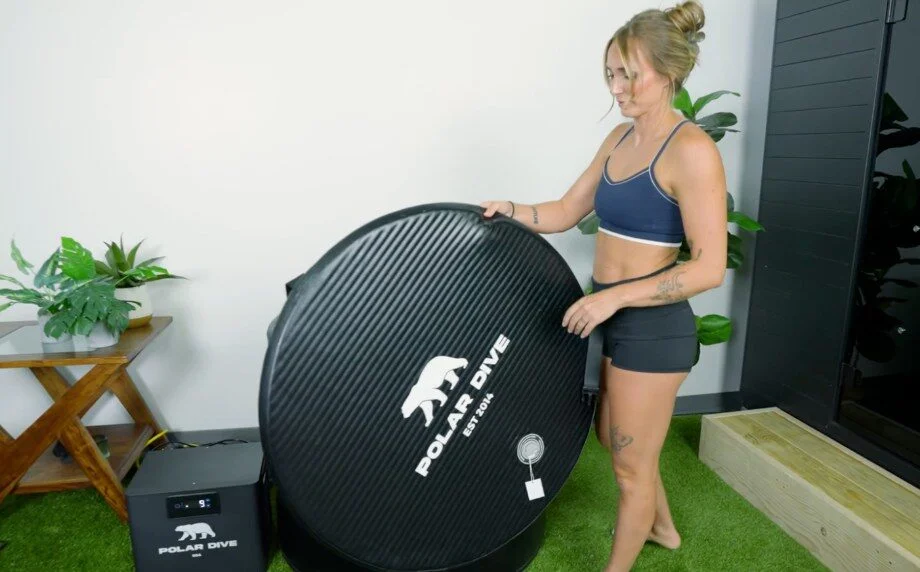
This upright cold plunge is available with or without a chiller, allowing users to customize the plunge to their needs and budget. It’s easy to set up, and large enough to fit a wide variety of body types.
What our tester says:
“It’s under $1,000, it has an ultra-quiet chiller, easy setup… I really have no major callouts to this cold tub.”
At a Glance
- Suitable for indoor and outdoor use
- Optional chiller available
- Great value for the price
- Water may need to be changed regularly
At just $799 without the chiller, the Polar Dive PRO offers surprisingly good value. There are cheaper tubs, but that doesn’t mean better, and we feel this provides the best value at an affordable cost, earning 5 out of 5 stars for value.
Even with the optional chiller, you’re still paying just $1,750, which is significantly more affordable than the average cold plunge we’ve tested. The Polar Dive PRO is also available in brick-and-mortar stores such as Target and Sam’s Club, which can bring the price down further by eliminating shipping costs for certain customers.
Ergonomics: 4/5
Value: 5/5
Footprint & Portability: 4/5
Why We Like The Polar Dive PRO
If you’re in the market for your first cold plunge, the Polar Dive PRO is an excellent choice. It’s affordable, but that doesn’t mean it’s low-quality, and it still provides plenty of value for what you’re paying.
Even though the suggested price on the Polar Dive website is $1,750, we’ve consistently seen it on sale for $949, which is an impressive price, according to Lindsay Scheele, CPT, CNC.
“The Polar Dive only costs $949, and I was actually surprised by that, because it’s very similar to other portable cold tubs we’ve tested,” Lindsay told me. “It’s very similar to other models that cost about $700 more.”
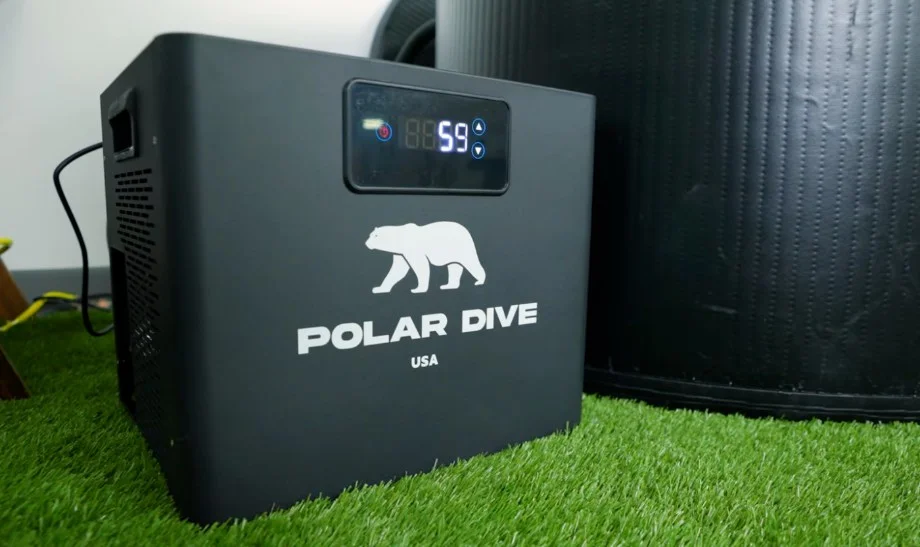
For those who want to purchase the chiller, which we highly recommend, you won’t be disappointed. Lindsay has used plenty of cold plunges, and she says this is one of the quietest chillers she’s seen.
“Normally, I wouldn’t recommend placing an indoor cold tub inside because even ‘quiet’ chillers tend to kick on and off multiple times throughout the day,” Lindsay explained. “However, we’ve been running this for well over a week in the office, and everyone agrees: it’s one of the quietest chillers we’ve ever used.”
It doesn’t have any sort of remote access to control the temperature with your phone, but we still give this 3 out of 5 for conveniences, thanks to the impressively silent chiller.
For the price point, I love this cold plunge. If you’re looking for an entry-level cold tub, this is a really good option.
Lindsay Scheele, GGR Everything lead reviewer and certified personal trainer
Alternatives
While this tub should last for a long time, Lindsay felt that the company’s claims of military-grade durability were a little exaggerated. She said, “Since it’s a portable inflatable design, the walls are a bit flimsy, so I wouldn’t rest your full body weight on the sides. Still, it’s stable enough to get in and out easily without stairs.”
She also noted that the chiller has single filtration, while other models use dual filtration. You’ll need to change your water more often, so we only give this 3 out of 5 stars for draining and cleaning.
“The chiller has a 20-micron filter, and the company recommends changing your water every 3–5 days,” Lindsay explained. “That’s more frequent than with other systems, which often use dual filtration. If you’re using it regularly, I’d suggest changing the water at least weekly.”
If you’re looking for an upright plunge with better filtration and durability, you may want to consider the Nordic Wave Viking Gen 2 instead.
Testing Breakdown
This cold plunge received a few average scores, particularly for durability, draining, and cleaning, but we think it still provides a lot of value at a great price point.
Vs. The Average
The Polar Dive PRO costs significantly less than the average plunge, even with the chiller, while providing excellent cooling, ample water capacity, and a standard warranty.
| Polar Dive PRO | Average Cold Plunge Tub | |
| Price | $799 without chiller, $1,750 with chiller | $3,999 |
| Footprint | 32” D x 36” H | 51.5” L x 23.7” W x 25” H |
| Temperature range | Goes as low as 39° F (with chiller) | 35.8° F to 97.1° F |
| Water capacity | 106 gallons | 100.9 gallons |
| Warranty | 1 year | 1 year |
Best Outdoor Cold Plunge: Redwood Outdoors Alaskan Cold Plunge Tub
Updated by: Caine Wilkes, OLY, CNC, USAW-L1
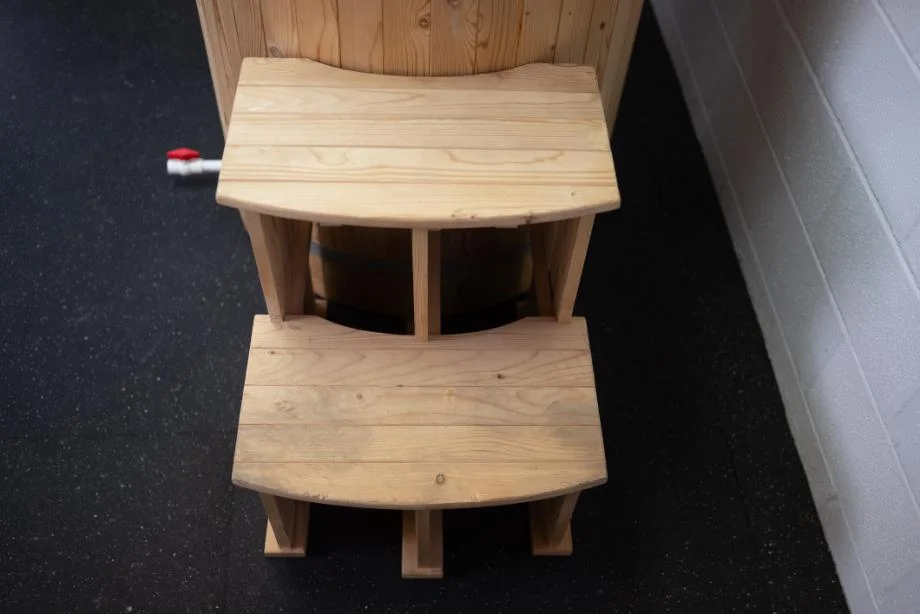
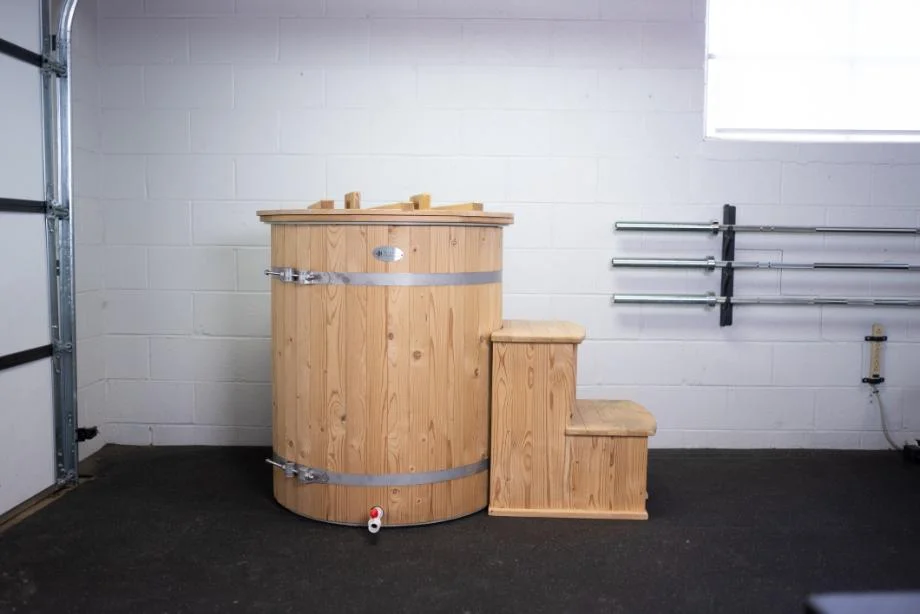
Redwood Outdoors Alaskan Cold Plunge Tub offers a vertical option for folks who’d rather sit upright versus lay down and pretend to relax while submerged in cold water. The Scandinavian spruce wood exterior gives The Alaskan a classic spa look and feel for your cold plunge sessions. It’s worth noting the base price does not include a chiller but it can be added for an additional cost.
What our tester says:
“It has a built-in seat, which many vertical plunges don’t have. I also love how easy this is to set up and use. It is heavy at 250 pounds, so it’s not portable.”
At A Glance
- Compact barrel-style tub made of durable Thermowood
- Holds 130 gallons
- Ice-cooled by default; optional chiller add-on
- Built-in seat and drainage for easy use
Built from durable Scandinavian Thermowood, the Redwood Outdoors Alaskan Cold Plunge Tub is a well-priced, footprint-friendly tub made to withstand outdoor use, as well as a tamer indoor environment. Earning an overall score of 4.1 out of 5 stars, it comes in stained or unstained versions that cost $2,999 or $2,499, respectively. Featuring a built-in seat, easy drainage system, and classy aesthetic, this vertical tub comes pre-assembled, making the setup process a breeze.
Construction: 4/5

Value: 4/5
Footprint & Portability: 4/5
Why We Like The Redwood Outdoors Alaskan Cold Plunge Tub
With a vertical design that can be great for small spaces, this barrel-style tub is ideal for outdoor use (or anywhere really), since it doesn’t require any power or plumbing. Scoring a 4 out of 5 for footprint and portability, the Alaskan also earned the same rating for its construction. The exterior is made of Scandinavian Thermowood, which is specially treated for outdoor durability and protection. Meanwhile, the inside of the tub is lined with hard plastic that our tester described as “high quality.”
Although many tubs on this list include a chiller and other extra features, we appreciate the simplicity of this tub. Draining and cleaning are a breeze, especially since there are no electrical components. With a capacity of 130 gallons and a built-in seat, it’s more comfortable and spacious than less expensive vertical tubs like the Ice Barrel. If you want precise temperature control (and have room in your budget), you can opt for the upgraded Alaskan All-In-One Cold Plunge Kit. Featuring a dual heating and cooling system, this premium unit costs roughly $6,000.
You can easily clean it with a brush or sponge that you’d use to wash your car.
Our expert product tester
Alternatives
Despite receiving solid marks for construction, durability, and footprint, the Alaskan falls short in features, earning a 3-out-of-5 score in that category. “Other than the steps, this is a no-frills cold plunge,” says our expert product tester.
The Alaskan is essentially an elevated ice bath that may require some heavy lifting to get sufficiently chilly. “When I used this in the summer, the outdoor temperatures forced me to use at least 80 pounds of ice each session, maybe more,” our tester notes. That’s quite a bit of ice to have to buy and transport, especially if you plan to use the tub as part of your daily routine.
Furthermore, while Redwood Outdoors used to sell separate heater and chiller units that could transform the Alaskan into a more streamlined unit for contrast therapy, that’s no longer the case. The only option you have for full temperature control (and no ice required) is to purchase the All-In-One Cold Plunge Kit, which costs roughly $6,000.
For a barrel-style tub with more features, check out the Nordic Wave Viking Gen 2. Although it’s expensive compared to the Alaskan, it includes a high-quality chiller, three-stage filtration system, and Wi-Fi app controls.
Testing Breakdown
Take a closer look at how the Redwood Outdoors Alaskan Cold Plunge Tub scored across all categories.
Vs. The Average
The Redwood Outdoors Alaskan Cold Plunge Tub is more affordable than the average cold plunge. However, it’s also smaller and doesn’t offer a precise temperature range since it doesn’t include a chiller.
| Redwood Outdoors Alaskan Cold Plunge Tub | Average Cold Plunge Tub | |
| Price | $2,499 (unstained) or $2,999 (stained) | $3,999 |
| Footprint | 37” L (diameter) x 40.5” H | 51.5” L x 23.7” W x 25” H |
| Temperature range | N/A | 35.8° F to 97.1° F |
| Water capacity | About 130 gallons | 100.9 gallons |
| Warranty | 1 year | 1 year |
You can read about our hands-on experience in our Redwood Outdoor Alaskan Cold Plunge review.
Best Vertical Cold Plunge: Nordic Wave Viking Gen 2
Updated by: Stephen Sheehan, CPT, CNC
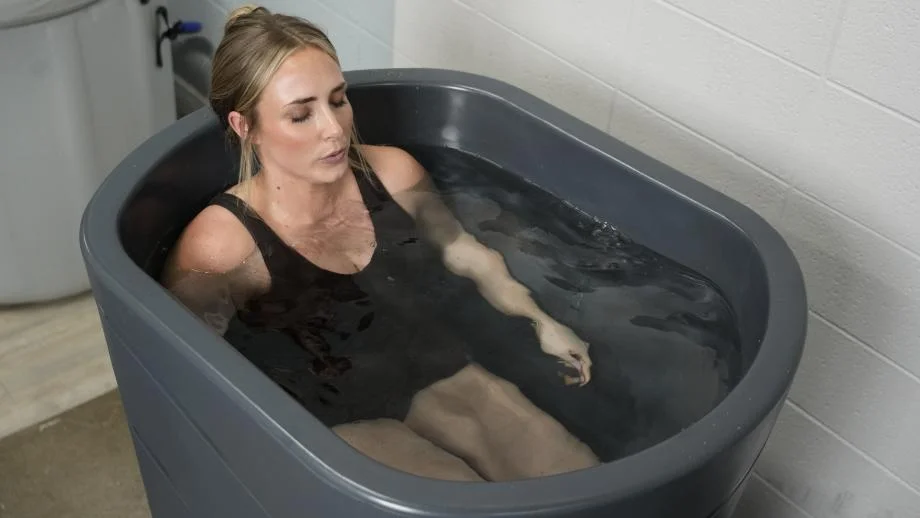
The Viking Gen 2 Cold Plunge from Nordic Wave is a vertical cold tub option that allows you to sit in an upright position. It also comes with a chiller and filtration system. The biggest updates from the original is that the chiller now heats and you can choose between the 0.8-horsepower standard chiller and a 1-horsepower Elite chiller. The 2-inch-thick insulated walls allow for temperatures as low as 35 degrees Fahrenheit or as high as 104 degrees.
What our tester says:
“This vertical cold plunge is compact, durable, can heat and chill, and comes in at a comparable price to other cold plunge tubs. I like the upgraded version of the Nordic Wave Viking.”
At A Glance
- Vertical, compact 95-gallon plunge
- Integrated chiller cools to 35° F and heats to 104° F
- Insulated walls, multi-stage filtration with ozone sanitation, app + touchscreen control
- Includes lid, step stool, auto-priming pump, and sloped drain
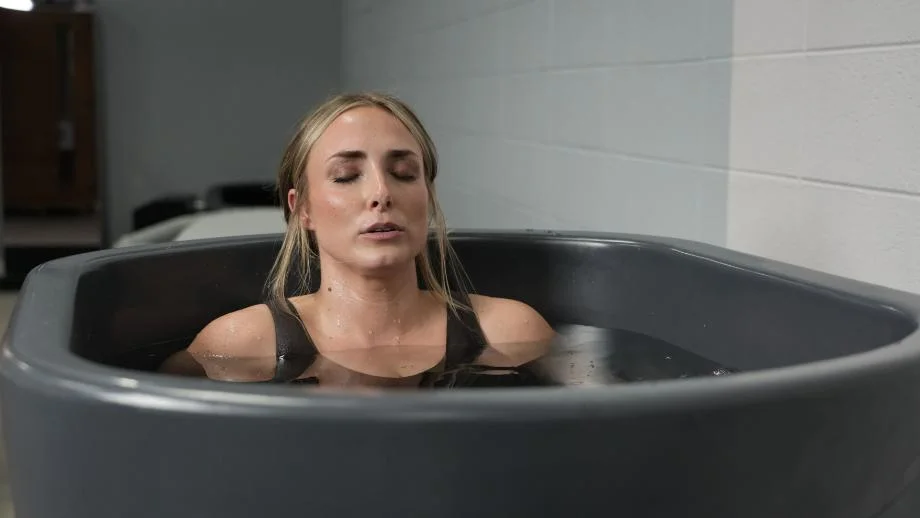
If you rather sit upright than lay back, the Nordic Wave Viking Gen 2 is our choice for the best vertical cold plunge. Available in multiple colors, sizes, and chiller types, you have ample flexibility to customize your cold plunge experience. This is one of the few vertical tubs that comes with a chiller, and despite a smaller footprint, it still has an impressive water capacity of 95 gallons.
Durability: 4.5/5
Value: 4/5
Footprint: 4.5/5
Why We Like The Nordic Wave Viking Gen 2
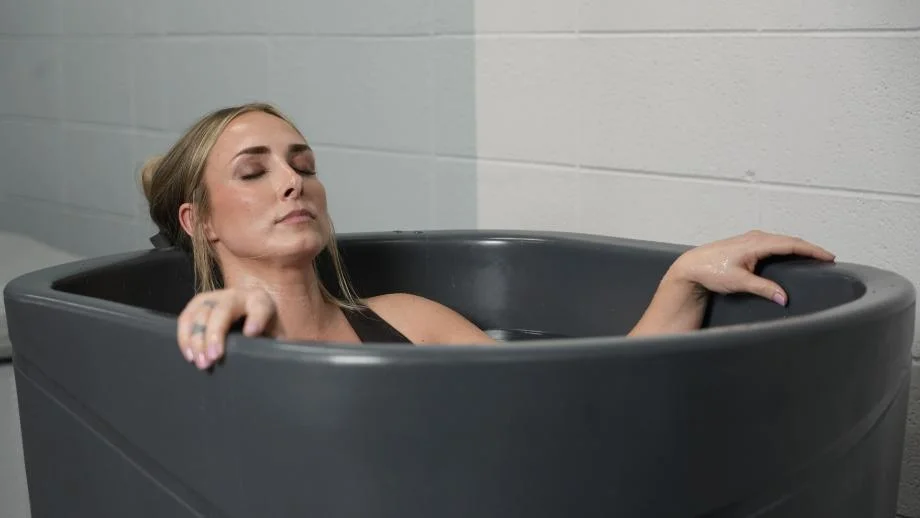
You’ll never have to worry about the Nordic Wave Viking holding up over time. Made from rotomolded plastic—a process that results in ultra-durable, single-piece plastic objects—this tub also features foam-insulated walls that help regulate the water temperature and lower the cost of running the chiller. GGR Everything lead reviewer Lindsay Scheele says the Viking “feels very high end,” awarding a score of 4.5 out of 5 for construction and durability.
Furthermore, the barrel-style design makes this a fantastic option for those with limited room. As opposed to bathtub-style units, the Viking requires such little floor space that some customers have even fit it inside their bathroom.
All in all I really like this Viking tub—I think that it functions really well, keeps the water very cool, and its price point is really comparable to other quality cold tubs.
Lindsay Scheele, GGR Everything lead reviewer and certified personal trainer
Alternatives
While the Viking Gen 2 is lightweight, it’s not nearly as portable as you’d expect. Lindsay noted that, “Even though it only weighs 60 pounds, it’s a little bit awkward to move around because they don’t have handlebars anywhere and you’re basically just bear-hugging this huge barrel.” This makes it less convenient if you plan to move the tub frequently or don’t have a permanent setup spot.
We also had some safety concerns with the lid. It does a great job of keeping out debris, but without a locking mechanism, it could be risky for households with kids or pets.
If you’d rather lean back when you’re chilling in an ice bath, check out the Polar Monkeys Brainpod 2.0, which can reach temperatures as low as 32 degrees Fahrenheit.
Testing Breakdown
Here’s a breakdown of how the Nordic Wave Viking Gen 2 performed across different categories.
Vs. The Average
The Nordic Wave Viking Gen 2 has a far better warranty than the average cold plunge tub, which is a nice perk given its price point. Keep in mind that it’s also capable of heating up to 104° F—roughly 7 degrees warmer than the average tub.
| Nordic Wave Viking Gen 2 | Average Cold Plunge Tub | |
| Price | $6,999 (Pro); $7,999 (Elite) | $3,999 |
| Footprint | 36″ W x 30″ D x 44″ H (tub) 12″ W x 21″ D x 17″ H (Pro chiller) 14” W x 21” D x 19” H (Elite chiller) | 51.5” L x 23.7” W x 25” H |
| Temperature range | 37° F to 104° F | 35.8° F to 97.1° F |
| Water capacity | 95 gallons | 100.9 gallons |
| Warranty | 5-year on tub, 1-year on chiller | 1 year |
Check out our Nordic Wave Cold Plunge review for more thoughts on the original Viking tub, or you can see Lindsay’s thoughts on the updated Gen 2 in her video review below.
Best Inflatable Cold Plunge: Sun Home Cold Plunge
Updated by: Caine Wilkes, OLY, CNC, USAW-L1

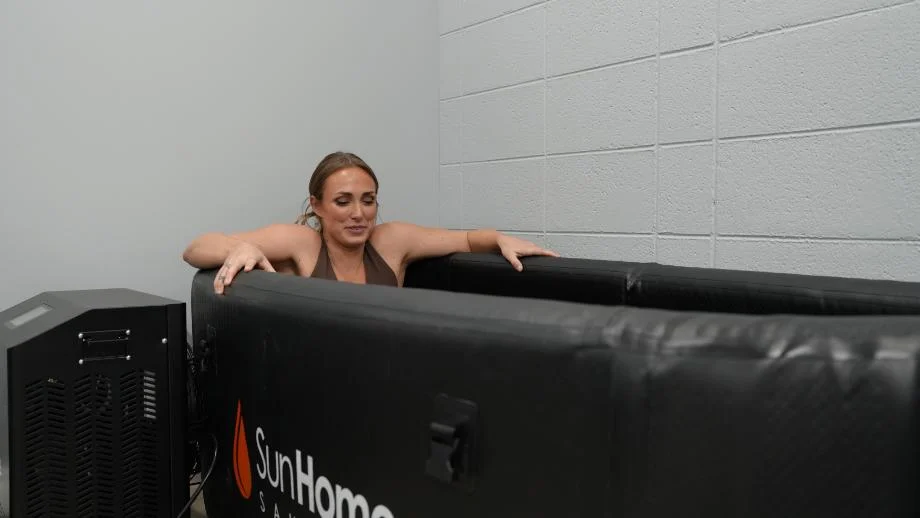
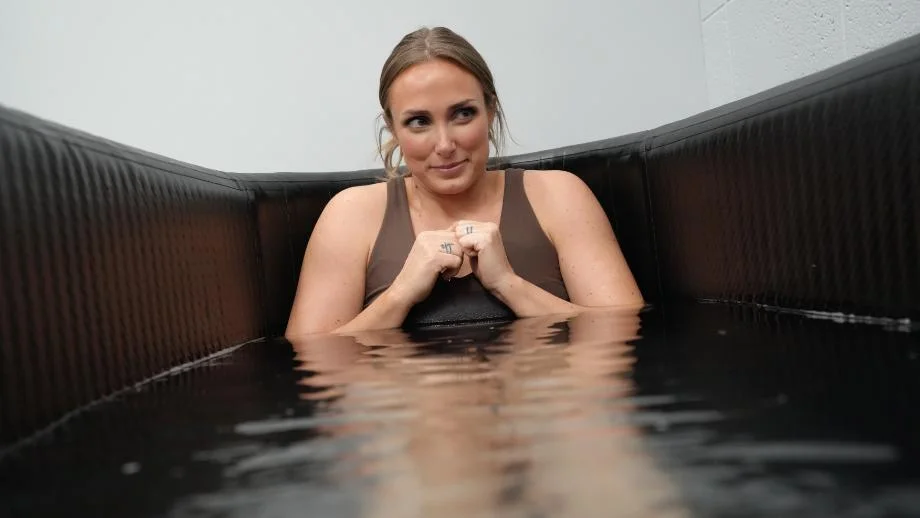
The Sun Home Cold Plunge was described by our expert product testers as “the most durable inflatable tub” they’ve seen. It can be used with hot or cold water and sets up easily.
What our tester says:
“We have had multiple people in and out of the tub, kept water in it for over two weeks, and have had no issues with the tub keepings it shape. When I compare the outer shell of this inflatable tub to others we have received, I’d place money on this one lasting the longest.”
At a Glance
- Military-grade drop stitch construction
- Chills to 32° F, heats to 104° F
- Wi-Fi-enabled chiller with app control
- Fits users up to 6’8”
The Sun Home Cold Plunge earned an overall score of 4.24 out of 5 and our nomination for the best inflatable cold plunge tub thanks to its combination of portability, durability, and hot/cold functionality. Made of a military-grade drop stitch, this inflatable tub is built to last—and it proved that during our evaluation process. After multiple testers used it for several weeks, the Sun Home Cold Plunge had no issues maintaining its shape, earning a 4-out-of-5 score for durability.
Ergonomics: 5/5
Durability: 4/5
Cleaning: 3.5/5
Why We Like The Sun Home Cold Plunge
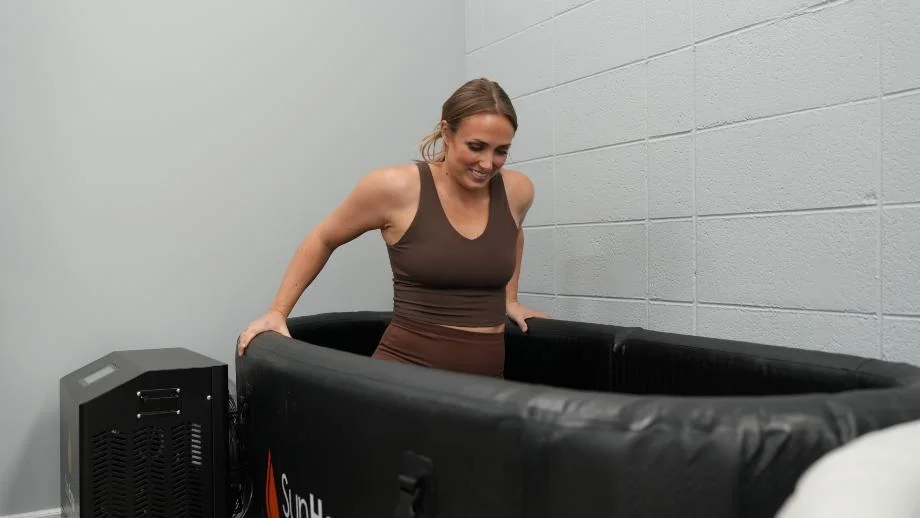
Despite weighing just 15 pounds when empty, this inflatable cold plunge tub is ultra-durable, making it ideal for consistent and routine use. That’s due to the military-grade drop stitch—a strong material used in inflatable objects to add puncture resistance and help with shape retention. “When I compare the outer shell of this inflatable tub to others we’ve received, I’d place my money on this one lasting the longest,” GGR Everything lead reviewer Lindsay Scheele says.
The Sun Home Cold Plunge is also incredibly roomy. We’ve had testers of all heights try out this tub and everyone has been able to lay down in it comfortably, which is enough to earn it a 5 out of 5 on ergonomics. Combined with the ability to heat up to 104 degrees Fahrenheit or cool down to 32 degrees via a Wi-Fi-enabled chiller, this cold plunge offers an attractive package of build quality and features that results in a value score of 4 out of 5.
It says it can fit people up to 6 feet, 8 inches, and I believe it. I think two shorter people or one tall person could easily use this tub.
Lindsay Scheele, GGR Everything lead reviewer and certified personal trainer
Alternatives
At just over $5,000, the Sun Home Cold Plunge is priced at the premium end of the market. If you’re on a tight budget or are a cold plunge beginner, this may be more than you want to spend.
While this tub scored well across nearly every category, Lindsay’s one criticism is the draining process because the valve sits a few inches above the bottom of the tub. “There will still be water at the bottom of it and you will need to tip up the tub and dump the rest,” she says, rating the draining and cleaning process at 3.5 out of 5. “This is fine outdoors, but if you have the tub inside it does make things a little more complicated.”
If you’re looking for a premium product, check out the Sun Home Cold Plunge Pro—a sturdy ice bath that reaches freezing temperatures. We even had ice forming across the top during our testing!
Testing Breakdown
The Sun Home Cold Plunge earned one of the highest overall scores out of all the cold plunge tubs we’ve tested. Here’s a detailed breakdown of how it performed.
Vs. The Average
The Sun Home Cold Plunge offers a better temperature range than the average cold plunge tub. It’s also a bit more accommodating for taller users, as it measures more than 6 feet long.
| Sun Home Cold Plunge | Average Cold Plunge Tub | |
| Price | $5,099 | $3,999 |
| Footprint | 76.8″ L x 27.6″ W x 25.2″ H | 51.5” L x 23.7” W x 25” H |
| Temperature range | 32° F to 104° F | 35.8° F to 97.1° F |
| Water capacity | 95 gallons | 100.9 gallons |
| Warranty | 1 year | 1 year |
You can get her full thoughts on this outdoor cold plunge in our Sun Home Cold Plunge review.
Best Cold Plunge Tub for Small Spaces: Nordik Recovery Ice Bath
Updated by: Stephen Sheehan, CPT, CNC
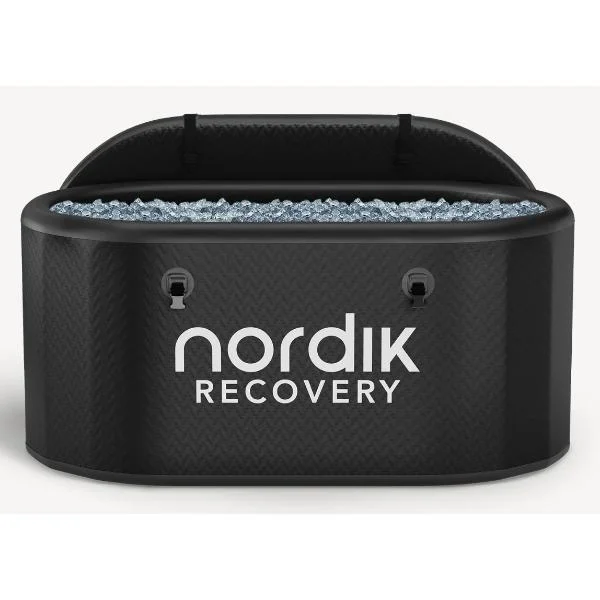
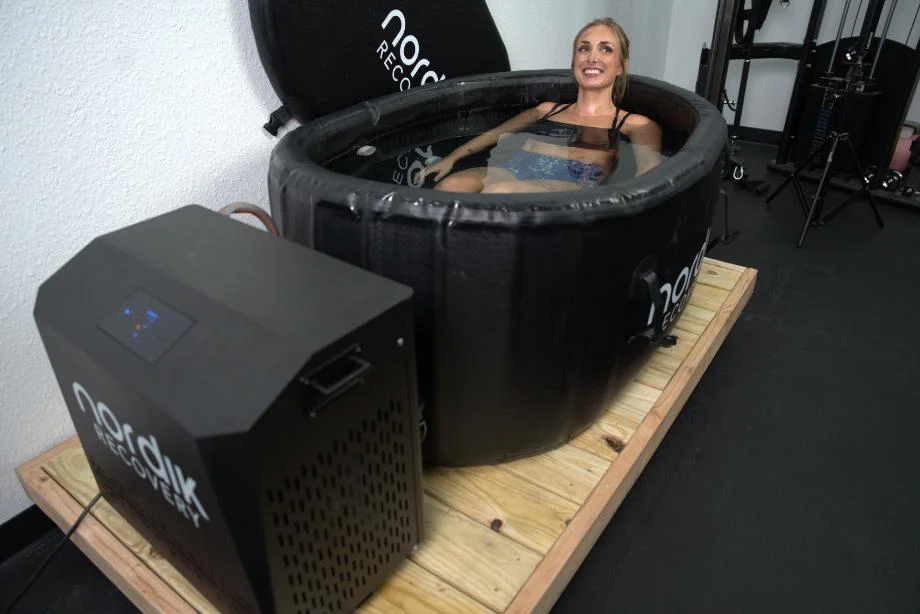
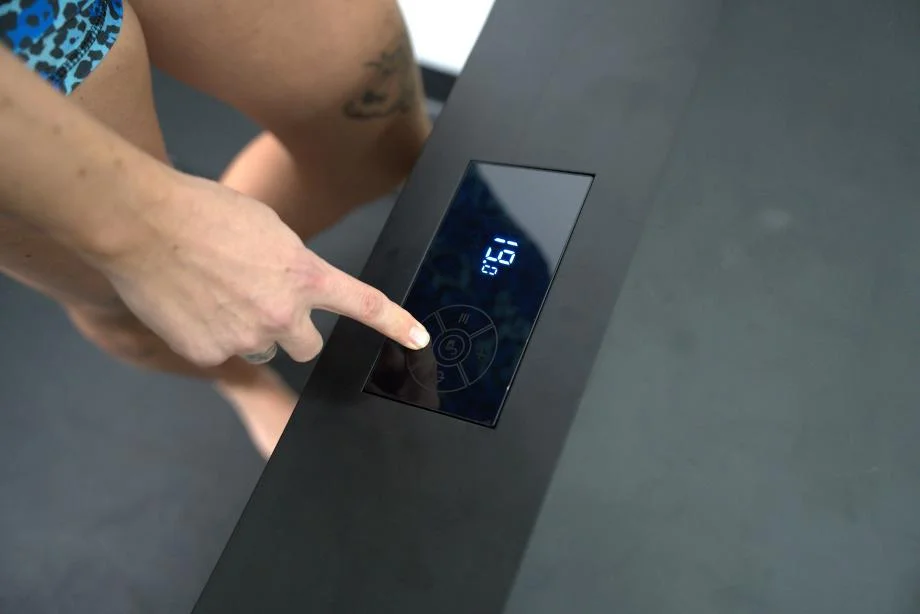
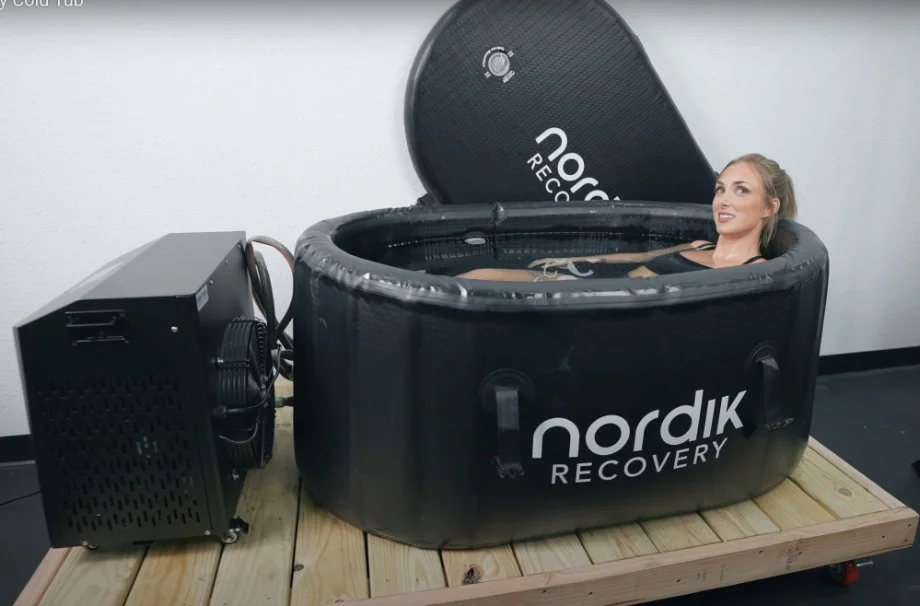
The Nordik Recovery Ice Bath is an inflatable plunge tub that can be used with ice or a standard or premium chiller. Either way, it can be ready to use in under 10 minutes.
At a Glance
- Budget-friendly price point
- Extra legroom for taller users
- Inflatable tub with compact footprint
- Optional chiller for cooling and heating
If you’re tight on space and funds, the Nordik Recovery Ice Bath will allow you to enjoy a comfortable cold plunge experience without breaking the bank or taking up too much room. With a small footprint and inflatable design, you can quickly pump and set it up just as quickly as you can deflate it and take it down. Unsurprisingly, the best cold plunge for small spaces earns a perfect footprint and portability score of 5 out of 5.
Construction: 3/5
Value: 4.5/5
Footprint: 5/5
Why We Like The Nordik Recovery Ice Bath
If you’re looking for premium cold plunge features without paying a premium price tag, the Nordik Recovery Ice Bath is made with military-grade PVC, can accommodate users from 4 feet, 1 inch to 6 feet, 7 inches, all while costing around $600, earning a 4.5-out-of-5 score for value. You can also upgrade from the tub-only version to a chiller-equipped bundle for more versatility.
Based on our experience and customer feedback, this tub is super easy to set up. It’s also incredibly comfortable, earning a 4 out of 5 for ergonomics. Tall users will appreciate its long, oval design for enhanced legroom, as well.
“What stood out the most to me about the tub is how spacious it felt,” our tester said. “I am 5’9″ on a good day, so I had plenty of space to kick the legs and have room to spare.”
The premium bundle comes in at about $2,750, which is actually cheaper than most other cold plunge options with chillers.
Lindsay Scheele, CPT, CNC
Alternatives
Although this tub is rated for indoor or outdoor use, it’s not the most durable one we’ve tested. GGR Everything lead reviewer Lindsay Scheele warns that the tub can bow if water is left in the cold plunge for too long. “Our tub started to bow after a couple of weeks,” she says, rating the durability and construction at 3 out of 5. “It works fine still, but to maintain the shape of the tub, I’d drain it regularly—at least once a week.”
For a little more space, you may want to take a look at the classic Plunge, which is about 66 to 73 inches long, depending on the tub model you go with. Be ready for an increase in the price, though.
Testing Breakdown
Here’s a complete breakdown of how the Nordik Recovery Tub scored using our testing methodology.
Vs. The Average
The Nordik Recovery Ice Bath comes close to meeting most of the marks for the average cold plunge tub. We like that it has a longer warranty (two years) compared to the average one-year warranty.
| Nordik Recovery Ice Bath | Average Cold Plunge Tub | |
| Price | $599 (tub only) $1,898 (Standard Bundle) $5,999 (Ultimate Pro Bundle) | $3,999 |
| Footprint | 53.1″ L x 23.6″ D x 31.5″ H | 51.5” L x 23.7” W x 25” H |
| Temperature range | 37° F to 68° F (standard chiller) 37° F to 113° F (premium chiller) | 35.8° F to 97.1° F |
| Water capacity | 105 gallons | 100.9 gallons |
| Warranty | 2 years | 1 year |
Best Smart Cold Plunge: Plunge All-In
Updated by: Jay Serafino

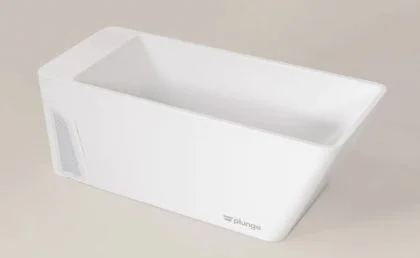






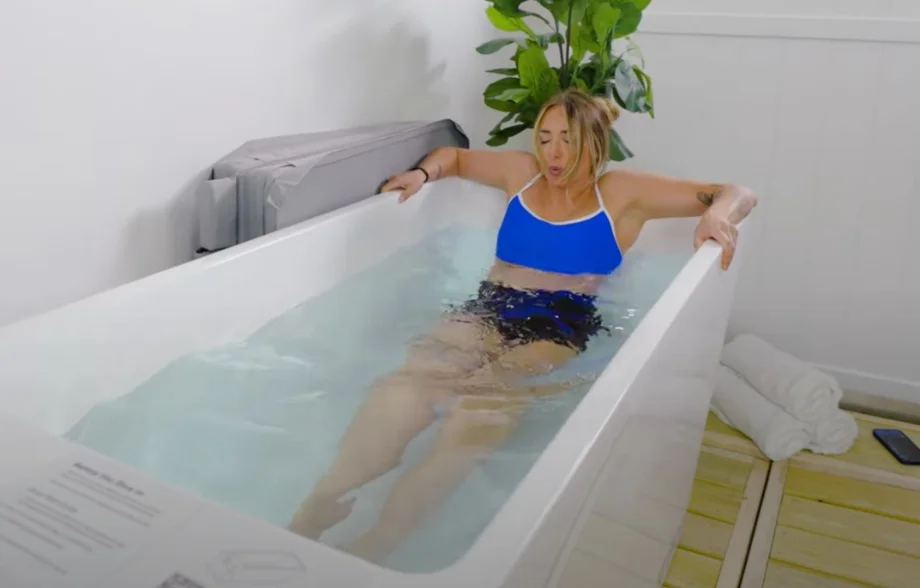
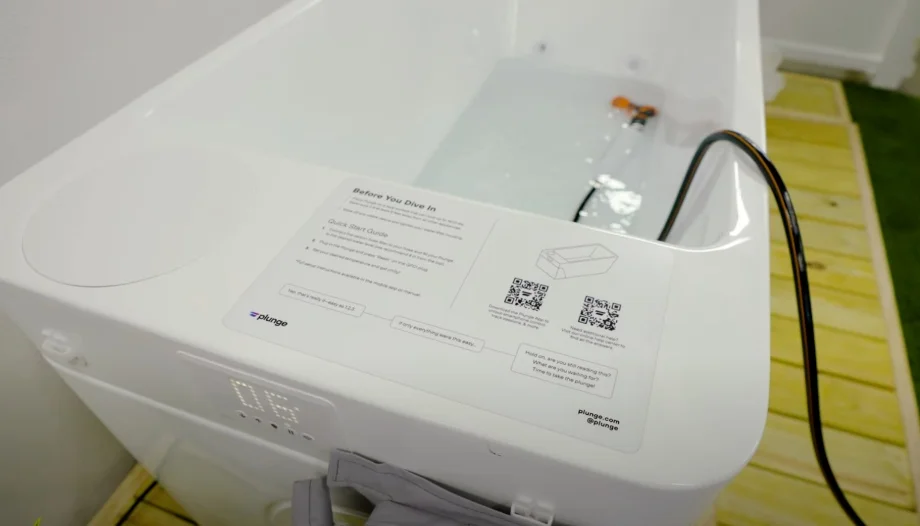
The Plunge All‑In delivers a premium, app-connected plunge experience with fast cooling to 37 degrees Fahrenheit and optional heating, perfect for dedicated home recovery setups. The downsides? It’s expensive and has a large footprint.
At a Glance
- Temperature can be controlled through a smartphone app
- Suitable for indoor or outdoor use
- Heat-capable chiller unit available
- Suitable for users up to 6 feet, 9 inches tall
We named the Plunge All-In the best smart cold plunge because of the app-friendly controls that allow you to schedule picture-perfect plunges directly from your smartphone. With a set of features like that, it’s no surprise that the All-In scored a perfect 5 out of 5 for conveniences. Other top-shelf features across the Plunge All-In profile include a built-in chiller and filter system, as well as extra leg room to help you really get your stretch on.
The All-In is the bougiest cold tub from the Plunge brand, featuring a range of bells and whistles to pique the interest of anyone looking to optimize their recovery. While the nearly $10,000 price tag might be an automatic no-go for some, the end result can’t be denied—this is one of the best cold plunge tubs we’ve ever tested.
Ergonomics: 5/5
Conveniences: 5/5
Value: 3/5
Why We Like the Plunge All-In
As mentioned above, the Plunge All-In is packed with quality-of-life improvements over the company’s previous models. First off, it’s roomy. Lindsay Scheele, CPT, CNC, the lead reviewer for our GGR Everything YouTube channel, tested the All-In herself and raved about its comfort.
“I’m able to use this fully relaxed and stretched out,” Lindsay says. “My husband, who is 6 feet, 2 inches, has also used this tub many times and has been able to stretch out comfortably.” The company says the tub can fit users up to 6 feet, 9 inches tall. For that, we gave the All-In a 5 out of 5 for ergonomics.
Lindsay also spoke to the build of the Plunge, giving it another 5 out of 5 for durability. “It’s a solid cold tub that is easy to get in and out of with a nice slanted back, making it feel really roomy and comfortable while using it,” she notes.
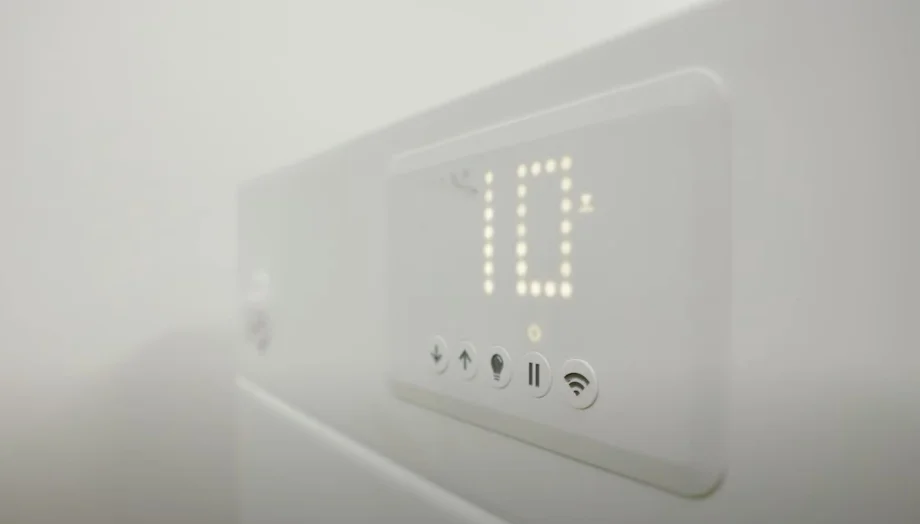
In addition to being spacious, the tub features a built-in chiller and filtration system, cutting down on clutter and extraneous accessories. Speaking of the chiller, you can control the temperature through an app on your phone, which, while not a new development, is always appreciated. The app also allows you to schedule plunges in advance, reminds you about upcoming maintenance tasks, and tracks your sessions to view your progress.
You can set temperatures as low as 37 degrees or as high as 104 degrees if you opt for the $500 heat-capable chiller unit. The ability to do all of this remotely is even more convenient when you consider that the tub needs at least three hours to reach its desired temperature.
Truthfully, the Plunge All-In is one of my favorites. I love how it looks; I love how quiet it is.
Lindsay Scheele, GGR Everything lead reviewer and certified personal trainer
Alternatives
While the Plunge All-In is one of the best cold plunges we’ve ever tried, it’s impossible to ignore that $9,990 price tag, which is why it earns a 3 out of 5 for value. We also don’t love the short one-year warranty that earned the All-In another 3 out of 5 for that category. If you’re paying top price for a cold tub, you might want a bit more peace of mind.
Another thing to consider: The Plunge All-In is heavy. It’s 238 pounds dry and about 1,150 pounds filled, earning it a 3 out of 5 for footprint and portability. This is not the type of tub you’ll move with ease. It’s also a bit on the big side, measuring 76 inches long by 31 inches wide, so you’re going to need some extra room to fit it within your home recovery space.
If you’re looking for a luxury cold tub at a lower price point, go for the Nordic Wave Viking Gen 2. It costs $6,449, has a five-year warranty, and only weighs 60 pounds unfilled.
Testing Breakdown
Here’s how the Plunge All-In scored across all of our categories.
Vs. The Average
The Plunge All-In is packed with great features but does sport a high price tag. Learn how it stacks up against the average cold plunge tub.
| Plunge All-In | Average Cold Plunge Tub | |
| Price | $9,990; $10,490 with heater | $3,999 |
| Footprint | 76.75” L x 31.5” W x 28.75 ” H | 51.5” L x 23.7” W x 25” H |
| Temperature range | 37° F to 104° F | 35.8° F to 97.1° F |
| Water capacity | 105 gallons | 100.9 gallons |
| Warranty | 1 year | 1 year |
Be sure to read our full Plunge All-In review for a more in-depth look at this luxury model.
Best Portable Cold Plunge: Cold Life Plunge
Updated by: Stephen Sheehan, CPT, CNC
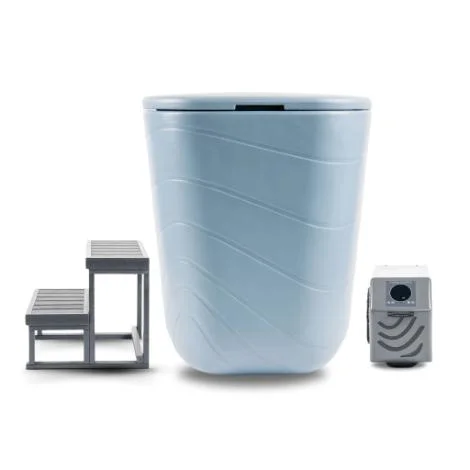
The Cold Life Plunge is a sleek vertical tub that immerses the user in waters as cold as 37 degrees Fahrenheit and is super simple to set up and use, according to our expert product testers.
What our tester says:
“I think people who are larger and taller will be really comfortable using this tub. You can’t fully extend your legs, but it does feel really spacious and big. You need to sit upright and will be in more of a crunched up position, but I like that. Some people might want more of a horizontal position.”
At a Glance
- 78-pound dry weight for easier transport
- Chills to 37° F with Pro Curve chiller
- Aerospace-grade aluminum construction for durability
- Indoor/outdoor use with simple setup
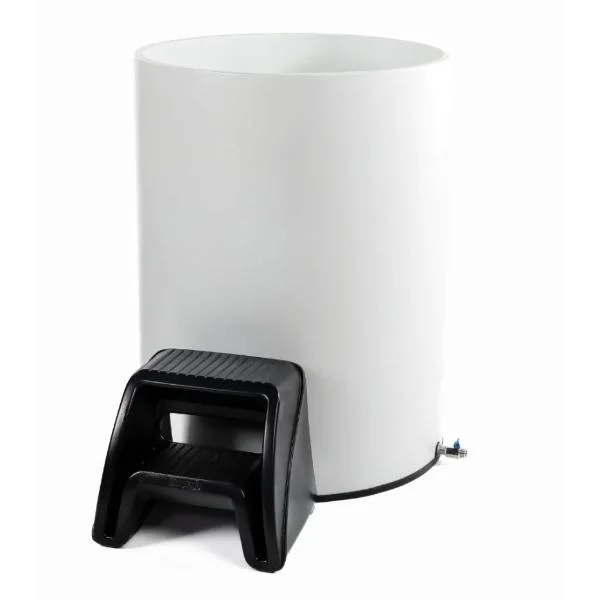
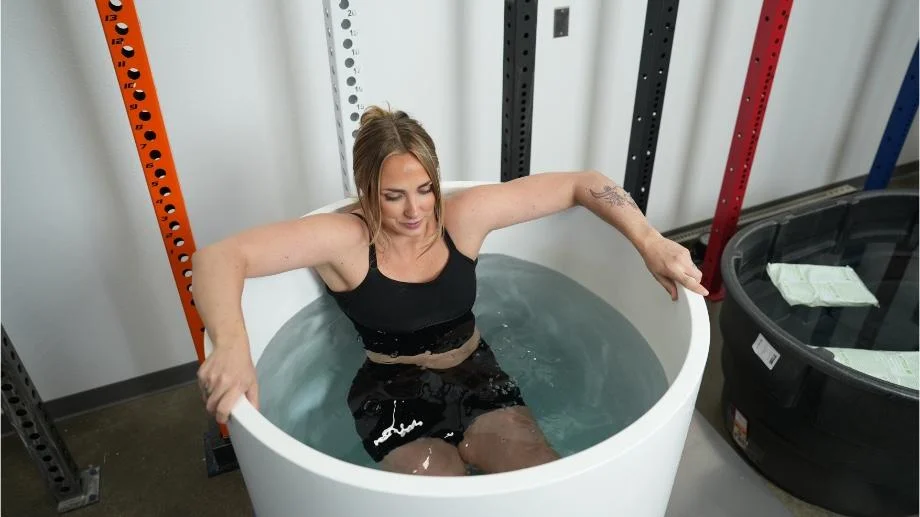
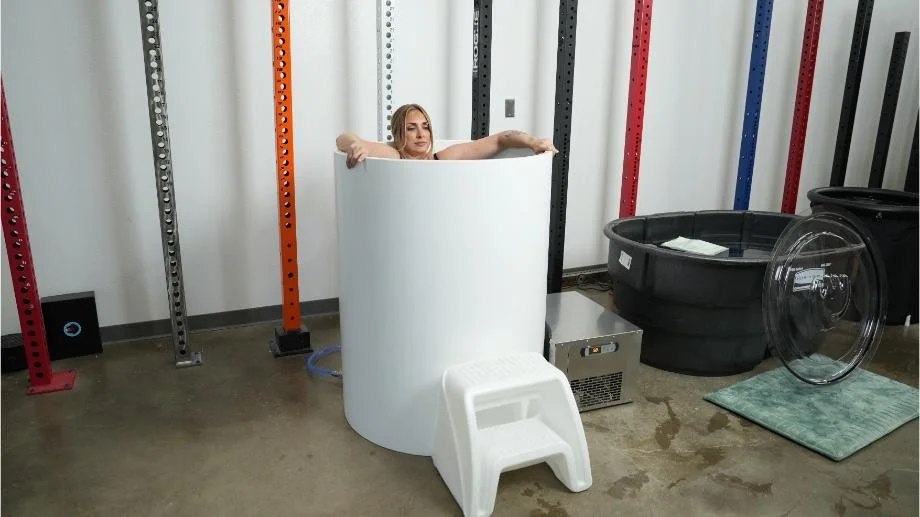
The Cold Life Plunge may look too heavy to tote around, but at roughly 80 pounds and only 43 inches tall (and 33 inches in diameter) it’s easy enough for most people to hoist into a truck or SUV and bring on the road—it might fit in some sedans, too, depending on your trunk space. Furthermore, as long as you’re not using a chiller, it can be used without electricity, earning a 4.5 out of 5 for conveniences.
Durability: 4/5
Conveniences: 4.5/5
Ergonomics: 4/5
Why We Like The Cold Life Plunge
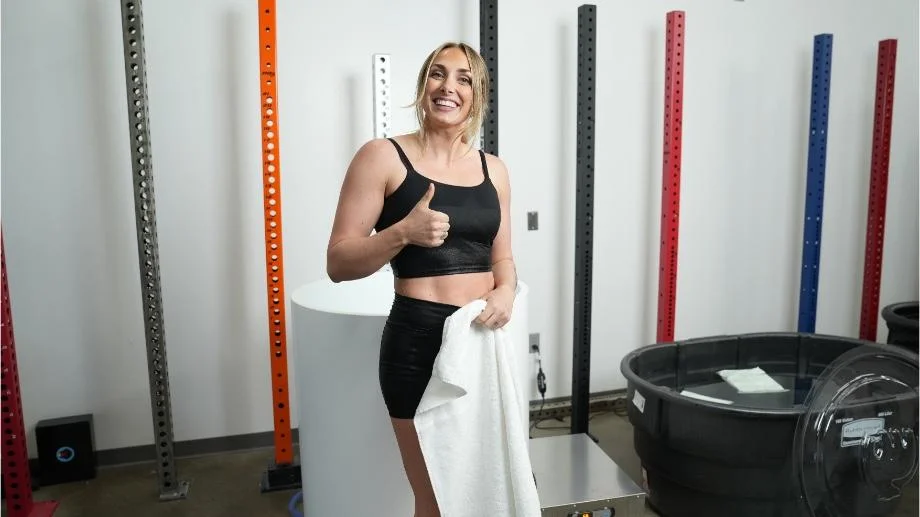
We picked this over an inflatable model because this is more durable—the exterior is made of aerospace-grade aluminum. “There are no weird seams or pieces that felt compromised,” says GGR Everything lead reviewer Lindsay Scheele, who has used this plunge since March 2024. “It looks like one big unit that won’t break on you, even when someone lays all their weight onto the sides of the tub as they get in.”
Earning dual 4-out-of-5 scores for durability and ergonomics, this intuitive cold plunge feels spacious once you’re submerged. At 5 feet, 4 inches tall, Lindsay felt that this was the largest vertical cold plunge she had tested. Despite it being almost oversized for her, she had no problem climbing in or out. Plus, with only three pieces—the tub, stool, and chiller—the Cold Life Plunge comes together quickly and intuitively, earning a 5-out-of-5 score for delivery and setup.
You need to sit upright and will be in more of a crunched-up position, but I like that.
Lindsay Scheele, GGR Everything lead reviewer and certified personal trainer
Alternatives
The main drawbacks with the Cold Life Plunge are the short warranty (just one year) and its high price point (roughly $7,500). “We usually like to see a multi-year warranty on cold plunge tubs,” Lindsay notes.
Also, unfortunately, what you see is what you pretty much get with Cold Life. Other than a complementary stool, there are no extra conveniences like a phone holder or built-in seat, and it’s pretty expensive when compared to other vertical tubs.
While we view the Cold Life Plunge as the best portable plunge, others may prefer a lighter, more packable silhouette.
If you want stronger warranty coverage, the Nordic Wave Viking Cold Plunge offers a slightly smaller vertical tub with a five-year warranty on the tub and two years on the chiller.
Testing Breakdown
The Cold Life Plunge rates highly across multiple categories. Here’s a closer look at how it scored based on our fitness equipment testing methodology.
Vs. The Average
The Cold Life Plunge is about double the price of the average cold plunge tub. It’s a straightforward tub that allows you to set the temperature as low as 37° F, which is right around the average, as well.
| Cold Life Plunge | Average Cold Plunge Tub | |
| Price | $7,499 | $3,999 |
| Footprint | 43″ H, 33″ diameter | 51.5” L x 23.7” W x 25” H |
| Temperature range | As low as 37°F | 35.8° F to 97.1° F |
| Water capacity | Not listed | 100.9 gallons |
| Warranty | 1 year | 1 year |
Our Cold Life Plunge review has our full thoughts.
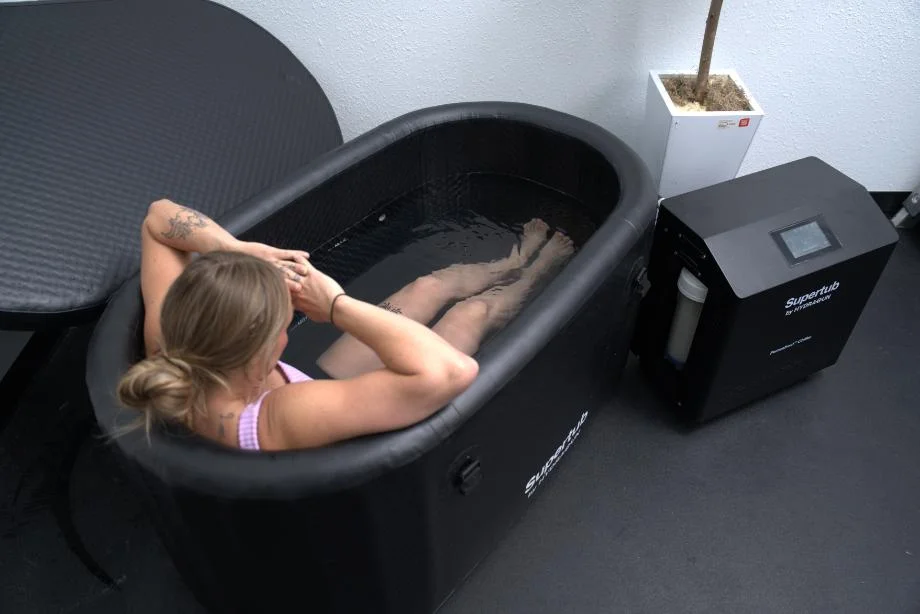
Best Indoor Cold Plunge: Hydragun Supertub Cold Plunge
Updated by: Stephen Sheehan, CPT, CNC
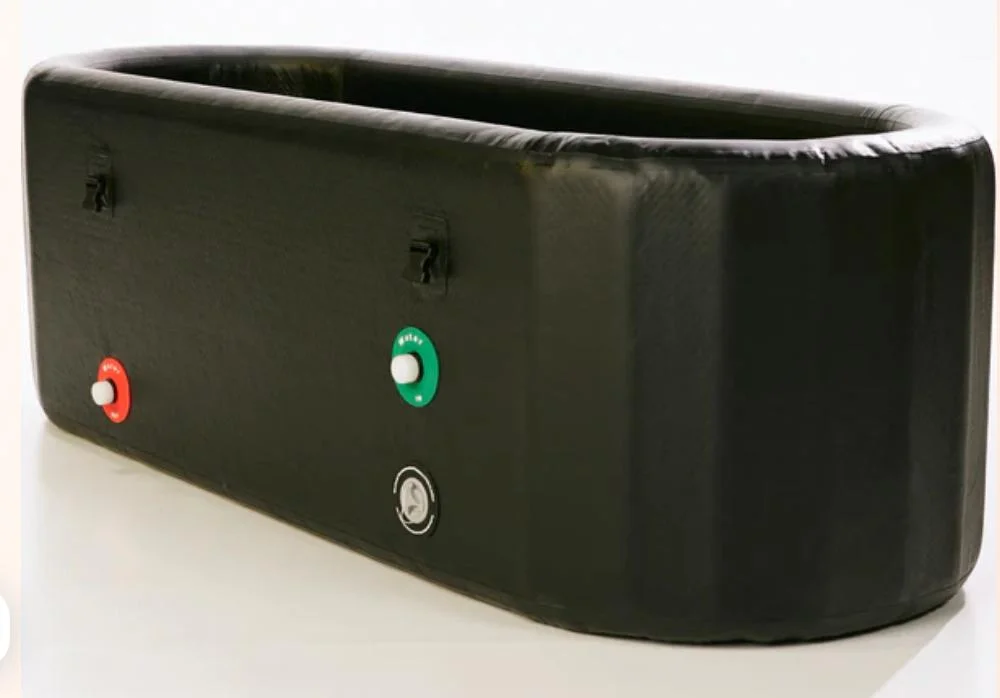
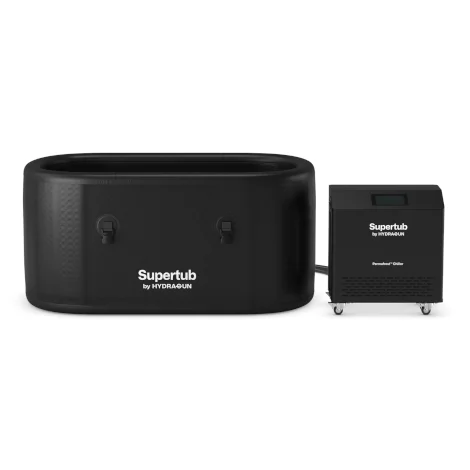
The Hydragun Supertub Cold Plunge comes with 0.8-horsepower chiller, which can be excellent for a range of climates. This inflatable cold tub is constructed of military-grade vinyl material and holds its shape well.
What our tester says:
“You can put your body weight on the edge when getting in and out, which is not always possible with inflatable tubs. It has held up to our wear and tear, holds its shape, and supports your weight.”
At a Glance
- Heavy-duty inflatable cold plunge tub
- Temperature range 33.8° F to 108° F
- Weighs just 21 pounds (empty) for easy portability
- Includes cover, storage bag, anti-slip mat, and phone mount
Boasting an impressive overall score of 4.19 out of 5, the Hydragun Subertub Cold Plunge is the ideal choice if you want a cold plunge tub indoors. Featuring military-grade vinyl construction and surprising durability compared to other inflatable cold plunges, the Supertub earned a 4.5-out-of-5 rating for durability and construction. Equipped with a chiller that both heats and cools, this can be a fantastic investment for recovery-focused folks.
Construction: 4.5/5
Value: 4/5
Conveniences: 4/5
Why We Like The Hydragun Supertub Cold Plunge
At just 21 pounds when empty, the Supertub is one of the easiest cold plunges to move, set up, and store, making it ideal if you don’t want a bulky, fixed tub. We’ve had the Supertub at our testing facility for well over a year, and our team has filled, drained, and moved it multiple times. “It has held up to our wear and tear, holds its shape, and supports your weight if you want to lean back or on the tub,” says GGR Everything lead reviewer Lindsay Scheele.
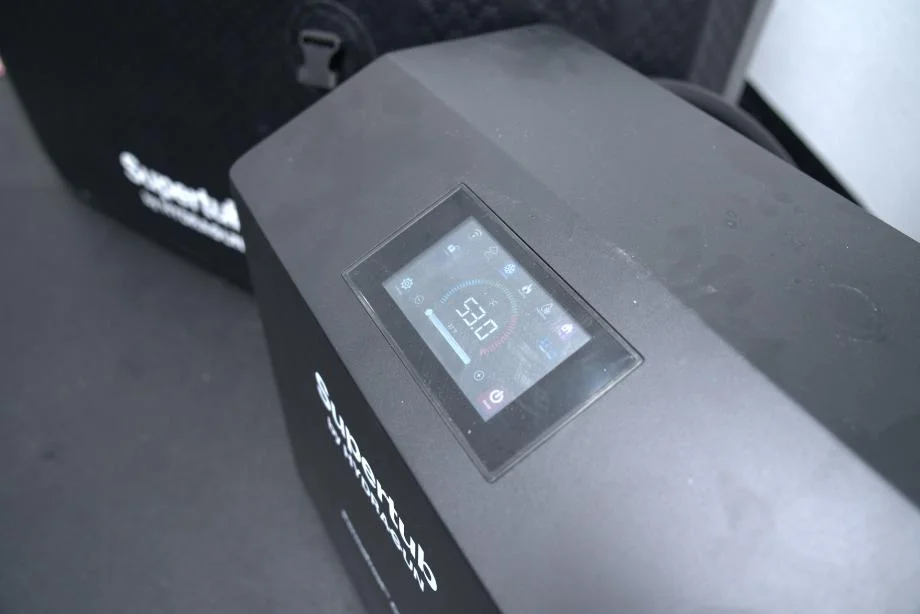
The 0.8-horsepower chiller should be powerful enough, whether you use the tub indoors or outdoors in a warmer climate. It features a filtration system and commercial-grade ozone generator to keep the water quality pristine, earning this all-in-one ice bath and hot tub a 4 out of 5 for conveniences.
I’ve sat on the edge with my full weight and it’s held its shape, too.
Lindsay Scheele, GGR Everything lead reviewer and certified personal trainer
Alternatives
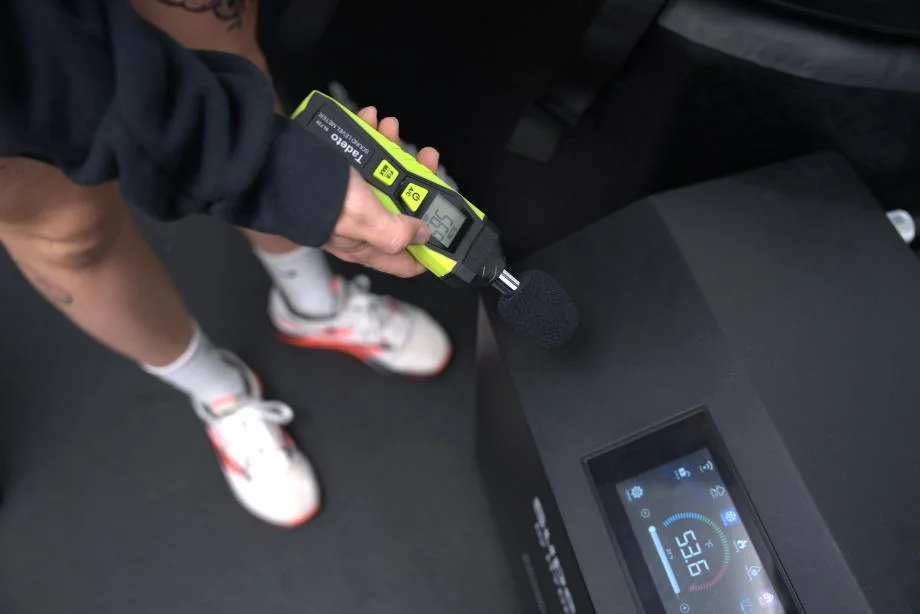
With a 60-gallon capacity (about half of what we like to see), taller athletes will likely feel cramped, which is why the Supertub earned a low ergonomics score of 2 out of 5. Lindsay also called out the chiller’s noise as a drawback. “It’s noticeably louder than others we’ve tried out. It won’t be much of an issue outside, but if you use it indoors, just know it’ll be loud enough to echo in a small room a bit,” she explains.
Want a stronger motor in your ice bath? Check out the Sun Home Cold Plunge Pro, which has a 1-horsepower motor capable of chilling the tub to 32 degrees. You will have to pay a premium price for it, however.
Testing Breakdown
Other than ergonomics, the Hydragun Supertub Cold Plunge scored well across the board. Here’s a complete picture of how it rates according to our fitness equipment testing methodology.
Vs. The Average
The Hydragun Supertub Cold Plunge falls in line with most of the specifications for the average cold plunge tub. The only area where it falls short is water capacity.
| Hydragun Supertub Cold Plunge | Average Cold Plunge Tub | |
| Price | $3,999 (0.8-hp) | $3,999 |
| Footprint | 52” L x 28” W x 24″ H | 51.5” L x 23.7” W x 25” H |
| Temperature range | 33.8° F to 108° F | 35.8° F to 97.1° F |
| Water capacity | 60 gallons | 100.9 gallons |
| Warranty | 2 years | 1 year |
Find out about our entire experience in our complete Hydragun Supertub Cold Plunge review.
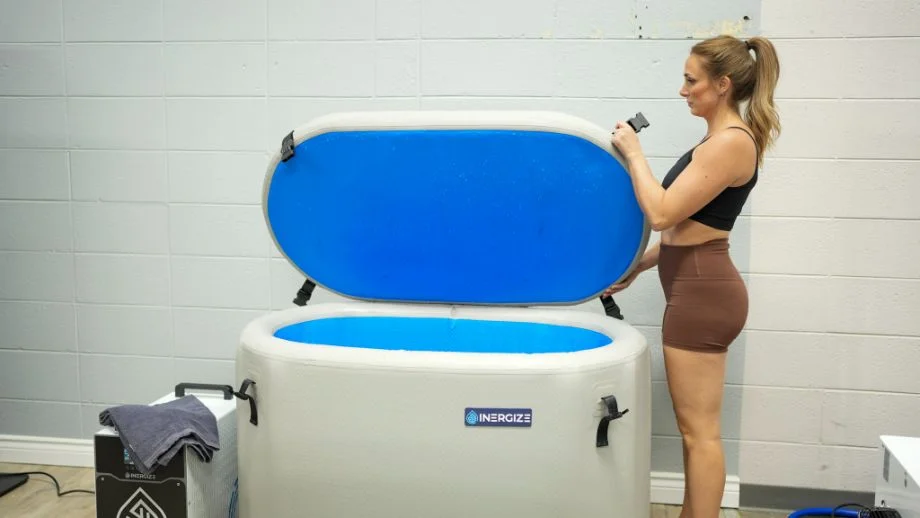
Best Customizable Cold Plunge: Inergize Cold And Hot Plunge Tub
Updated by: Stephen Sheehan, CPT, CNC
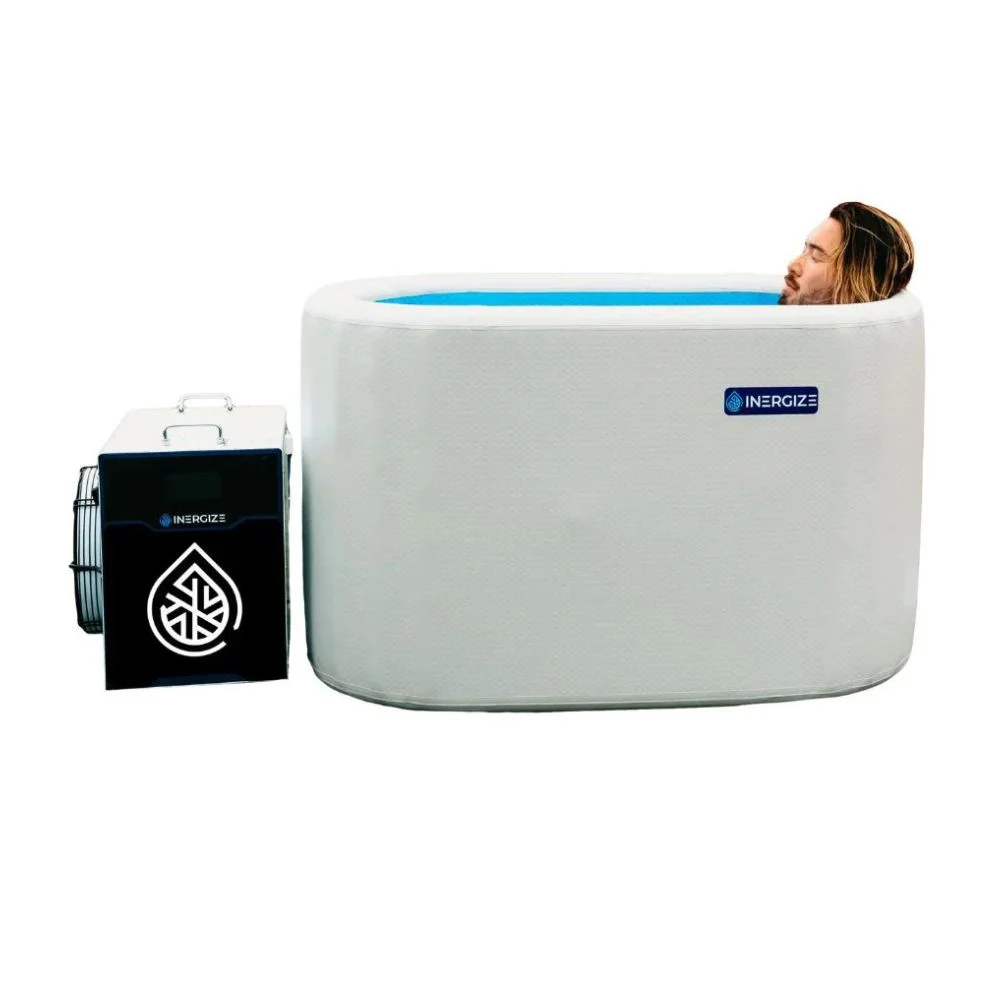
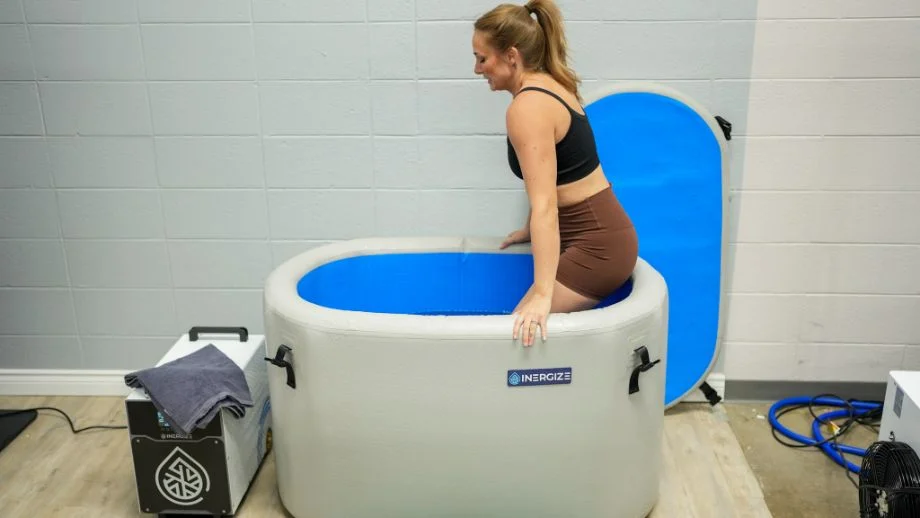
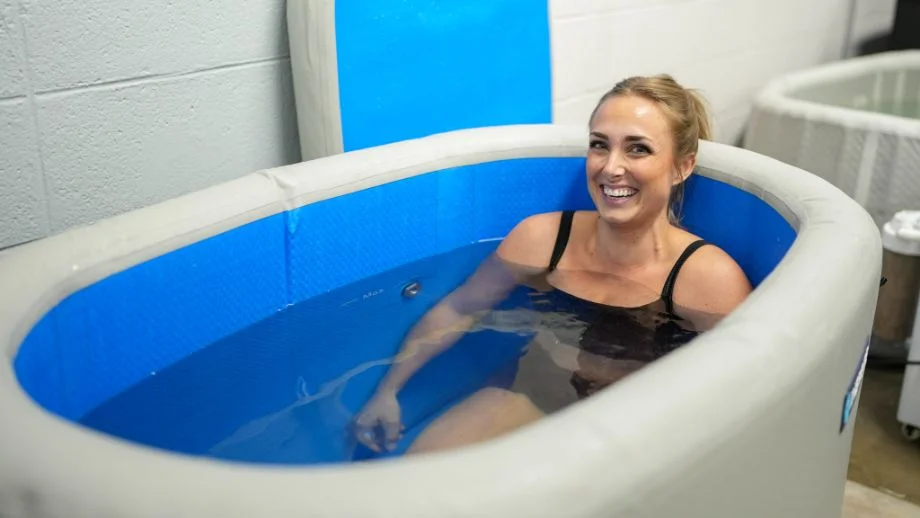
The Inergize Cold and Hot Plunge Tub allows you to regulate the water temperature with the touch of your phone. You can prepare the water for hot or cold therapy modalities depending on your needs. The inflatable tank is portable and comes with a duffle bag for packing up and bringing with you. The tank has a 60- to 70-gallon water capacity and you can choose your temperature between 37 to 105 degrees.
What our tester says:
“Several of us have tested this tub, and it has held up like a champion. I had to bend my knees in order to fit, but I felt as comfortable as one can during my experience.”
At a Glance
- Inflatable hot + cold plunge tub (37° F to 105° F)
- Lightweight at 25 pounds (plus 60-lb chiller) with duffle bag for portability
- WiFi-enabled app for remote temperature control
- Includes insulated cover, hoses, micron filter, and sanitation solution
The Inergize Cold and Hot Plunge Tub is pretty much as customizable as it gets. It’s both foldable for on-the-go use and sturdy enough for staying at home. Plus, you can heat, cool, and even use the app to control the temperature remotely with the powerful cooling unit, earning it a 4.5 out of 5 for conveniences. With an overall score of 4.35, this versatile cold plunge tub is among the most impressive we’ve tested.
Construction: 4/5
Ergonomics: 3.5/5
Conveniences: 4.5/5
Why We Like The Inergize Cold And Hot Plunge Tub
What makes the Inergize stand out is its flexibility. You’re not locked into just cold plunging—you can also use it as a hot tub, making it one of the most versatile muscle recovery tools we’ve tested. Earning a near-perfect score of 4.5 out of 5 for value, the Inergize Cold and Hot Plunge Tub lets you fine-tune the water temperature remotely using a paired smartphone app.
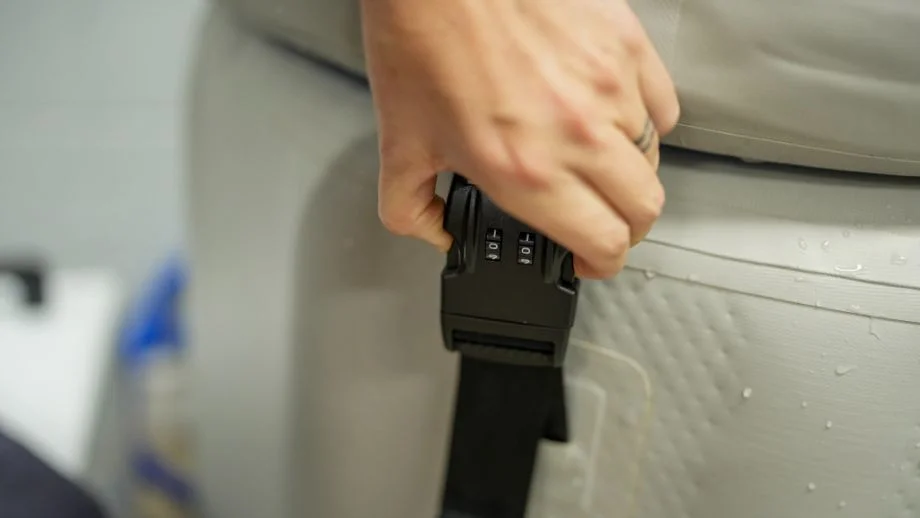
We also appreciate how easy it is to move and store this lightweight cold plunge. At 25 pounds dry with a carrying duffle for stress-free transport, it earns a 5 out of 5 for footprint and portability. Although it’s inflatable, the tub feels sturdy, too. “Several of us have tested this tub, and it has held up like a champion,” says GGR Everything lead reviewer Lindsay Scheele, rating the durability and construction at 4 out of 5.
It was all delivered in one package that was well protected, and it took me very little time to set it all up.
Lindsay Scheele, GGR Everything lead reviewer and certified personal trainer
Alternatives
The Inergize falls short in two areas: size and warranty. Based on our experience, taller users may struggle to find a comfortable position. Lindsay rated the ergonomics at 3.5 out of 5, saying, “I had to keep my legs slightly bent and I’m only 5’4”—anyone taller will feel cramped.”
Furthermore, we’d like to see a better warranty policy considering this cold plunge has a listed price of nearly $4,500. Inergize only provides one year of coverage, which isn’t ideal given that level of investment.
Need a little more leg room? The Plunge Air has a length of 61 inches, which may be more accommodating for taller athletes.
Testing Breakdown
The Inergize Cold and Hot Plunge Tub is one of the highest-scoring tubs we’ve tested, earning perfect scores in multiple categories.
Vs. The Average
The Inergize Cold and Hot Plunge Tub is slightly more expensive than the average cold plunge tub. However, it has a smaller water capacity.
| Inergize Cold And Hot Plunge Tub | Average Cold Plunge Tub | |
| Price | $4,490 | $3,999 |
| Footprint | 53” L x 29.5” W x 30” H | 51.5” L x 23.7” W x 25” H |
| Temperature range | 37° F to 105° F | 35.8° F to 97.1° F |
| Water capacity | 80 gallons | 100.9 gallons |
| Warranty | 1 year | 1 year |
Want to learn more? Read our full Inergize Cold Plunge Tub review to see how it stacks up to the competition.
Best DIY Cold Plunge: Tuff Stuff Super-Duty Oval Stock Tank
Updated by: Stephen Sheehan, CPT, CNC
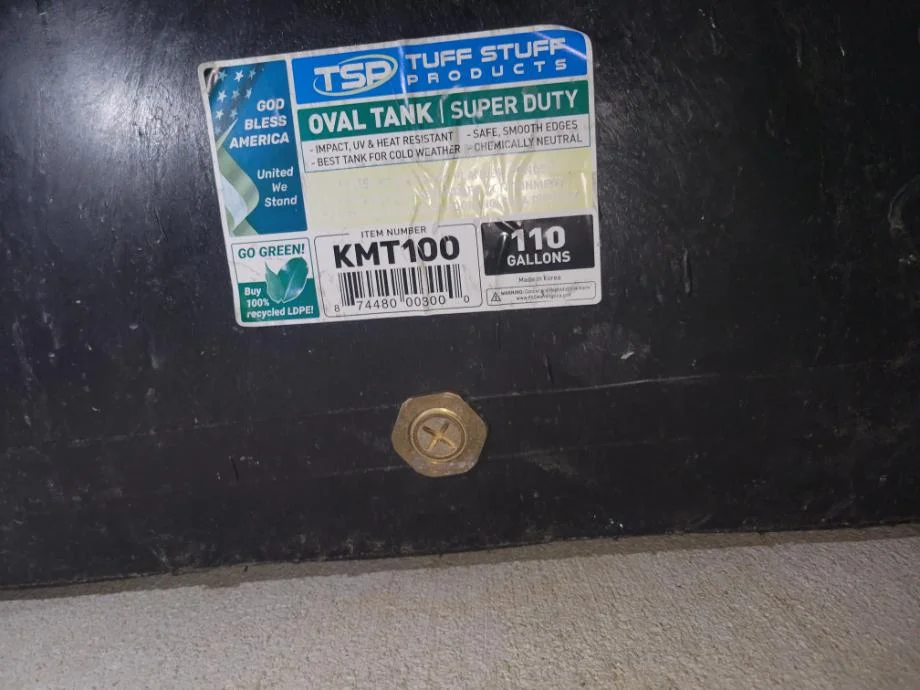
While a utility stock tank is most often used for gardening or farming, we see no problem using it as a cold plunge tub. The tank has a 110-gallon capacity, it’s made from sturdy low-density polyethylene (which is UV, heat, cold, and crack resistant), and it has a plug for easy draining. It might not offer temperature regulation or a ton of insulation, but it could be a great cold therapy hack for budget-conscious folks.
What our tester says:
“As long as you don’t mind using your own ice, this is a great cold tub. It’s great for places like small, gritty gyms where multiple people want to take ice baths, but you aren’t making a ton of money, or you aren’t able to fit a bougie tub.”
At a Glance
- 110-gallon capacity
- Budget-friendly at about $100
- Durable low-density polyethylene (LDPE) that can withstand outdoor weather
- Lightweight at 46 lbs empty, easy to move or flip for cleaning
If you’re someone who wants to experience an ice bath, but you’d rather not spend thousands of dollars on fancy cooling systems or use your own bathtub, you may just need a good old-fashioned DIY gym equipment option. With a 110-gallon capacity, lightweight design, and unbeatable price tag of $120, the Tuff Stuff Super-Duty Oval Stock Tank is an affordable, accessible way for athletes and exercise enthusiasts to enjoy the benefits of ice baths without investing much money. As a result, it earns a 4.5-out-of-5 rating for value.
Value: 4.5/5

Cleaning: 3/5
Footprint: 5/5
Why We Like The Tuff Stuff Super-Duty Oval Stock Tank
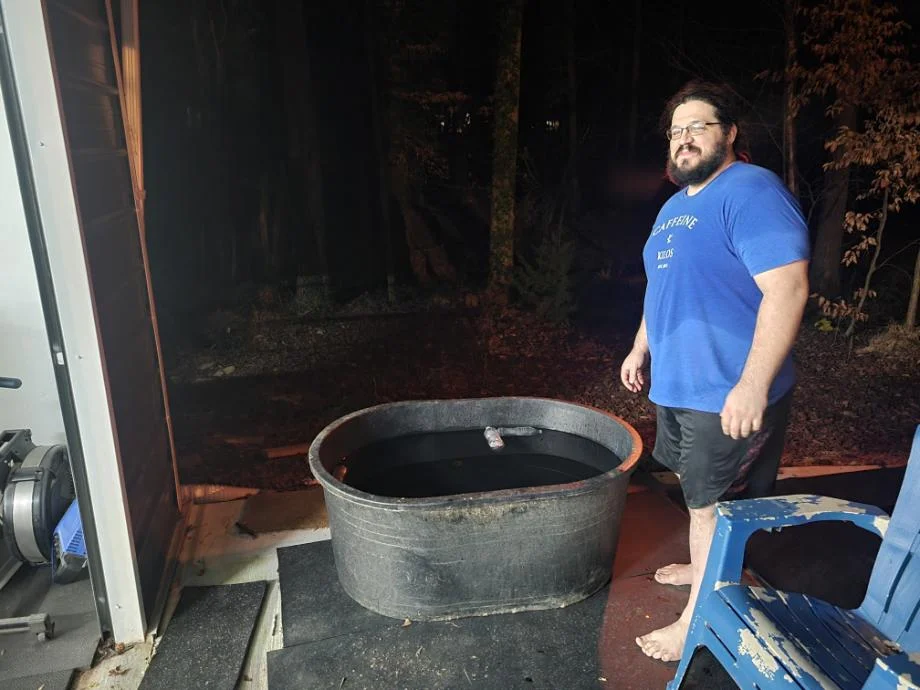
Senior Director of Content Kate Meier has set up the Tuff Stuff tank outside her large home gym where her entire weightlifting team trains and uses the tub for recovery. The tub can fit two grown adults, as long as they don’t mind being in close quarters with each other. “We fill the tub with hose water and throw in bags of ice or a collection of frozen water bottles we keep in the gym freezer,” Kate says.
Weighing only 46 pounds, it’s highly portable, and won’t take up much space while not in use, earning it a 5 out of 5 for its footprint and portability.
As long as you’re OK with having to bring your own ice and set up your ice bath each time you use it, it’s a great option.
Senior director of content Kate Meier, NASM-CPT, USAW-L1, CF-L1
Alternatives
It goes without saying that you don’t get any conveniences with the Tuff Stuff tub. There’s no insulation to help with temperature regulation, and you’ll have to haul ice every session. Taller athletes may also find it challenging to fully submerge their upper body without bending forward due to the shape of the tub.
If you prefer sitting for your cold plunge sessions, try The Cold Pod, which is another ultra-budget option but has you seated upright instead of reclined like the Tuff Stuff Stock Tank.
Testing Breakdown
Here’s how the Tuff Stuff Stock Tank scored across all categories of our testing methodology.
Vs. The Average
The Tuff Stuff Super-Duty Oval Stock Tank is an ultra-budget-friendly choice that offers more water capacity and slightly roomier dimensions than the average cold plunge tub.
| Tuff Stuff Super-Duty Oval Stock Tank | Average Cold Plunge Tub | |
| Price | $119.99 | $3,999 |
| Footprint | 53” L x 36” W x 20” H | 51.5” L x 23.7” W x 25” H |
| Temperature range | N/A | 35.8° F to 97.1° F |
| Water capacity | 110 gallons | 100.9 gallons |
| Warranty | 1 year | 1 year |
Learn all about our full plunging experience in our complete Tuff Stuff Stock Tank review.
Our Testers


Lindsay Scheele, CPT, CNC
Lindsay Scheele is a certified personal trainer, ISSA-certified nutrition coach, Level 1 CrossFit coach, and lead reviewer on GGR Everything.


Kate Meier, NASM-CPT, USAW-L1, CF-L1
Kate has nearly two decades of experience working in both the fitness and content industries.
Other Cold Plunge Tubs We Researched
While we’ve tested nearly every tub featured on this list, we’ve researched a dozen more. Here are some other brands that didn’t quite make the cut:
- Blue Cube Bath: The main reason we didn’t test or recommend this brand is because there are no tubs priced under $10,000, which doesn’t make it affordable for the average home gym owner.
- Polar Monkeys Portal 2.0: This cold plunge tank didn’t make the list because it’s not insulated and is meant for outdoor use only. We have more details about the Portal 2.0 and Star Treatment 2.0 cold plunge tubs in our Polar Monkeys Cold Plunge review.
How We Picked and Tested The Best Cold Plunge Tub
For any equipment our product testers use or research, we have a strict testing methodology in place so each of our experts has the same considerations when working through trials. Here are the factors we had in mind when testing cold plunges, specifically:
- Footprint and volume: We not only considered how much space this is going to take up (in your home, garage, porch, or backyard) we also wanted to know how much water each cold plunge tub holds relative to the footprint.
- Delivery and setup: While researching and testing, our experts noted if it was an easy setup process (like just unboxing or inflating) or if it was difficult and required full assembly.
- Durability and construction: When something is designed to hold water, we expect it not only to do just that but resist rust, mold, and general wear and tear.
- Ergonomics: Although seated or reclined is a personal preference, we wanted to be sure there is wiggle room and a design that allows you to put your arms out of the tub, if desired.
- Additional conveniences: These are things that go beyond just providing a place to hold cold water like chillers, filtration, or temperature regulation apps.
- Price and value: While cold plunge tubs are often expensive additions to your home gym, we wanted to consider what you’re getting for the price (which often includes chillers, pumps, and filtrations systems).
Benefits of a Cold Plunge Tub
If you’re wondering why some folks invest thousands of dollars to chill out at home, there are many science-backed benefits of cold plunging. From reduced inflammation to improved immunity to stress management, let’s dive into how this recovery method can enhance your overall well-being.
Potential to Reduce Inflammation
For most folks, muscle soreness after a workout is inevitable. But for athletes, being sore can hinder performance, especially if an athlete has back-to-back events (like a doubleheader baseball game or a multi-day bike race).
Dr. Michael Masi, doctor of physical therapy (DPT) and strength coach, notes that ice baths make the most sense for athletes.
“Cold water immersion can help with muscle recovery because it reduces the inflammation from working out and provides less perceived soreness,” says Dr. Mike. “In reality, inflammation is a natural response to aid muscle growth.”
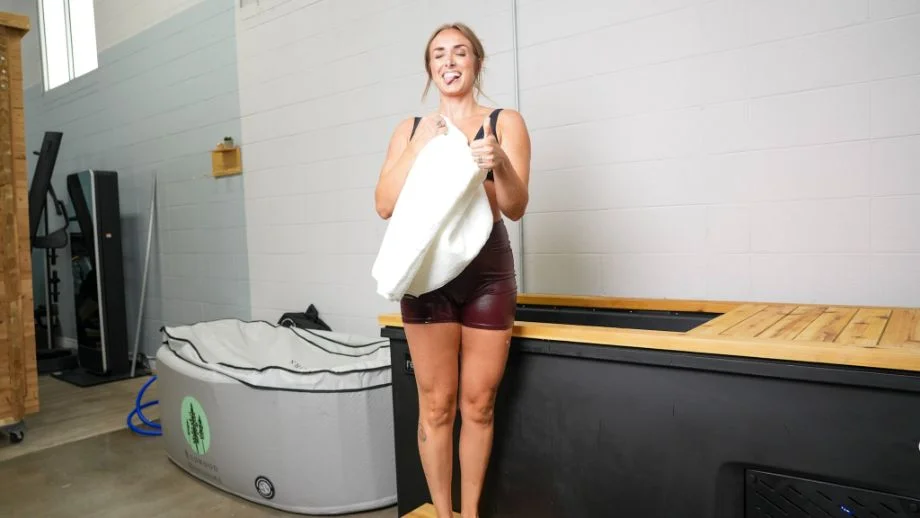
In other words, full-body cold water immersion can help reduce perceived soreness but it doesn’t necessarily help with muscle recovery or muscle growth1.
RELATED: Best Muscle Recovery Tools
Immune System Benefits
While more research on immersion therapy and the immune system is still needed, at the moment, there is research to support2 that the combination of cold exposure, breathing exercises, and meditation can activate the sympathetic nervous system. Doing this provides an epinephrine release (which is basically adrenaline) that can help regulate your natural immune response to fight infections.
Dr. Raj Dasgupta, MD, FACP, FCCP, FAASM, says, “Cold water exposure can increase the production of white blood cells in the body, which are responsible for fighting infection.”
The key here is not cold water exposure, alone—it’s the combination of breathwork and meditation that activates the sympathetic nervous system and provides immunity benefits. This method is typically referred to as the Wim Hof Method.
Boosts Metabolism
Studies have shown that going into a cold plunge before or after a workout may increase metabolism. “In addition to the production of body heat by normal basal metabolic processes, the body is, in addition to physical exercise, able to generate extra heat through the process of shivering and nonshivering thermogenesis,” a September 2022 study in the International Journal of Circumpolar Health says3.
Mental Health and Stress Management
Mental health is another area that still has many unknowns about the potential benefits of ice baths. However, related to the activation of the sympathetic nervous system, this activation can also be helpful to the way you feel and your overall perception. One study4 found that participants of a four-week trial found a reduction in stress, anxiety, and depression after regular cold water exposure every week for four weeks.
RELATED: Exercise and Mental Health
“There are several reasons to think that ice baths might provide mental health benefits,” says Dr. Raj Dasgupta, MD, FACP, FCCP, FAASM. “Immersing yourself in icy water triggers the release of stress hormones. This is likely why people say that a dip in cold water wakes them up. Some believe that an ice-water face immersion can activate the parasympathetic nervous system, which prompts the body to relax after a stressful event. Some researchers also hypothesize that adapting to the shock of ice water plunge may improve a person’s ability to cope with other stresses.”
Improved Circulation
Cold plunges are often used to improve circulation, which may also contribute to a cold plunge’s ability to reduce inflammation and support immune health.
“The working hypothesis is that the ice water stresses and strains your body, and it goes into survival mode, working hard to maintain its core body temperature,” according to Dr. Raj Dasgupta, MD, FACP, FCCP, FAASM. “This stimulates your body to increase blood flow and improve circulation in order to help deliver oxygen and nutrients to areas of the body that need to recover.”
GGR expert contributor Christopher Mohr, PhD, RD, echoes that sentiment, noting that ice baths may reduce muscle soreness and inflammation after intense exercise.
“Exposing your body to the cold can stimulate the vagus nerve, leading to decreased heart rate, relaxation and may help manage anxiety. All of this might can help improve stress levels and sleep quality over time,” he explains.
Buying Guide: What to Look for in the Best Cold Plunge Tubs
Here are some things to consider before you order a cold plunge tub for your home gym:
Size and Capacity
Like any large piece of equipment, measure your space! You’ll also need to consider how you’ll fill up the tank and how close your proposed area is to a water source. If the tub you’re considering has a chiller, you’ll also need a power source nearby, too.
It’s also worth noting that cold plunge tubs come in various sizes and capacities. If you’re adding a cold tub to your deck, be sure that the total weight of the tub (when full with water) can be supported. Some of the tanks featured on this review are several hundred pounds when full.
Insulation and Material
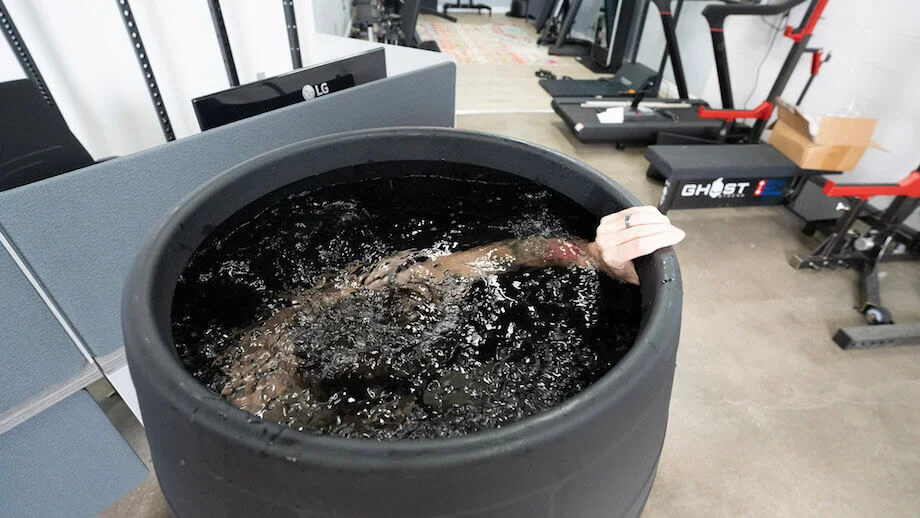
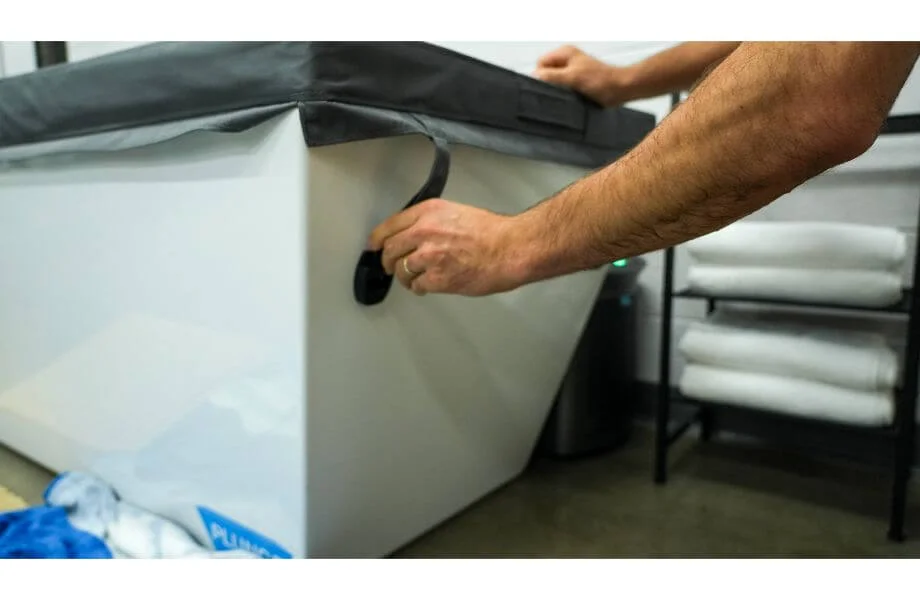
The material of the tub is crucial for maintaining the desired water temperature. Look for tubs made from high-quality, durable materials that offer good insulation. High-quality insulation will help retain the cold water temperature and minimize heat exchange with the surrounding environment. Stainless steel or high-grade acrylic are popular choices for cold plunge tubs due to their durability and insulation properties.
RELATED: How to Insulate A Garage Gym
Filtration and Maintenance
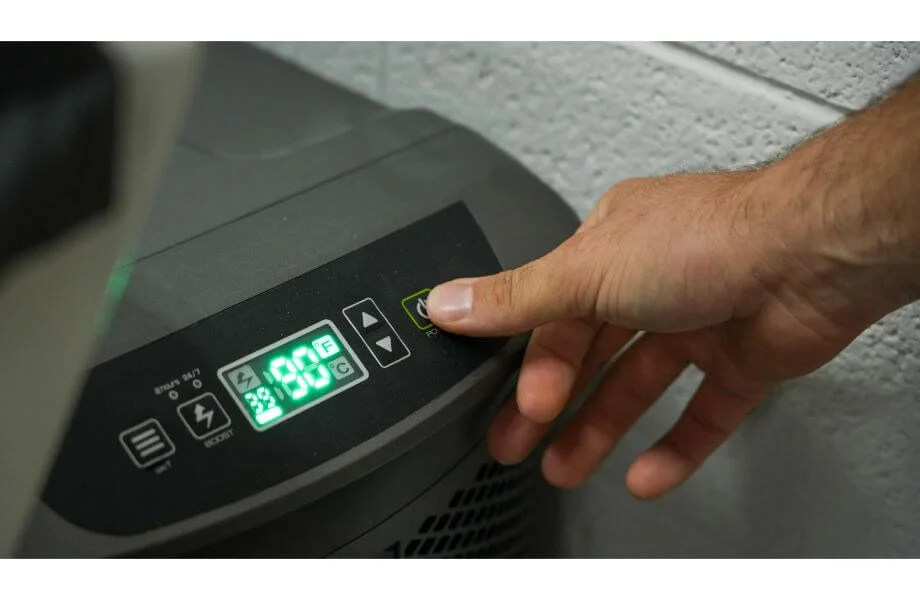
Proper water filtration and maintenance are essential to keep the water clean and safe for regular use. Look for a cold plunge tub that comes with a reliable filtration system. Additionally, consider the ease of maintenance and cleaning. A well-designed tub with easy-to-access filters and simple cleaning procedures will save you time and effort in the long run.
Warranty Policy
Compared to other large and costly purchases you’ll make for your home gym, the warranty policies on most cold plunge tubs pale in comparison to big investments like the best squat racks and treadmills. Most of the tubs we included offer a one-year warranty, while only a few have a five-year policy. While this may not be a dealbreaker, we think it’s worth thinking about.
Power Supply Requirements
Many cold plunges that use a chiller require access to a 120V power supply in your home. This is the standard outlet voltage in most North American homes and shouldn’t be an issue, but it’s something to keep in mind. If you’re buying a tub with a chiller, make sure there’s a nearby outlet where you’ll be setting it up.
Portability
While some cold tubs are very light and portable, some are very large and heavy, and aren’t meant to be moved on a regular basis once installed. If you plan on moving anytime soon, or you need a tub that can be moved from room to room between uses, you’ll want to choose a lighter, smaller cold plunge.
Ice vs. Chiller Trade-Offs
One of the first decisions to make is whether you’re looking for an ice tub or a cold plunge that’s powered by a chiller, both of which have their pros and cons. An ice tub is significantly cheaper, but you’ll need access to large quantities of ice on a regular basis, which can be inconvenient. Tubs with chillers can be pretty expensive, but they eliminate the need for ice and offer more precise temperature regulation.
Indoor vs. Outdoor Use
While just about any tub or cold plunge can be used indoors, if you’re going to have yours outside, uncovered, you’ll want to make sure it’s outdoor-safe. Outdoor tubs will be exposed to the elements, so you’ll likely need a tub with a cover and waterproof construction. It’s worth taking the time to make sure your tub is suitable for outdoor usage before making a purchasing decision.
Noise Level
Piggybacking off the indoor vs. outdoor consideration, you’ll also want to find out how loud your tub of choice is before making a purchase. While a louder cold plunge tub isn’t as big of a deal outdoors, the noise won’t have anywhere to go if you’re using it in a tight indoor environment.
The National Institute for Occupational Safety and Health5 recommends that you not be exposed to sounds at or above 85 decibels throughout an 8-hour workday to help prevent noise-induced hearing loss. While cold plunge tubs won’t typically reach those levels, GGR Everything lead reviewer Lindsay Scheele said she has run across models that measured 77 decibels, which is comparable to the noise level of landscaping equipment running outside when you’re indoors, according to the Hearing Health Foundation6. It’s not dangerously loud, but you’ll probably have to raise your voice to hold a conversation around it.
Noise from a cold plunge tub typically comes from the chiller, with Lindsay noting that 1-horsepower models tend to be the loudest. Before making your purchase, figure out where your tub will be located and look into the chiller specs to see what type of noise level you can expect.
Temperature Control and Range
The best cold plunge tubs on the market will typically get as low as 37 degrees Fahrenheit, but some may dip to 32 degrees. More important is the fact that some models can double as hot tubs that climb to 105 degrees or higher. If you’re the type who loves to soak in both extremes (and have the budget necessary to indulge), you might want to opt for one of these combo models.
Then, there’s the little issue of how you actually set these temperatures. Some tubs are just barrels that you fill with ice and water. Other builds can feature either built-in or add-on chillers that make the water ice-cold with the push of a few buttons. If you love that level of convenience, go with the chiller. You can even take it a step further and find a tub model that you can control through an app on your phone, allowing you to schedule plunges with exact temperatures in advance throughout the week.
Remember, though, if you’re using your cold plunge regularly, the cost of buying all of that ice is going to add up. While a chiller is a bigger upfront investment, it might be the smarter move down the road.
Budget
This may seem obvious, but your budget plays a significant role in deciding which cold plunge to buy. They can range from under $100 to nearly $15,000, so you’ve got a lot of choices. At the low end, you’re looking at inflatable tubs meant to be filled with ice, while the more expensive options include features like water filtration, heat settings, remote control via a phone, and more.
Common Mistakes to Avoid When Buying a Cold Plunge Tub
Cold plunge tubs are a serious investment, with certain high-end models costing $10,000 or more. With that sort of green on the line, you’ll want to make sure you dot your i’s and cross your t’s during the purchasing process. Here are some common mistakes you’ll want to avoid:
Buying a Tub That’s Too Small (or Too Tall)
This one should be obvious, but how many times have you made a purchase online only to realize—uh-oh!—it’s the wrong size? While most horizontal cold plunge tubs should be roomy enough to fit most people, you definitely need to do your research if you’re on the taller side (think 6 feet, 5 inches and up). Getting a tub that’s too small can severely hamper your ability to plunge properly, turning a promising recovery tool into a cramped fiasco.
Conversely, vertical tubs can be a chore to get into if you’re not tall enough. While you can get a step stool to help you climb in and out, you might not love the idea of traveling down plastic steps while soaking wet.
Before making your purchase, pore over the specs and read as many reviews (including ours!) as possible to get a feel for the tub’s size. Remember, it needs to be comfortable enough to plunge in and easy enough to get in and out of while wet.
RELATED: Cold Plunge Vs Hot Tub
Ignoring Cleaning and Maintenance
Many of the tubs on this list earned our seal of approval due to their sturdy construction, but even the most durable models won’t last if you don’t take care of them. If you ignore the recommended cleaning schedule and put off necessary maintenance, like filter replacements, your tub won’t work as well as it could. Plus, proper cleaning and water sanitization help cut down on any mold and bacterial growth that can creep up over time.
These steps are even more important if you have an outdoor tub. You need to avoid as much exposure to the elements as possible, so you’ll want to buy an insulated tarp (if it’s not already included) to drape over your tub during the colder months, and be sure to change the water temperature to accommodate the outdoor conditions.
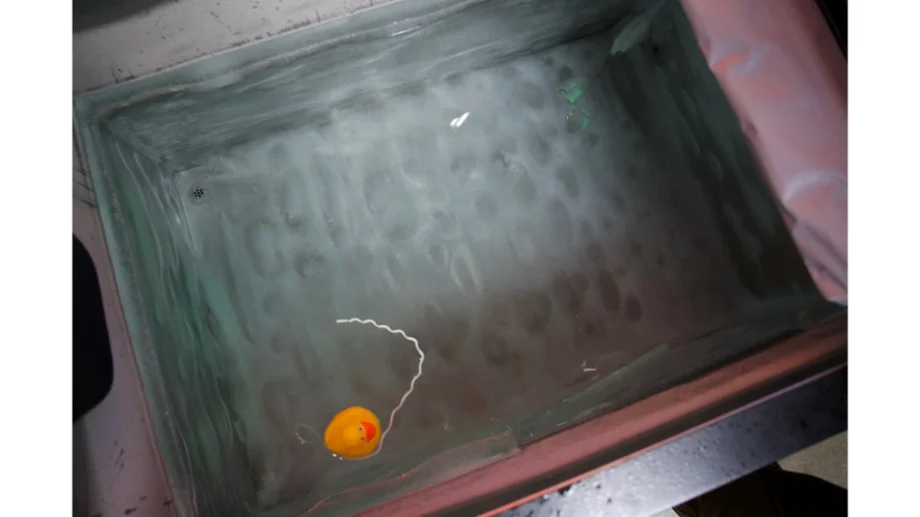
Chillers that run both hot and cold are especially convenient for warming the water slightly during the frigid months to help prevent pipes from freezing and other ice damage. In the past, our testers have set their water temperature to around 40 degrees Fahrenheit during the winter without any problems. Before making a purchase, reach out to the brand’s customer service to ask about model-specific maintenance tips for cold weather.
If you aren’t going to use your tub outdoors during the winter, make sure it’s fully drained and dry to prevent ice damage. If possible, move it indoors to reduce any risks.
RELATED: Cold Plunge Maintenance: A Crash Course in Cleaning Your Ice Bath
Going Too Basic
It’s all well and good if you just want a simple barrel to fill with ice and water, but you have to make sure that this is all you want out of a tub. Some of these simple barrels don’t have the ability to add a chiller, turn into a hot tub, or be controlled through an app. If you’re going to spend money on a plain barrel, just make sure you’re 100% certain you won’t get the itch for more bells and whistles in the near future.
Cold Plunge Safety Tips
While cold plunges can be excellent recovery tools, safety is critical, especially when submerging your body in near-freezing water. Here are some essential safety tips to keep in mind when using a cold plunge.
Keep in mind, this is not medical advice, and you should always consult with a physician before using a cold plunge, especially if you have any pre-existing health conditions.
Cool Down Before You Plunge
A cold plunge can seem like a refreshing way to cool off after a challenging workout. Still, experts recommend allowing your body to cool off first to avoid extreme temperature fluctuations naturally.
“Ice baths can potentially cause cardiovascular strain from the sudden temperature change,” says Chris Mohr, PhD, RD. “People with heart diseases, high blood pressure, and pregnant women should avoid ice baths or consult with a healthcare provider first.”
Cover Your Plunge
We recommend keeping your plunge covered when not in use. Not only will this help keep your water free of debris, but it can also ensure nobody accidentally falls in, especially if you have small children in your house. The frigid water can be quite a shock to your body, and kids may not be prepared for the extreme temperature fluctuations.
Limit Your Time
Chris Mohr, PhD, RD, recommends limiting your time to 10 to 15 minutes per session to avoid health issues like hypothermia. He also suggests that beginners start with moderate temperatures before moving to the coldest settings, saying, “For those new to plunging, you should first fill your bathtub with cold water and, if that’s not cold enough, add ice to it until it reaches a temperature of about 50 to 59 degrees Fahrenheit.”
Types of Cold Plunge Tubs
A cold plunge is a cold plunge is a cold plunge, right? Well, if you’ve read this far, you probably understand that these tubs are a bit more complicated than they appear. Here are the main types of cold plunge tubs and who they can be best suited for:
Inflatable Cold Plunge Tubs
Just like you’d imagine, these cold plunge tubs aren’t made of hard plastic, stainless steel, or wood. Instead, they’re typically made from durable ripstop materials and filled with air, offering a budget-friendly, portable silhouette that can be taken on the go.
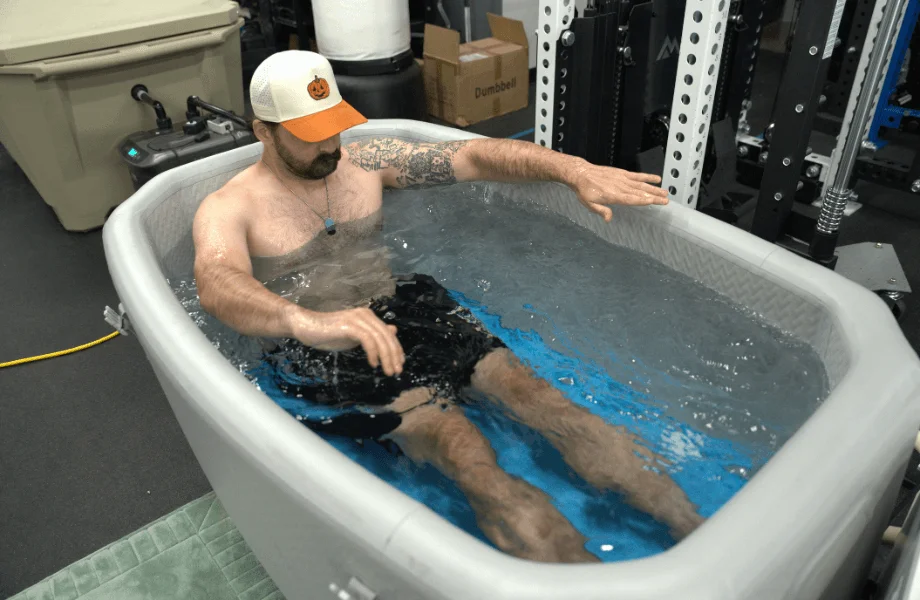
Despite the travel-friendly motif, there are some trade-offs here. Obviously, you need to spend time inflating and deflating the tub when you want to use it. (Don’t worry, many brands include a hand pump.) Additionally, despite how sturdy most of these models are, you’ll usually be very aware that you are in an inflatable tub whenever you move around. Still, many of these tubs have comparable features with their sturdier counterparts, including compatible chillers, the ability to turn into hot tubs, and smartphone controls.
Vertical Barrels
Some people would rather sit upright than kick back in a cold tub. If you’re in that camp, you might fare well with a vertical plunge design. Not only do these tubs tend to work well for taller folks, but the vertical setup helps to cut down on their overall footprint, making them a great choice for a garage gym or patio plunge setup.
These barrels can be made from wood or plastic, and you can also find a lot of barebones models on the market without chillers or smart features. This can help keep the price in check, as long as you’re fine with providing the water and ice.
DIY Cold Plunge Tubs
This is a broad term for any cold plunge tub that you rig up yourself. The easiest way to craft a DIY cold plunge is to buy a stock tank—the kind cows and horses drink from on a farm—from your closest Tractor Supply or Home Depot and fill it with water and ice. It might not seem glamorous, but it gets the job done and could be a great introductory peek into the plunge life.
Premium Tubs With Chillers
If plunging is a foundational part of your fitness routine, it might be worthwhile to invest in a premium model decked out with a compatible chiller unit. These tubs are the ultimate in convenience, with many allowing you to switch between hot and cold temperatures and schedule plunges remotely through an app. The best examples of these tubs also have built-in filters and sanitation features, making maintenance and cleaning even easier.
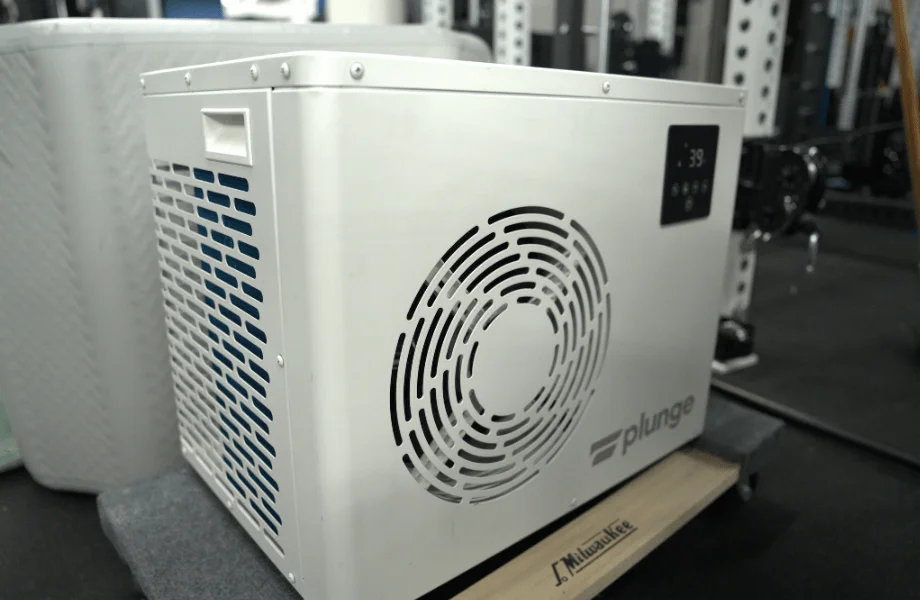
What these tubs offer in convenience, they more than make up for in price, with many ringing up at $8,000 or more. Still, plunge aficionados likely won’t be able to go back to the days of pouring bags of ice into a plastic barrel after they’ve experienced what chiller units can bring to the table.
Portable Hard-Shell Cold Plunge Tubs
While many portable cold plunge tubs are inflatable, there are a few made from plastic or aluminum that can be moved easily from spot to spot. These tubs often weigh less than 100 pounds, which is certainly moveable for two or three people, especially if you have a hand truck nearby.
Unlike heavier premium tubs, these portable plunges likely won’t have chillers or filters built into them. Don’t be fooled, though, because the best ones will still be durable enough for people to climb in and out without worrying about anything breaking.
Best Cold Plunge Tub FAQs
What are the best cold plunge tubs?
The best cold plunge tubs offer precise temperature control, sufficient water capacity, and dimensions that accommodate users of various heights. In our experience, some of the top manufacturers include Redwood Outdoors, Sun Home, and Plunge.
Is it worth buying a cold plunge?
Cold plunging can support muscle recovery, reduce inflammation, boost energy, and improve mental toughness. If those benefits align with your health and fitness goals, a cold plunge tub can be a worthwhile investment.
How often should I use a cold plunge tub?
Begin with two to three cold plunges per week and evaluate how it impacts your recovery. We recommend shorter sessions at first, gradually increasing the amount of time as you get accustomed to this recovery protocol.
What features should I look for in the best cold plunge tub?
Key features to look for when searching for the best cold plunge tub include a powerful chiller, the type of insulation and materials used, and the overall size, as you want a tub that allows you to sit comfortably for an extended period.
References
- Peake, J. M., Roberts, L. A., Figueiredo, V. C., Egner, I., Krog, S., Aas, S. N., Suzuki, K., Markworth, J. F., Coombes, J. S., Cameron-Smith, D., & Raastad, T. (2017). The effects of cold water immersion and active recovery on inflammation and cell stress responses in human skeletal muscle after resistance exercise. The Journal of Physiology, 595(3), 695–711. https://doi.org/10.1113/JP272881
- Kox, M., van Eijk, L. T., Zwaag, J., van den Wildenberg, J., Sweep, F. C., van der Hoeven, J. G., & Pickkers, P. (2014). Voluntary activation of the sympathetic nervous system and attenuation of the innate immune response in humans. Proceedings of the National Academy of Sciences of the United States of America, 111(20), 7379–7384. https://doi.org/10.1073/pnas.1322174111
- Esperland D, de Weerd L, Mercer JB. Health effects of voluntary exposure to cold water – a continuing subject of debate. Int J Circumpolar Health. 2022 Dec;81(1):2111789. doi: 10.1080/22423982.2022.2111789. PMID: 36137565; PMCID: PMC9518606.
- Kurniasari, M. D., Monsen, K. A., Weng, S. F., Yang, C. Y., & Tsai, H. T. (2022). Cold Water Immersion Directly and Mediated by Alleviated Pain to Promote Quality of Life in Indonesian with Gout Arthritis: A Community-based Randomized Controlled Trial. Biological Research for Nursing, 24(2), 245–258. https://doi.org/10.1177/10998004211063547
- Centers for Disease Control and Prevention. (2024, January 30). Noise-induced hearing loss. Centers for Disease Control and Prevention. https://www.cdc.gov/niosh/noise/about/noise.html
- Keep listening: What are safe decibels?. Hearing Health Foundation. (2026). https://hearinghealthfoundation.org/keeplistening/decibels